

Why You Should Plant Lavender Under Fruit Trees
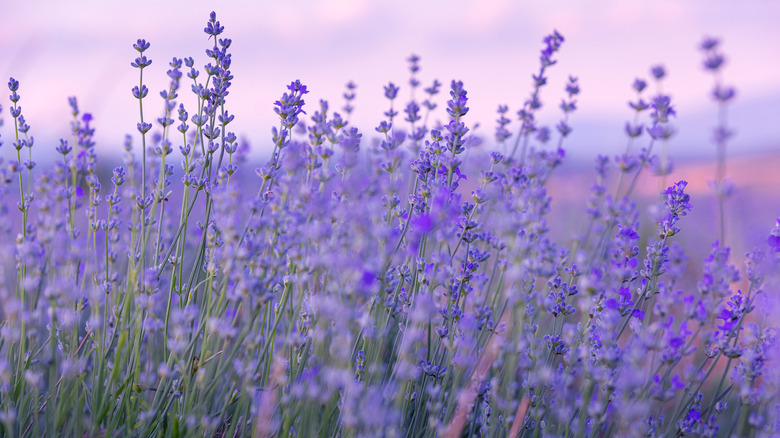
When you're trying to get your garden or grove under control without pesticides and herbicides, there are certain plants and herbs you can grow together for an amiable, sometimes mutually beneficial relationship. You should always plant basil alongside tomatoes, for instance, because the herb will deter pests from the tomatoes, and the tomatoes will guard the basil from the bright sun. It's called companion planting, and lavender is one of the best companions your fruit trees are likely to find. The scent of lavender can dissuade moths, whiteflies, and other pests from your fruit trees and bushes. On the flip side, when you plant lavender near or under your fruiting crops, its crisp, sweet, piney, and perfumed scent will attract the "good" bugs.
While some trees are self-fertile, many (like apples, pears, apricots, and plums) require, or are greatly aided by, flying pollinators — bees, butterflies, day-flying moths, and even hummingbirds — to produce fruit. Planting lavender in your orchard will give pollinators a little amuse-bouche, with the ultra-fragrant flowers drawing them in so they'll eventually move on to the tree blossoms, passing pollen from tree to tree in the process.
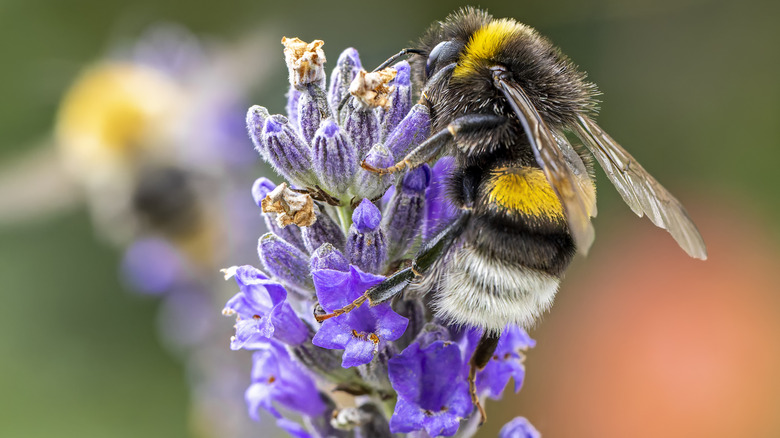
Lavender, it seems, is particularly enchanting to bumblebees, whose longer tongues allow them to reach deep into the conical flowers, which can be more difficult for other bees to access. Bumblebees have fuzzy bodies that carry more pollen, and thanks to their long tongues, they can collect nectar more efficiently, moving from blossom to blossom quickly and ultimately pollinating more of your trees. The little purple flowers will still attract plenty of honeybees, however, and they have an extended flowering season, so they'll help provide a steady food source when the fruit trees aren't in bloom.
Growing and using lavender offers both garden and kitchen rewards
Lavender is best planted from early April through May, once spring weather has set in, but before it gets too hot. Depending on the variety, it can withstand temperatures of minus 10 to minus 20 degrees Fahrenheit and is ideally grown in USDA plant hardiness zones 5 through 9. It's a resilient herb that's easy to grow, but it needs well-drained soil, especially in the colder months. For colder climates (down to Zone 5), Munstead, Hidcote (or Hidcote Blue), and Phenomenal are among the best choices. Studies have shown, however, that Dutch lavender can be four times more effective than other varieties at luring in pollinators, though Spanish lavender varieties are far more delicate and struggle when temperatures dip below about 20 to 25 degrees Fahrenheit.
When companion planting lavender with your fruit trees, you'll want to position it about 3 to 4 feet from the trunk of the tree to avoid root crowding. If freezing is a concern, you can grow lavender in pots and bring it indoors for the winter. Large containers, about 12 to 16 inches in diameter with large drainage holes, are ideal.
Lavender is also great in the kitchen. Try a lavender flan, or make a simple tincture to add a flowery kick to cocktails, cookies, or cakes. For savory dressings and dips, chopped, a pinch of dried lavender is the secret floral ingredient your ranch needs, or use the fresh flowers in a garlic aioli for some aromatic, woody undertones. Once you start cooking with lavender, you'll be hooked, just like the bees.