

This Small Bird Was Once A Dinner Staple, But Is Now Illegal To Eat In The US
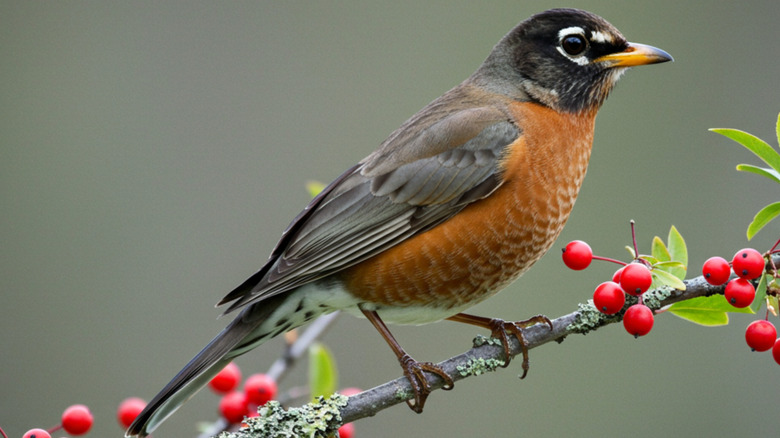
Widely believed to be the most abundant landbird in North America, the American robin has become a bona fide national symbol, thanks in no small part to that burnt-orange breast and song that lets us know spring is finally on its way. We'd be surprised if anyone had anything negative to say about these birds, but their lovable nature didn't stop them from being on the chopping block for much of American history. While we hate to be the bearers of bad news, the good news is that federal conservation laws eventually banned this practice more than a century ago.
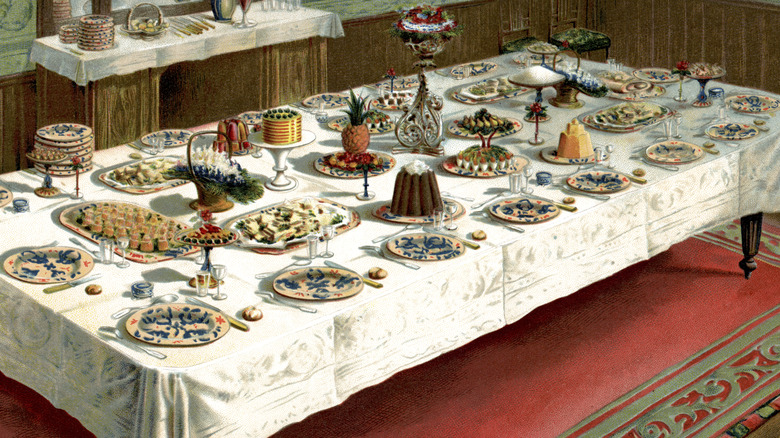
American robins have been on the menu for far longer than they've been off. While we associate their round, chubby bodies with pure cuteness, all early European settlers saw was a filling dinner. It didn't help that robins traveled in reckless, enormous flocks, which practically advertised that they were an easy meal. While the North and South have always had their differences, robins on the dinner table were common ground. Enjoyed by rich and poor alike, they showed up everywhere from humble kitchen tables to the height of fine dining. Vintage cookbooks laid out instructions for beef, bacon, and robin pie, while high-end establishments like New York's Delmonico's kept their own elaborate recipes for roasting and broiling the little songbird.
We hate to admit it, but robins' widespread popularity has us wondering whether they were really worth the hype. Thankfully, we'll never get to know, as the Migratory Bird Treaty Act of 1918 put a stop to robin hunting for good. They're now a protected species, and hunting, killing, capturing, or consuming an American robin carries hefty penalties, including fines and even jail time.
The American robin isn't the only once-popular dish that's been banned
The history of American food preferences is an ever-changing tapestry, though some trends, like the American robin, fade into obscurity thanks to changing legislation rather than changing tastes. Although it's not always the sole reason, animal conservation has played a fundamental role in determining what does and doesn't end up on our plates — including several international dishes banned in the U.S.
Under the Migratory Bird Treaty Act of 1918, other notable species, including the snowy egret and sandhill crane, also gained protection, significantly improving their populations in the decades since. Arguably, the only bird more protected than the robin is America's very own bald eagle. The national symbol is shielded under both the Migratory Bird Treaty Act and the Bald and Golden Eagle Protection Act, which imposes penalties of up to $100,000 for individuals who take, possess, or disturb an eagle or its nest.
Birds are by no means the only species protected from consumption, though. In 2004, the U.S. Fish and Wildlife Service banned imports of beluga sturgeon caviar from the Caspian Sea to help protect the critically endangered wild species. That legislation isn't quite as airtight as the Migratory Bird Treaty Act, and as of 2026, there's one legally permitted beluga farm operating in the U.S. In other cases, diners worked around legislation rather than give up a dish entirely. Turtle soup, a dish enjoyed by presidents, was traditionally made from sea turtles. Commercial overfishing helped push several sea turtle species onto the Endangered Species List under the Endangered Species Act of 1973, making it illegal to take or consume them. But the dish never really disappeared, especially in the South, where cooks simply swapped sea turtles for farm-raised freshwater snapping turtles.