

The Simple Technique To Make A Bloody Mary Taste Better Than At A Bar
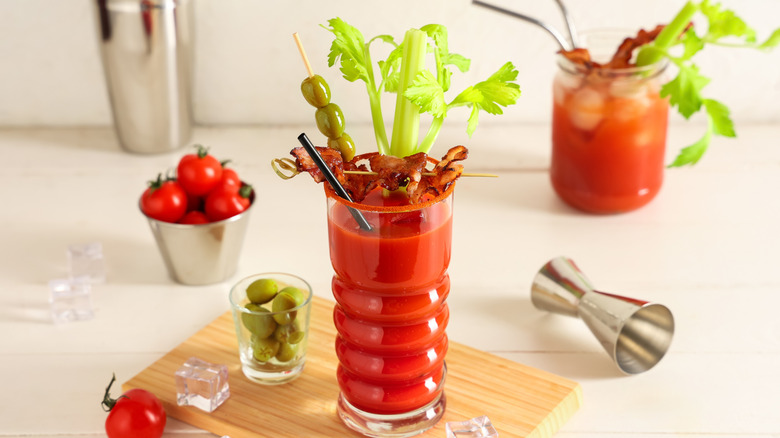
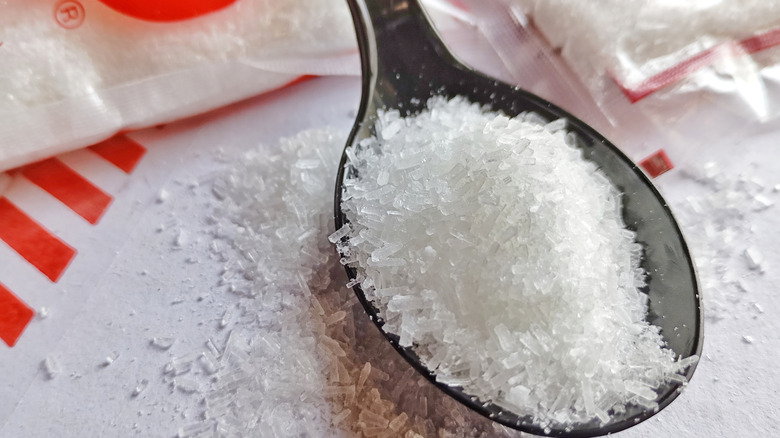
There is one thing that sets bloody marys apart from other cocktails, and it's not just salt. It's umami, or savoriness, which is present in foods like meat, mushrooms, shellfish, and cheese. This fifth taste was identified and named by Japanese chemistry professor Kikunae Ikeda in 1908, and he isolated the specific chemical compound responsible for it: monosodium glutamate, or MSG. Though originally extracted from seaweed, today's MSG is made from starches or sugars. Just a pinch boosts the cocktail's umami and perfectly complements a bloody mary's myriad toppings.
The wonderful thing about plain MSG is that it can be kept in your pantry almost indefinitely, and a little goes a very long way. Just a pinch in a pitcher of your tomato-forward brunch brew will greatly improve its flavor, so even a small packet will last a long time.
MSG has gotten a bad rap over the years, but it's mostly unfounded and rooted in racism. It started with a letter that a Chinese American doctor sent to the New England Journal of Medicine describing certain symptoms after consuming northern Chinese food. Responses came pouring in with completely unrelated symptoms, followed by a series of poorly conducted experiments specifically targeting MSG. The mass media caught on, and the rest played out like a middle school gossip chain. Since then, research has indicated that MSG is generally safe to eat.
Upgrade your bloody mary with umami-rich ingredients
There is no denying that certain people may be sensitive to MSG. Luckily, glutamates, the compounds that give MSG its mouthwatering properties, are actually naturally present in many foods, including tomatoes. The fruit's umami is even more pronounced in concentrated products, like tomato juice, but a dollop of tomato paste in your bloody mary mix will make it even more savory. Sun-dried tomatoes can also provide an added dimension of flavor.
Parmesan is another great source of glutamates that you could grate over your cocktail, or you can simmer its rinds in tomato juice and chill the mixture before assembling your drink. Add a little basil, and you have an Italian riff on a classic that would pair beautifully with a rosemary and olive frittata.
Many Asian ingredients are powerhouses of umami, and this is one of the reasons MSG became so popular in many cuisines throughout the region. Soy sauce is perhaps the most readily available glutamate-packed Asian ingredient you can find in stores. If you're concerned about your bright-red bloody mary turning maroon, try sourcing white soy sauce. Miso paste will also add a big boost of umami to your cocktail. Kombu, a type of kelp, has some of the highest concentrations of glutamates of any food, and making a simple broth with it can boost the savoriness of your recipe. Fermented fish, like anchovies, also pack a powerful punch, and even adding a few dashes of Worcestershire sauce to your brunch cocktail will give it more flavor and nuance. Or you can double up on the savoriness with some fish sauce.