

The Third Spice Shaker That Used To Sit At Restaurant Tables With Salt And Pepper
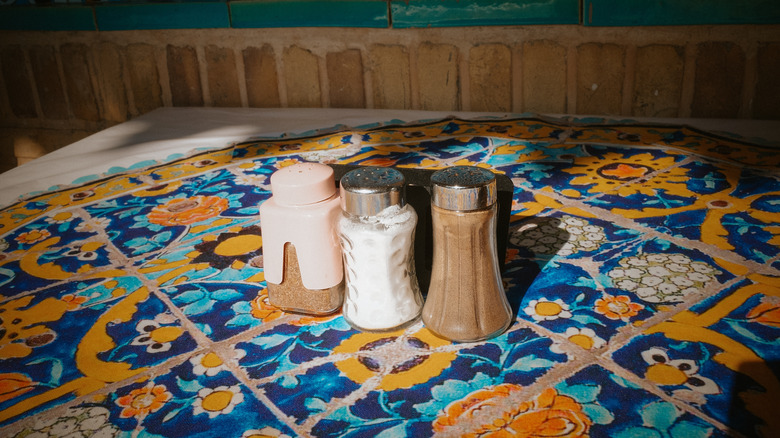
Nowadays, salt and pepper are the tableside stalwarts. Yet through the early 20th century, a third shaker appeared in the mix. Included in dedicated stands and depicted in drawings, the additional seasoning was widespread in Victorian-era England. By the early 20th century, it had slipped into obscurity, leaving few footprints behind. Looking back, people have speculated that such shakers contained everything from paprika to sugar. Most strongly, though, the evidence suggests the third shaker contained dried mustard.
Although now reserved for making salad dressings and glazing meats, mustard formerly played a larger role in British dining. In use since Roman times, an 18th-century innovation in milling and de-husking sharpened mustard seed's flavor, further boosting its use. Around this time, the mysterious third shaker appeared on tables.
Unfortunately, precisely how diners used dried mustard at the table is now a mystery. Most likely, the spice was sprinkled on slow-cooked meats and used to make dressings, as well as other sauces. Some suggest the use of mustard gave rise to the culinary term "deviling," hence its appearance in classic deviled egg recipes. A mustard shaker played a role similar to that of a hot sauce bottle today, conveniently adding a dose of spice to suit personal taste.
Culinary history shows that tabletop condiments constantly change
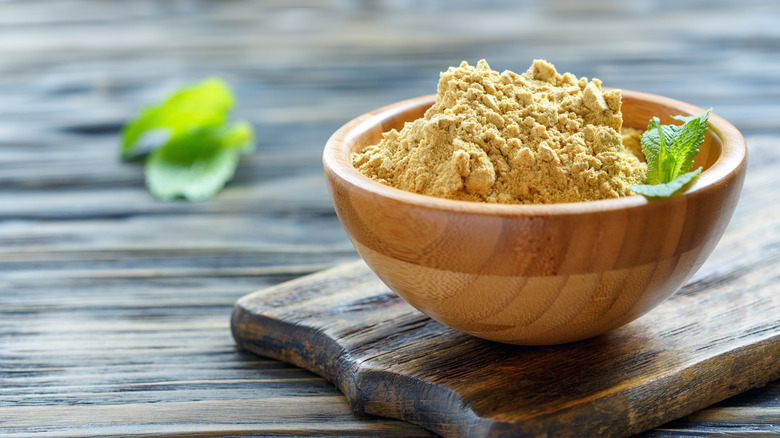
Today, it's hard to imagine a dining table without salt or pepper, although some fine-dining restaurants no longer provide the shakers. Just as ground mustard seeds went in and then out of style, other seasonings once graced dining tables, too. After all, the inclusion of mustard in the third shaker isn't definitively established, but rather the most widely accepted theory.
For instance, Victorian cruet sets occasionally contained inscriptions for cayenne, suggesting the fiery pepper powder appeared tableside. Introduced to Europe in the late 15th century, the spice was first used as a black pepper substitute. Others suggest milder paprika might have occasionally appeared in a shaker, too, incorporating pepper flavors in a sweeter form.
Diners long incorporated savory flavors, too. Vintage British jars once contained the salty, umami notes of anchovy paste. In the early 18th century, British cooks also crafted proto-ketchups, using everything from mushrooms, alcohol, vinegar, and fish to make complex sauces. Tomatoes appeared in the subsequent century, laying the groundwork for the beloved ketchup-and-mustard combo. Today, we may no longer serve a dedicated vessel for every seasoning type. However, peek into a typical fridge, and it's clear that seasoning fervor is as strong as ever.