

Why You Shouldn't Grill Food On Rusty Grates

Whipping out the barbecue is never a bad idea, but a few common mistakes can quickly turn a crowd-pleasing cookout into a major flop. There's no question that the best part of barbecuing is the grilling itself. The cleanup? Not so much. Still, neglecting your grill can seriously affect the quality of your food. One major culprit is rusty grates, which will quite literally leave a bad taste in your guests' mouths.
Let's get the science-y bit out of the way: When exposed metal reacts with oxygen and moisture, it chemically forms iron oxide, aka rust. Moisture can come from a variety of common sources, such as rain, humidity, and even juices from your food. These factors become far more troublesome if you're working with an outdoor grill that's exposed to the elements. While most new grills are typically sold with a protective coating designed to prevent rusting, repeated use causes wear and tear that will inevitably degrade the coating over time.
Aside from being a total eyesore, rusty grill grates are usually behind several annoying problems. For starters, rust can affect flavor, leaving your meats and vegetables with unpleasant metallic notes that overpower the smoky barbecue flavors you actually want. Rust also creates a rough, uneven surface, making food more likely to stick and tear when you try to flip or remove it. As for health concerns, accidentally swallowing a tiny amount of rust is usually not dangerous for most people, but finding loose rust flakes lingering in your otherwise perfectly juicy burger is a guaranteed appetite killer.
How to prevent rusting and keep your barbecue in top shape
If you're in the market for a new barbecue, it's always worth paying attention to the materials. A high-quality grill may cost more upfront, but it'll usually be far easier to maintain in the long run. The gold standard is 304-grade stainless steel. That's largely thanks to its high chromium content, which reacts with oxygen to form a protective layer that shields the metal from corrosion. Of course, that level of durability comes at a price, and grills made from this material often sit at the premium end of the market.
For a more budget-friendly option, porcelain-coated grates are a solid choice. These resist rust thanks to a baked-on protective ceramic coating. Just be mindful not to chip or crack that coating, which will leave the exposed metal vulnerable. It's also worth noting that, no matter what type of material you're using, leftover grease and food debris can cause a whole host of problems. They trap moisture against the metal, and acidic marinades can wear down the protective coating. To keep your grill clean of grease, simply apply a mixture of baking soda and water.
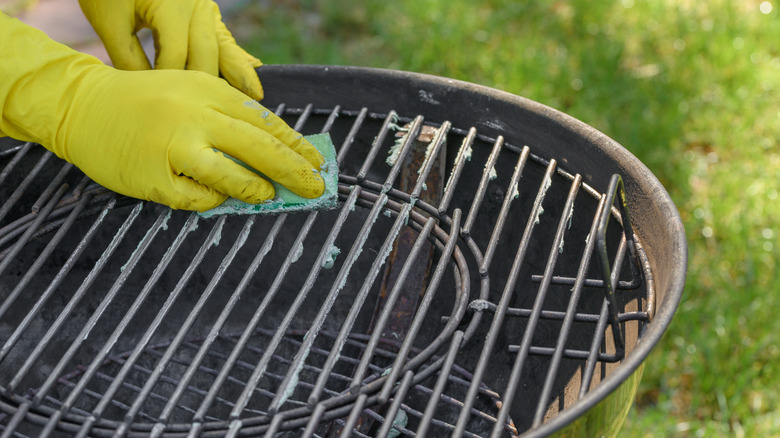
Rust is notoriously persistent, but it's usually pretty easy to tackle. For light rust, remove the grates and scrub them thoroughly using a crumpled ball of aluminum foil, along with a paste of baking soda and water. Rinse, and then use vinegar to dissolve any remaining hard water scales or light rust. Don't go all in with an aggressive metal scourer, as deep scratches can damage protective coatings and leave the surface even more vulnerable to rust. If you're dealing with heavier rust buildup, consider investing in a grill-safe rust remover.