

How Much Caffeine Is In A Shot Of Espresso Vs A Standard Cup Of Coffee?
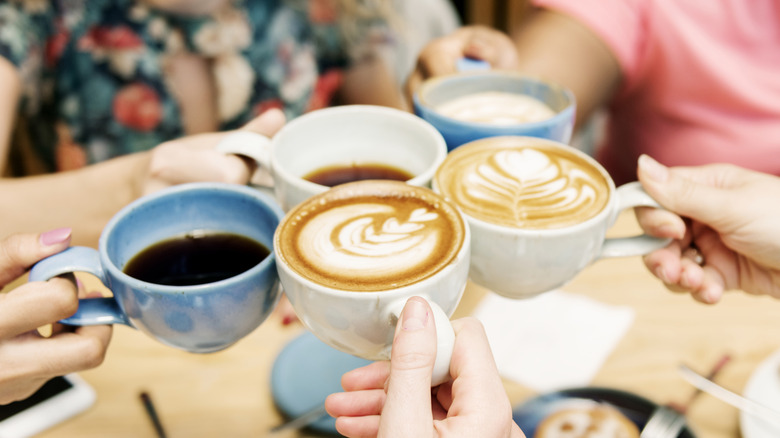
For fans of the beverage, coffee is delicious, a complex drink enjoyed both hot and in various iced forms. Let's just be honest, though — caffeine is likely the main reason for the drink's success. The complex compound is a daily cornerstone for many Americans, enhancing alertness alongside a breadth of other physiological effects.
Every person has their own daily caffeine habit. Some might drink just one cup and call it a day, while others follow the habits of Teddy Roosevelt and consume a gallon. Generally, you'll want to stick below the U.S. Food and Drug Administration's daily guideline of 400 milligrams — roughly four cups of regular drip coffee — but the typical caffeine experience varies hugely from person to person. So, to help keep track of the potentially jitter-inducing compound, it's helpful to note the caffeine content in classic beverages, such as a shot of espresso versus a cup of drip coffee.
Although these are two supremely popular coffee drinks, both come with only approximate caffeine estimates, as precise measurements are difficult. Coffee strength doesn't derive exclusively from the brewing method, but also from the type of coffee bean. For example, robusta — which appears in both espresso blends and instant coffee — naturally contains about twice as much caffeine. Roast type influences the strength, too, as does grind size. Still, as a general approximation, note that espresso contains more caffeine per ounce, but when evaluated over an entire serving size, a standard cup of coffee is actually more energizing. According to the USDA, a standard 2-ounce serving of espresso contains 127 milligrams of caffeine, compared with an average of 24 milligrams for the same volume of regular brewed coffee; though a standard 12-ounce mug of drip coffee climbs to about 144 milligrams.
Espresso is a highly concentrated coffee brewing method
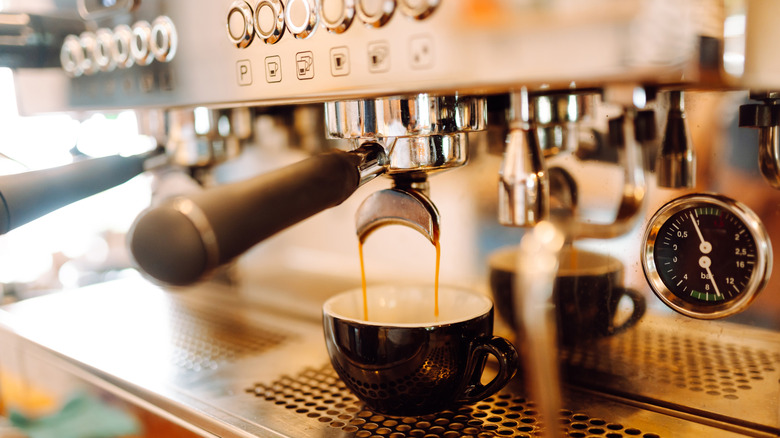
Espresso is an efficient coffee delivery mechanism. The brewing process, first developed in Italy during the early 20th century, entails pushing hot water through super-finely ground coffee under intense pressure. The result is a concentrated liquid, traditionally enjoyed in a 1- or 2-ounce shot. Frequently crafted using a dark roast, both the resulting flavor and the customary serving style suggest that espresso is a strong coffee style.
To some extent, that's indeed true — espresso is rivaled only by some hyper-strong cold brew concentrates on a per-ounce basis. For this reason, the coffee style bodes well for standalone consumption, as well as dilution into beverages like lattes and americanos, or even pairing with tonic. Compared with a classic cup of coffee, espresso is easier to mix into flavored beverages, making it sneakily caffeinating.
Not to mention, the mechanics of an espresso shot escalate its strength, too. The brewing technique requires one of the finest grind sizes, thereby optimizing caffeine extraction. Some mistakenly attribute the accompanying bold flavor to caffeine, which is a common misconception. Otherwise, though, it's a brewing system that indeed invigorates.
Volume and brewing time make drip coffee surprisingly strong
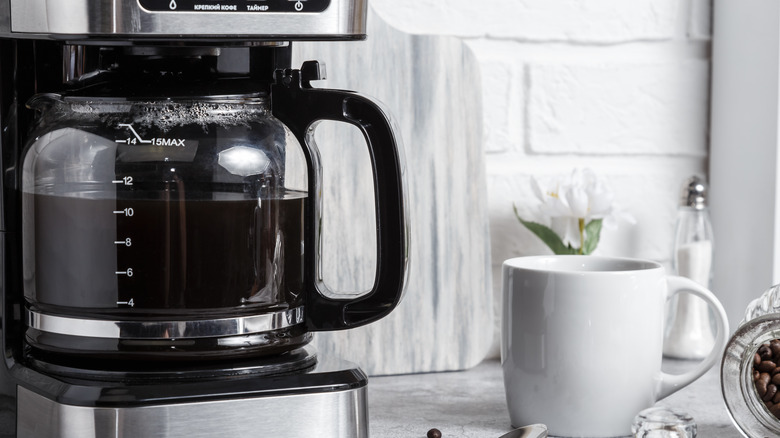
A cup of coffee can refer to many styles of beverage. For Americans, an especially common preparation is drip coffee, served by the refill at diners. Compared with espresso, this style doesn't come with a standardized serving size, which complicates tracking caffeine. More often than not, a cup of joe is served in a 12-ounce mug, which contains approximately 144 milligrams of caffeine.
So while espresso certainly offers more caffeine per ounce, drink a typical cup of java, and you'll get more of a buzz. This surprising quality emerges for several reasons. Undoubtedly, the larger serving size plays a role. To craft a 12-ounce cup, you'll need approximately 21 grams of coffee, while a double shot of espresso starts with around 17 grams. Extraction-wise, drip coffee opts for a coarser grind (meaning less caffeine is extracted at any given moment), but it also entails a significantly longer extraction time to compensate.
Plus, without a designated machine, drip coffee widens the variables. The preparation technique welcomes a broader array of bean styles and roasts, resulting in a brewed cup that varies drastically in strength. A tall (12-ounce) coffee at Starbucks packs about 260 milligrams of caffeine, for example. However, a weak batch can dip below the 100-milligram mark. More often than not, though, the brew comes out strong, making a mug of drip coffee the more energizing standalone option.