

How To Fix An Uneven Stove Flame So Your Food Turns Out Right
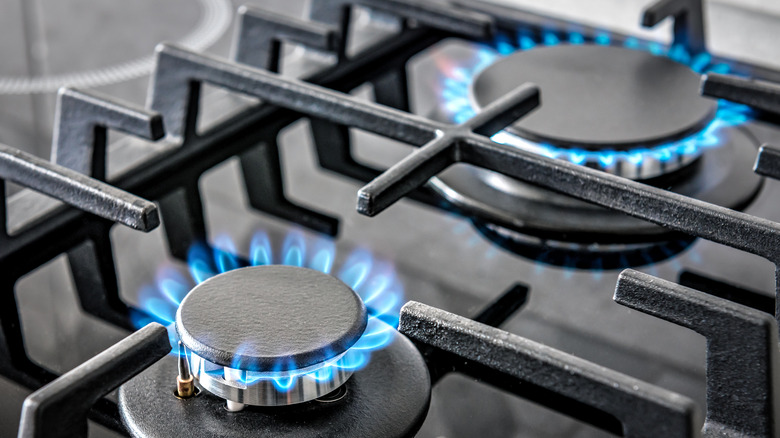
Generally, gas stoves are beloved by home cooks for their instantaneous heat and accompanying precision. Yet the kitchen appliance requires more maintenance than an electric stove, and therefore comes with an uptick in potential problems. One such issue that can trouble stove users is an uneven flame. Ignite a burner, and the blue flare might pop up on only one side, leading to both a lack of heat and inconsistent heating.
It's a frustrating issue that undoubtedly tempts you to call a repair technician. Thankfully, with a little know-how, it's perfectly doable to fix the issue yourself. First, you'll want to know how to take a gas stovetop apart for cleaning. Start by carefully removing the stove cap and base. Occasionally, the issue may simply be caused by these two parts being unbalanced. More often than not, however, the weak flame results from a buildup of debris.
Several parts of the system could use a cleaning. So grab a nylon scrubbing pad or a soft brass-bristle brush for rigorous maintenance, and scrub the grooves of the burner head. Food debris often gets lodged here, thereby displacing the flame. Apply the same vigorous scrubbing to the underside of the cap. Additionally, you'll want to target the gas ports, too. Use a paperclip to poke through the openings, both in the center of the burner and the surrounding holes. With such a quick, yet thorough, touch-up, the stove should be back to burning properly.
More stove maintenance tips to consider
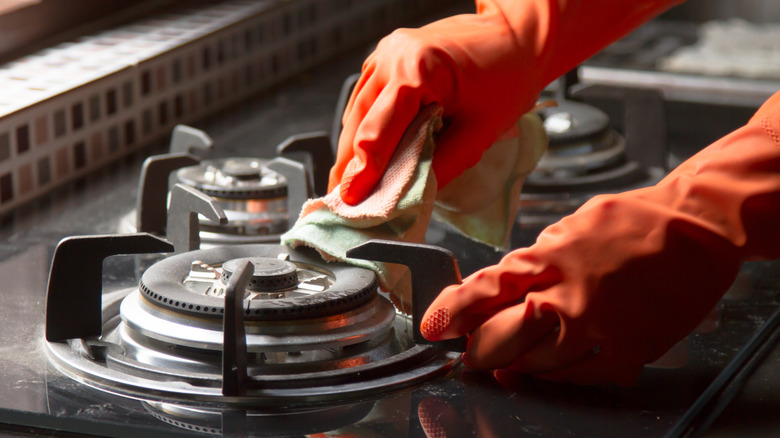
Whether you're using a gas stovetop to smoke food or whip up mouthwatering stir-fries, the appliance undergoes plenty of heavy-duty use. Yet it's all too easy to let maintenance fall by the wayside, leaving troubleshooting until problems arise. Like any other appliance, it's a good idea to give your gas stove some TLC.
In addition to cleaning the caps and bases, don't forget about the grates, too. Give the top stove layer a scrub, then soak the grates in hot, soapy water for a good 20 minutes. Doing so will prevent gunk from accumulating deeper in the stove system. Simultaneously, don't forget to thoroughly wipe the stove knobs, as well as other parts of the stovetop and the hood vent filters.
However, stove maintenance isn't only about cleaning, but also keeping a close eye out for potential issues. Look for a uniform flame pattern before problems accumulate, and verify the flame color. An orange or red flame, rather than a blue one, indicates incomplete combustion, which can produce dangerous carbon monoxide. Furthermore, test the ignition spark, as excessive clicking could occur due to trapped moisture, debris, or more complex technical problems. And don't forget to glance at the oven; the door gasket should always seal properly. With such thoughtful maintenance, your gas stove will be ready to rip, crafting pan-seared ribeye steaks and reducing sauces without issue.