

The Average Lifespan Of A Good Set Of Steak Knives
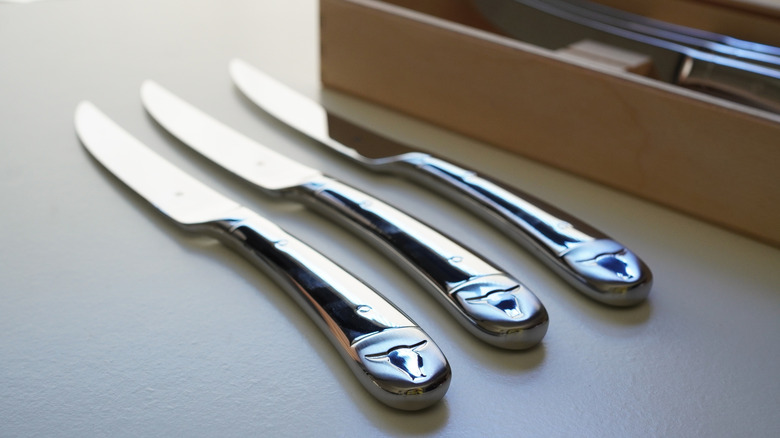
If you've ever wondered whether it's time to retire your trusty steak knives, you're not alone. The good news is that a well-made collection can outlast most other kitchen purchases by a wide margin. In fact, a quality set of steak knives can realistically be expected to last between 20 and 30 years, but reaching that milestone requires more than just buying the right blades. How long yours last will depend heavily on the type of knife, how you use them, and the care you put in along the way.
One of the biggest factors is whether your knives have straight or serrated edges. Serrated blades tend to hold their cutting ability longer because the teeth make contact only at their peaks, meaning the deeper valleys of the edge never touch the plate or cutting surface and are largely protected from wear. Straight-edge knives, by contrast, demand more consistent upkeep, including honing after use and sharpening every couple of months, but reward that effort with cleaner, more precise cuts through even the most tender and juicy steaks.
How to care for your steak knives
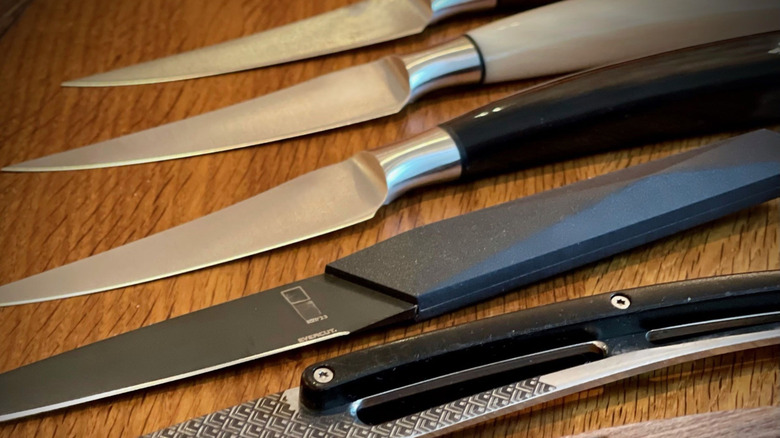
Even the finest steak knives will deteriorate prematurely without proper care, and the difference between a set that lasts a few years and one that lasts three decades comes down almost entirely to routine habits. The dishwasher is the single biggest threat to a quality knife. The intense water spray can cause blades to rattle and strike other utensils, chipping their delicate edges. Additionally, the high-heat cycles can warp, split, or loosen handles, while harsh detergents chemically attack the steel, causing pitting and rust. Hand-washing in warm, soapy water followed by immediate drying is the only method worth using, even if the label says otherwise.
Storage matters just as much as washing. Tossing damp knives into a cluttered kitchen drawer risks both bacterial growth and dulled edges from contact with other metal utensils. A quality knife block or magnetic strip keeps blades separated and dry. Even the best storage won't substitute for consistent sharpening. If you'd rather leave that to a professional, it's possible to have your knives sharpened at some grocery stores.
It's also worth being deliberate about what you buy from the start. High-carbon stainless steel blades offer superior edge retention and corrosion resistance compared to lower-grade steels, while budget knives tend to dull faster and respond poorly to repeated sharpening. However, there are plenty of trusted, affordable knife sets as well. If you treat your utensils like the long-term investment they're meant to be, you can realistically reach that 20-to-30-year lifespan.