

How McDonald's Ketchup Is Slightly Different From Heinz
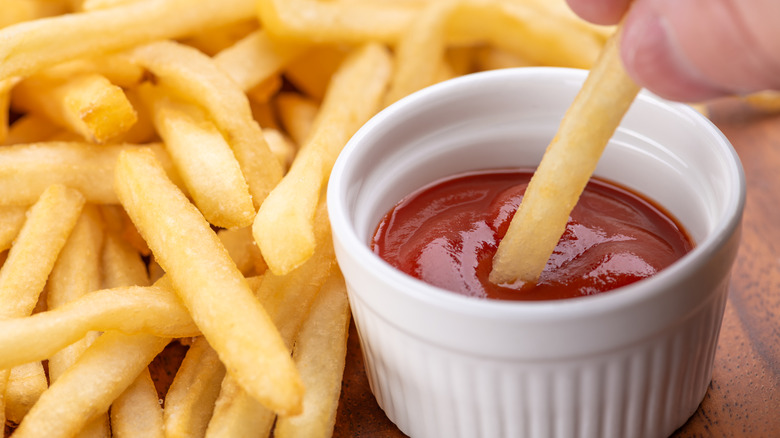
When enjoying fast food, ketchup plays a prominent role. The sauce is spread onto sandwiches, dipped alongside fries, and squeezed onto nuggets. As such a cornerstone flavor, it comes as no surprise that consumers keep a close eye on the condiment landscape. So, in 2013, McDonald's made headlines by announcing a split from Heinz ketchup. The move occurred because Heinz appointed a CEO from Burger King, McDonald's longtime rival.
Heinz and McDonald's had collaborated since the 1970s, meaning customers long enjoyed the iconic condiment at the famed fast-food chain. Following the breakaway, the Golden Arches swiftly rolled out its own ketchup recipe, continuing to serve a USDA Grade A ketchup that satisfies criteria for taste, texture, and appearance.
Customers were quick to notice a few tweaks. In its iconic sweet-savory tomato formula, ketchup packs delicate variations, with slight nuances noticeable between McDonald's and Heinz. Differentiated in both flavor and consistency, there's a surprising condiment contrast between the two famed brands.
McDonald's ketchup delivers a distinct sweet-and-vinegary punch
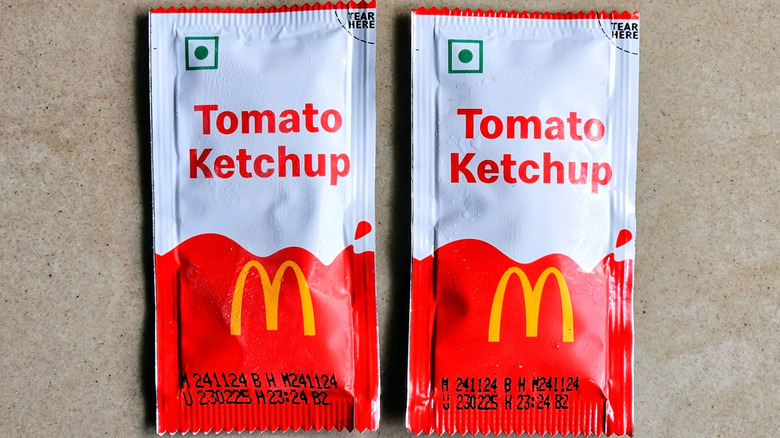
McDonald's version of the condiment keeps it standard, mixing together tomato concentrate, distilled vinegar, high-fructose corn syrup, corn syrup, water, natural flavors, and salt. Compared to Heinz, consumers find the Golden Arches' ketchup more liquid in composition and less spiced in taste.
"It's usually a tad sweeter and more vinegary," wrote a Reddit user. By composition, the two are similar: Heinz contains 4 grams of sugar per tablespoon, while McDonald's contains 3.74 grams. However, with fewer bold ingredients in the mix, it's understandable that the sugar and tomato flavors shine through more prominently.
The differences certainly aren't negligible, with fans supportive of both brands. Not to mention, the context in which they're consumed plays a role, too. McDonald's ketchup typically comes in a room-temperature packet, squeezed over a hot batch of gloriously greasy french fries. Meanwhile, Heinz is squirted out of its iconic, often refrigerated, 57-labeled ketchup bottle, further delineating the two condiment experiences.
Custom ingredients create Heinz's uniquely bold flavor profile
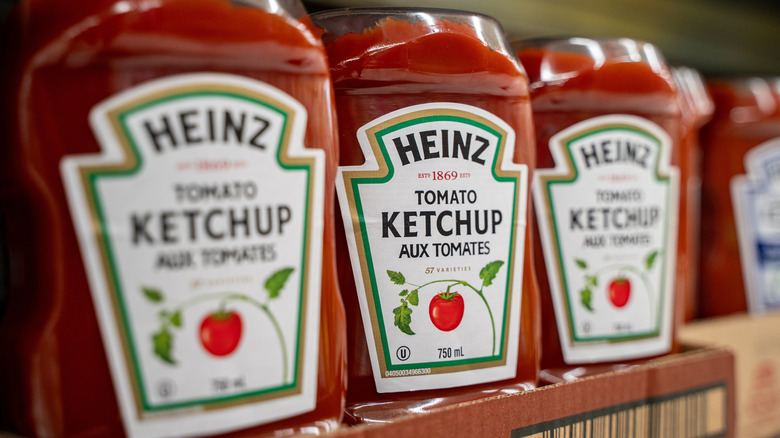
For many, the flavor of Heinz is synonymous with ketchup itself. First released in 1876, the brand has grown into a widely recognizable global giant. As with many ketchup brands, including McDonald's, the condiment is built around a straightforward ingredient list of tomato paste, vinegar, two types of corn syrup, and seasonings. The composition suggests that the taste should be similar to McDonald's, but a few subtleties make a considerable difference.
Most notably, Heinz employs a secretive selection of seasonings. There's assuredly onion powder, which is listed in the ingredient list, joined by undisclosed spices and natural flavors. Furthermore, Heinz utilizes ingredients produced in-house, which further sets its product apart.
All tomatoes in Heinz ketchup come from specific breeds created by the company. The brand also distills its own vinegar alongside ketchup production. Combined with the foundational spice mix, this establishes Heinz's signature bold palate. Consumers find the condiment more viscous and more heavily seasoned than McDonald's. "It perfectly balances the tomatoes and vinegar [taste, it's] spiced well and it adds great flavor to most dishes," noted a Reddit reviewer. It's an iconic brand with a dedicated fan base.