

The 2 Words Your Tequila Bottle Should Have
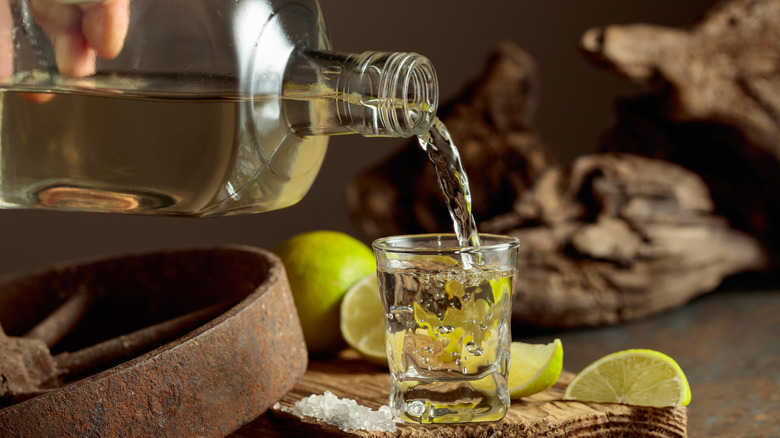
Tequila is an incredibly complex spirit. Crafting a bottle of the liquor involves growing exclusively Blue Weber agave for up to twelve years, meticulously harvesting the plant (often by hand), then following a precise fermentation, distillation, and optional aging process. It's laborious work — more than ten pounds of agave are required to craft a single bottle of tequila. Amplified by decades of demand, it's no surprise that some brands have cut corners to lower the spirit's price.
In times past, all distributed tequila was comprised of pure agave, a composition that's no longer the
case. Because of this, it's crucial to look for "100% agave" on your bottle to signal a high-quality variety. Per Mexico's Tequila Regulatory Council, all tequilas need to follow one crucial ratio for authentication, employing at least 51% fermentable agave sugar for distillation. However, bottles bearing the 100% agave label use exclusively agave — thereby containing no cane sugar or corn syrup-based distillate.
Although typically more expensive, 100% agave tequila oftentimes better translates terroir, showcasing the spirit's abundant intricacy. Whether enjoyed neat or made into a margarita, tequila's earthy-herbal character is more likely to shine through. Some brands manufacture impure tequilas — called mixtos — that deliver tasty palates, still functional in mixed drinks. However, to appreciate the depth tequila has to offer, look for the regulated 100% agave label.
100% agave tequila can still contain additives
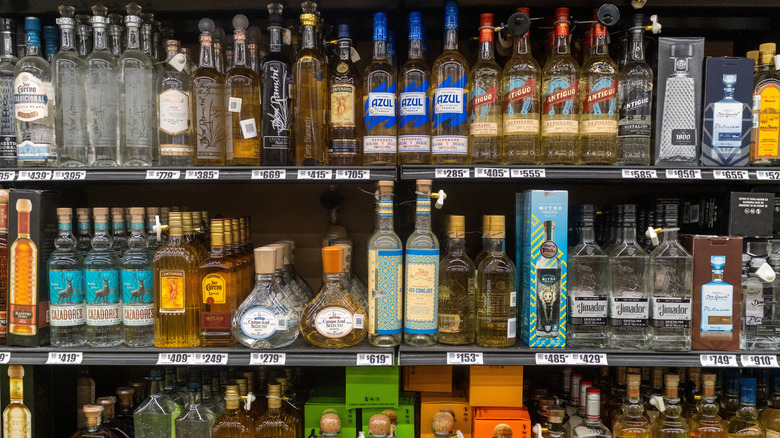
Even with such labeling help, knowing which tequilas to buy and which to avoid requires added expertise. A 100% agave label does not provide surefire assurance the spirit is high quality. Despite using exclusively agave, some batches might come out harsh, while others subjectively taste bad. Furthermore, the 100% agave label contains a glaring caveat. Regulation allows for 1% of the spirit by weight to comprise other additives.
Incorporated into tequila after distillation, such compounds can drastically alter the liquor, sometimes completely overriding the agave's natural flavors. The avenues of adulteration are numerous. Glycerin impacts the texture, lending the spirit more body to gloss over defects. Jarabes — various syrups — imbue artificial sweetness. And some brands even employ plain ole' vanilla extract to flavor tequila.
Unlike 100% agave tequila, Mexican regulation doesn't test for additives. Worryingly, grassroots initiatives to reveal additive transparency have even been targeted by the Tequila Regulatory Council. It's possible to find additive-free tequilas using industry markers like NOM or by using internet databases like AgaveMatchmaker. The process is complex, though, making the 100% agave tag only a simple shopping starting point.