

What It Means When Eggs Are Cloudy
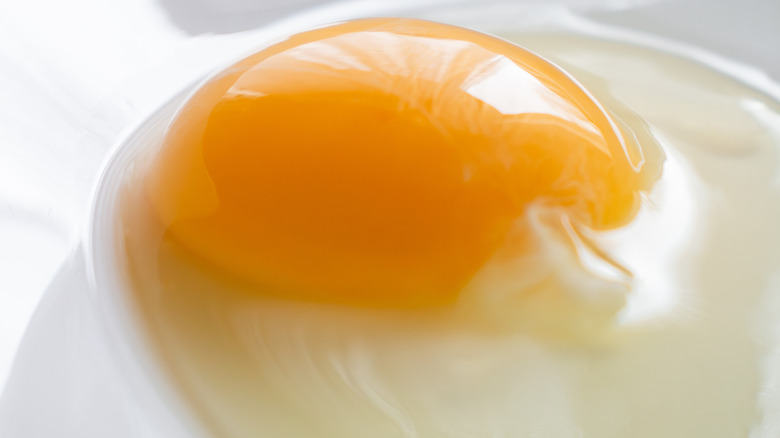
Eggs are one of life's ultimate convenience foods. You can cook them in so many different ways, then enjoy a tasty and reliable source of protein. Crack them open day to day, and the food is relatively standardized. Every once in a while, though, drop an egg into a pan, and it might look a little different — say, the white exhibits cloudiness. Spurred by historic fears of foodborne illness, the mind immediately goes to dark places. You might even be inclined to toss the batch; better safe than sorry, right?
However, cloudy egg whites actually signal the opposite: top-tier freshness. The effect occurs due to an accumulation of carbon dioxide that has yet to seep out of the shell. A completely natural phenomenon, the egg is not only perfectly fine to eat, but will likely taste even better than usual. Specifically, the texture comes with advantages, lending an extra-fluffy consistency that can ease the creation of restaurant-quality scrambled eggs in the comfort of home. So rather than a bad sign, take it as a fortunate one, making breakfast a little tastier than usual.
Other safe egg discolorations to note
In the world of eggs, navigating what's a good or bad signal can be tricky. While cloudy egg whites evince freshness, a cloudy exterior shell can signify spoilage, for example. After all, there are many ways to know if an egg is spoiled, with some (like a rotten smell) more obvious than others. Yet when you start examining the food's interior, deviations in appearance are often harmless.
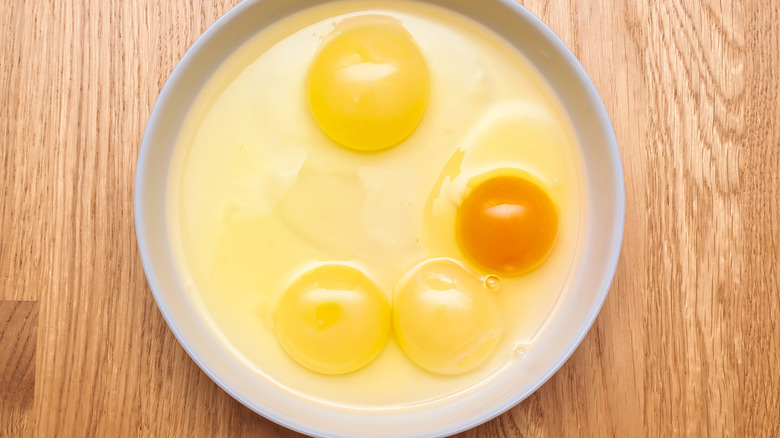
Take yolk color, for example. This hue stretches from a straw-like yellow all the way to a rich orange, possibly categorized on a nuanced scale. No color indicates an inedible egg. Instead, the pigment largely correlates with the hen's diet, signaling both the type and variety of food consumed. Typically, darker orange yolks are more coveted, evincing a natural grass-fed diet. So crack open an egg with a cloudy white and a rich orange yolk, and it's optimally farm-fresh.
A tiny red spot in the yolk is another benign discrepancy. This effect occurs due to a burst blood vessel — a defect that doesn't impact the culinary experience. Plus, unusual colors, like green on a yolk or tiny traces of brown in an egg white, might appear due to excessive cooking. Egg interiors can display an array of hues, not all of which are harmful.