

This Best-Selling Beer From The '80s Is A Creamy Classic

During the 1980s, American beer culture was at an intriguing stage. Consumption was at an all-time high, but the landscape was changing. Once-classic top brands like Schlitz were on the way out, eclipsed by still-reigning domestic giants like Anheuser-Busch and Bud Light. Economically, easy-drinking light lagers still ruled the land, while imported beers like Heineken and Corona drew abundant interest.
Yet, for the first time in decades, small-scale American brewers started to make their mark on beer culture. Interest in new beer styles grew, with now-iconic makers like Sierra Nevada, Bell's Brewery, and Samuel Adams making their debuts during the decade. As part of this brewing renaissance, another best-selling beer style was on offer: Genesee Cream Ale. From the late 1970s to the mid-1980s, the Rochester, New York-based brewery sold plentiful cans.
The beer did not debut during this era. Genesee Cream Ale first came out in 1960, while the cream ale style had already served as competition for lagers during the 19th century. Forced into near-obscurity following Prohibition, cream ale eventually reemerged, with Genesee becoming one of the style's leading producers and reminding American consumers of the wider range of beer options available. Much like the strong Pennsylvania ties of Yuengling, America's oldest brewery, Genesee is buoyed by a proud Rochester fan base, making it a regional favorite that found success nationwide.
Tracking the rise of the American cream ale
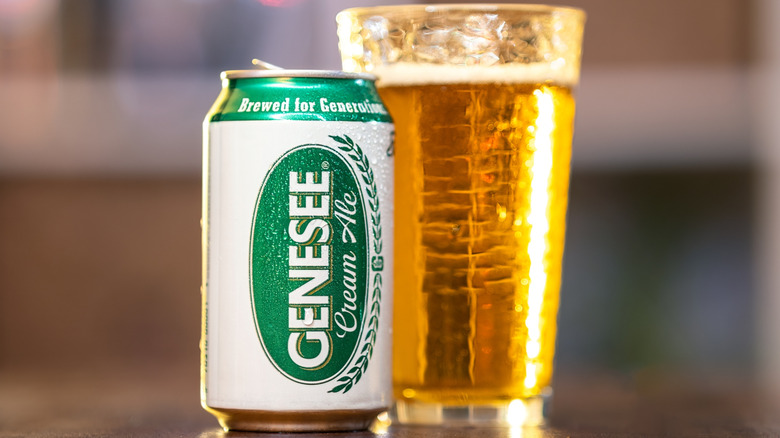
So what is this soft-sounding cream beer, and what makes it so special? First, it is important to note that the brew style is an ale rather than a lager. This means the yeast is fermented at warmer temperatures, resulting in a fuller-bodied, often boozier beer. However, cream ales are designed to mimic some of the qualities of a lager while using ale-making techniques. Genesee Cream Ale comes with a touch more alcohol, at 5.1% ABV, compared to the roughly 4% ABV common among many popular light lagers in the U.S.
The cream name, however, is somewhat misleading. The style comes with a touch of bitter bite; creaminess is not a defining characteristic of the category. Instead, Genesee's rise can be attributed to its role as a lager alternative, brewed with a bit more character while maintaining effortless drinkability. Since its 1960 debut, it has won several awards and continues to be widely sold and distributed. It was not the first cream ale, however: Krueger's Cream Ale, released in 1935, was associated with the early era of canned beer in the United States. And with the explosion of craft beer, a wide range of cream ale renditions have followed. However, few have maintained a market presence quite like Genesee.