

Pepsi Once Tried Selling This Vending Machine Snack In Soda Cans
We may receive a commission on purchases made from links.
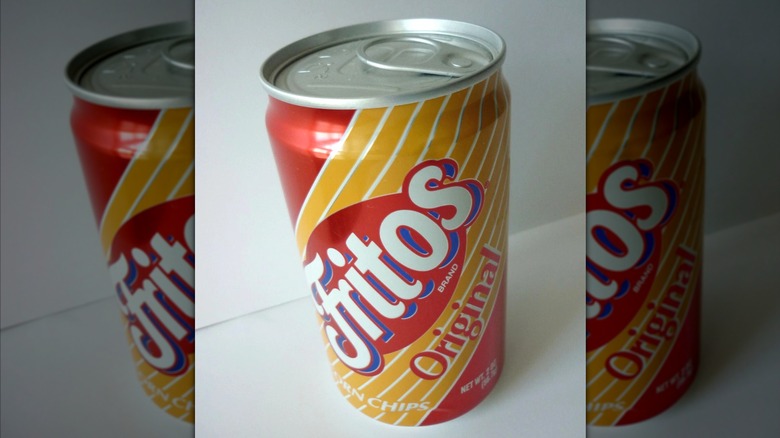
From the rise of prebiotic colas to the explosion of canned mocktails, an increasing selection of drinks now ends up in a soda can. Still, it's hard to top the uniqueness of a late-1990s PepsiCo release, when the brand packaged Frito-Lay chips in a can. The two companies merged in 1965, and never was a brand crossover so literal.
Visually, the original chip cans were striking. The Fritos rendition came with bold yellow stripes underpinning a classic logo. Meanwhile, a 1996 Doritos release bore a sideways logo and a splash of crayon-like red coloring — an aesthetic reminiscent of a La Croix can. The cans featured pull-off tops, enabling on-the-go snacking. Such packaging prototypes only ran for a few years, making the now-rare cans collectible items.
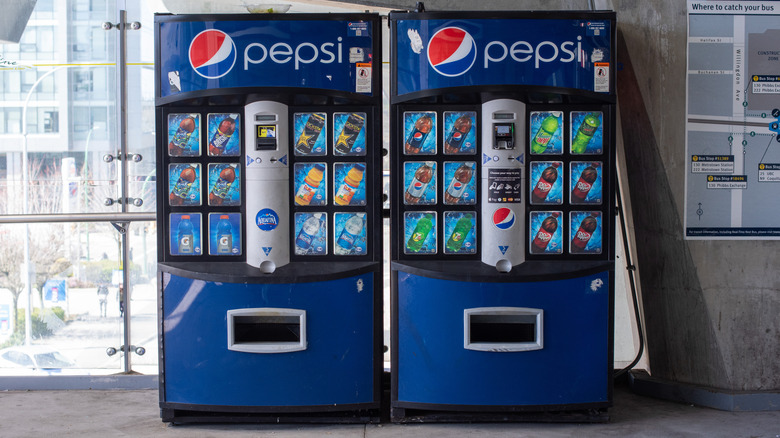
PepsiCo released the product to ease automated sales alongside sodas and to curate product placement inside vending machines. However, the momentum never picked up, and distribution failed to expand past select test markets. Mechanical issues further stalled growth, making the release a unique blip in time rather than a widespread form of packaging.
Snack history is filled with unconventional container designs
Soda can chips aren't the sole occurrence of tinned crisps. There's the widespread Pringles brand, distributed in a cardboard can with a metal base. The rigid construction enhances shelf stability and prevents crushed crisps — an integral foundation for the brand's expansive flavors. Prior to PepsiCo's soda can test run, the company also released Fritos in a spacious 9.5-ounce can, with dimensions designed for dipping into bean or cheese dips (although not ideal for making a Frito pie).
PepsiCo has undertaken a range of other experimental containers, too. In 2010, the brand made headlines with the release of fully compostable SunChips bags. Crafted using plant-based polymers, the packaging broke down efficiently while still ensuring optimal freshness. Unfortunately, the bag was discontinued the same year due to its overly loud sound. In Australia, a similarly environmentally minded initiative rolled out in 2025, with multipacks housed in cardboard in lieu of plastic. The brand continues to update its packaging sustainability goals, signaling a new direction in container research and development.