

Why Some Restaurants Only Accept Cash For Payment
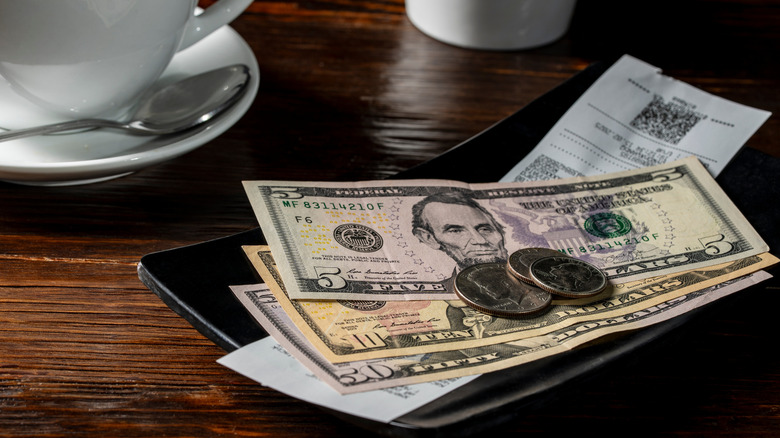
Eating out is fun and all — until it comes time to pay. Whether you're dining with bad tippers or feeling nervous about how to split the bill, paying for food inspires understandable stress. Sometimes, nervousness can even surround the form of payment itself, like when a restaurant only accepts cash.
While largely a relic of times past, some estanlishments continue to take only paper currency. The practice is more common among petite eateries: food trucks, mom-and-pop restaurants, and hole-in-the-wall spots. Oftentimes, the mode of payment is listed on the door, but occasionally, there's an unspoken understanding among decades-long regulars. Some eateries might even house an ATM to make transactions possible.
So why do such restaurants still exist, despite the prevalence of credit cards and mobile payment options? Largely, it all comes down to credit card processing fees. The expense comprises a steep financial burden, averaging around 2% to 4% of each transaction. Many banks even set additional swipe fees, often around 30 cents per payment. For small-business owners, this adds up to a considerable added expense. Meanwhile, cash is instant, reliable, and consistent. Books can be tallied at the end of the day, and chargebacks aren't a possibility, cementing paper currency as a favorable payment option among small-business owners.
Cash use is declining in the food industry
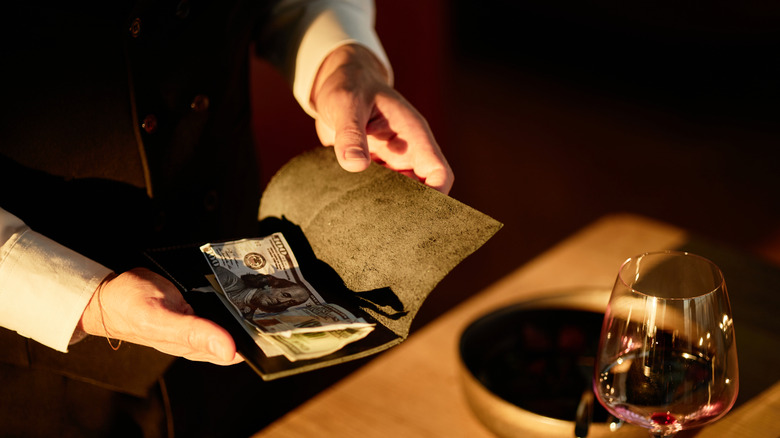
Whether you're swinging by a unique dive bar or an old-school sandwich shop, cash-only businesses typically feature a few unifying factors. Most have long been in operation, as opening a cash-only eatery in the modern era is a struggle. Many sell a food experience that's fast and cheap, with a business model built around a high volume of transactions. Plus, cash-only eateries often exude a no-frills charm, with customers paying in cash as a sign of respect for a cherished spot.
It's a mode of operation that's becoming increasingly uncommon. In the U.S., the credit card payment system is ubiquitous, not to mention the cashless initiatives amplified during the COVID-19 pandemic. Maintaining such a payment model increases the odds of losing business — some customers may simply walk away when confronted with a "cash only" sign.
Subsequently, most restaurant owners choose to accept cards and offset the fees either by increasing menu prices or transparently adding the charge to the tab. The payment issue remains a source of tension for business owners, despite not often being considered by consumers.