

Bacon Vs Turkey Bacon: Which Breakfast Meat Has More Protein?
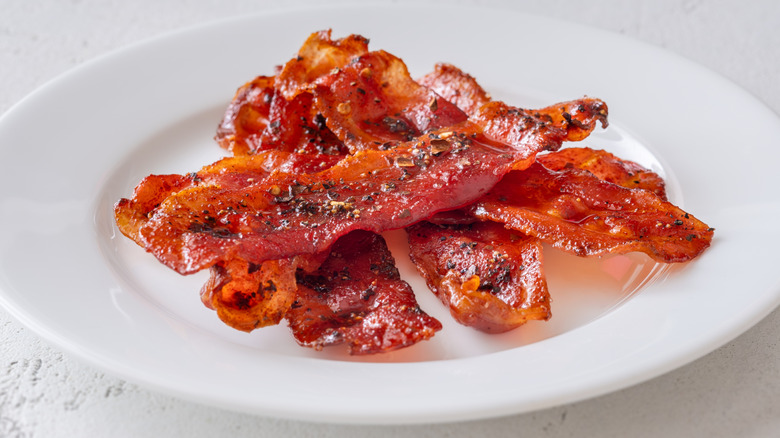
"Beef. It's what's for dinner" was a popular campaign slogan launched in the 1990s to promote the American cattle industry and beef consumption. On the opposite side of the day from suppertime, one might well say, "Bacon. It's what's for breakfast." The crispy, fried meat strips have long been hailed as a popular morning favorite among Americans, and the bacon market was valued at a staggering $85.03 billion as of 2025 (per Mordor Intelligence). Whether your favorite early meal is a bacon lardon-filled full English quiche or you prefer the tasty pairing of bacon and eggs, this classic breakfast staple is a go-to for many.
While bacon is traditionally pork-based, an alternative product gained popularity during the low-fat diet craze of the '90s: turkey bacon. While fattier pig-derived bacon still reigns supreme, leaner turkey bacon has remained steady as a favored choice among many consumers. But which one serves up more protein? In terms of that macronutrient, there actually isn't much difference between pork bacon and turkey bacon. Each product offers, on average, between 3 and 5 grams of protein per slice, with pork bacon sometimes clinching a very slight edge at around 6 grams per slice (though turkey bacon can also match that number depending on the brand's thickness and formulation).
From the perspective of protein intake, therefore, there isn't a significant advantage to choosing one type of bacon over the other. Other considerations might influence one's decision regarding which meat should star in your favorite recipes. For instance, if these factors are important to you, turkey bacon is lower in calories and saturated fat. Both products have comparable sodium content, though, unless you buy reduced-sodium bacon.
Both types of bacon lend flavor, texture, and protein to recipes
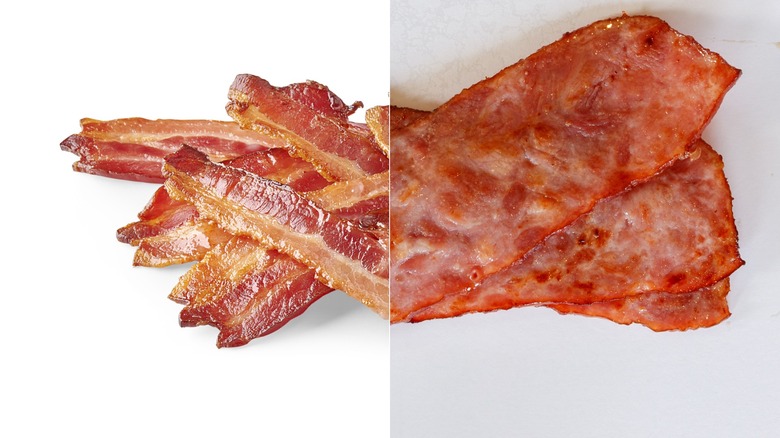
Since the protein content is similar between pork and turkey bacon, the great news is that either product lends a comparable boost when added to recipes. Before including either in your cooking, though, it helps to understand some key taste and texture differences, so you can choose the one that melds best with a particular meal.
The pork-based bacon most often eaten in the United States is made from pork belly and has a salty, smoky taste. The fat content adds richness, and pork bacon cooks up very crispy. It's an ideal topping crumbled over things like salads and baked potatoes, adding both crunch and umami. Bacon doesn't have to be crispy to be a wonderful addition to recipes, though — it's terrific in its floppier form for wrapping things like jalapeño poppers and pigs in a blanket. Raw bacon also lends savoriness and cooking fat to dishes like Dutch oven potatoes, never becoming crispy because it's cooked differently in that preparation.
While pork bacon is made from a whole cut of meat, turkey bacon is made from ground meat formed into bacon-like pieces. It has a milder flavor and chewier texture, and it never reaches the crispness of pork bacon. Because it doesn't have the heaviness of its pork cousin, it works well in lighter recipes that pork bacon might overwhelm. Turkey bacon makes a great addition to recipes like vegetable stir-fries and comforting soups, adding a light protein boost. Its chewier texture also makes it somewhat more cold cut-like when layered into sandwiches and wraps.