

Give Vegetables A Flavor Boost With This French Sauce
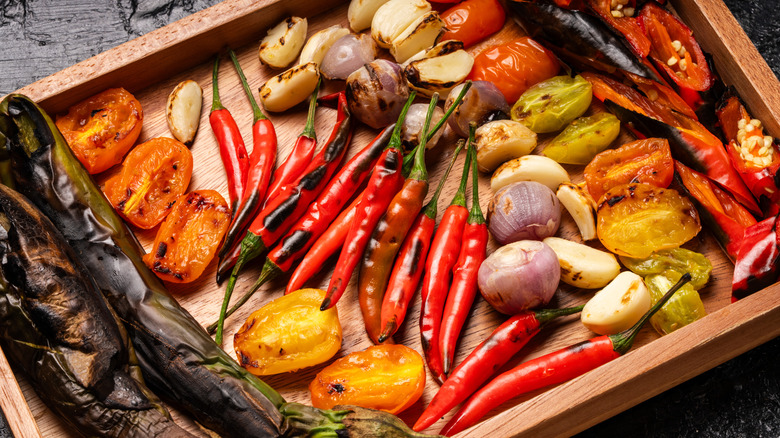
Common recipes that prepare vegetables with cooking fats are all about upping heartiness while pairing with their natural sugars. Anthony Bourdain even said that the key to restaurant-worthy veggies at home was to lean into the butter for the best possible taste. However, if you want something just as good but far more complex, look no further than a classic French sauce: demi-glace.
Made either by mixing veal stock with the French mother sauce espagnole or by simply reducing veal stock to an incredibly thickened state, demi-glace is an all-in-one seasoning that makes vegetables easier to prepare and far more flavorful. What really sets it apart from other seasoning blends, and even the highest-end butters, is its intense umami flavor. Combined with the acidic brightness of tomatoes, there's practically no flavor box this sauce doesn't tick. Plus, it's incredibly versatile and easy to keep on hand, lasting in the freezer for up to four months before needing to be replaced.
As an ingredient, its high fat content makes it a great substitute for traditional cooking oils, helping roasted and sauteed root vegetables develop a glassy sheen. As a sauce, it can impart tons of caramelized flavor to steamed, boiled, or blanched sides, transforming fast and easy vegetables into something incredibly hearty. Thanks to its aromatics, demi-glace also has a deep complexity, making any vegetable taste like you spent hours preparing it, even if all you did was toss it in the sauce.
Tips for cooking vegetables with demi-glace
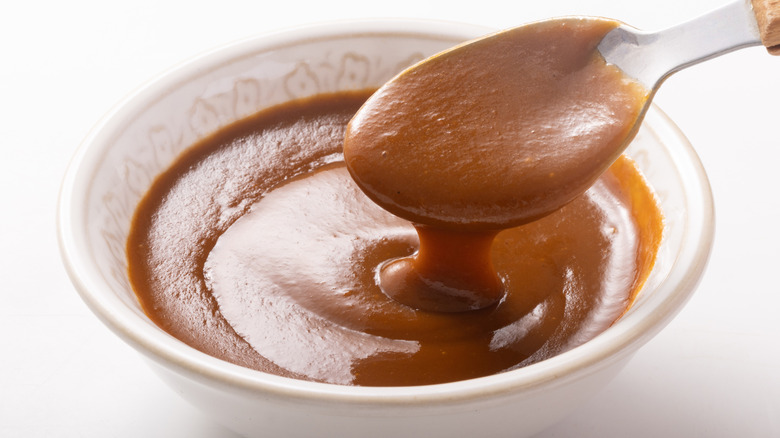
Whether you're using demi-glace as a sauce or as a cooking ingredient, there are a few considerations to keep in mind. Preventing it from burning in a pan and adding complementary flavors to better pair it with specific vegetables are the keys to unlocking its full potential, and fortunately, both are relatively simple.
Demi-glace has already been heavily reduced, so it has a relatively low moisture content that makes its solids burn more easily than many refined, high-smoke-point oils. For fast-cooking vegetables like Brussels sprouts and other greens, this isn't much of a concern. However, for firm root vegetables, you may need to use a couple of tricks. Basic tips for cooking carrots work well here, such as parboiling to speed up roasting and sauteing times. Still, you can always add the sauce halfway through cooking or incorporate an extra splash of moisture from stock or even wine.
If you want your demi-glace to pair better with sweeter vegetables, like carrots, or reduce the bitterness in cruciferous varieties, like broccoli, try incorporating a bit of sugar. Honey only makes the sauce taste more complex, while the molasses in darker sugars adds layers to its caramelized, roasted flavor. For especially savory vegetables, you can deepen those flavors even further by simmering your demi-glace with earthy mushrooms, especially rich varieties like porcini, shiitake, and portobello. Just be sure to remove them or finely mince them beforehand so they don't interfere with the demi-glace's texture.