

Does Chilled Beer Need To Stay Cold?
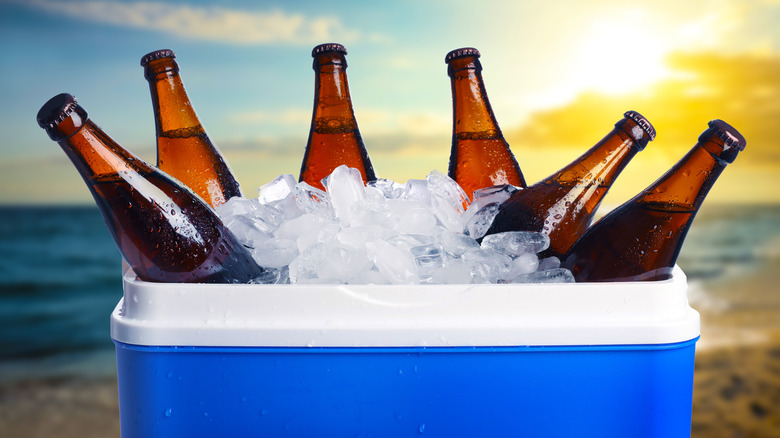
A pervasive myth about beer is that once it's cold, it must stay that way to prevent the infamous "skunking" effect. However, while it's best to store beer in a relatively chill environment, temperature fluctuations have very little effect on how it tastes.
When brewers package beer, some amount of oxygen finds its way into each unit, regardless of how careful they are. Over time, oxidation occurs, a chemical process that interacts with the various compounds in your beverage to produce a slightly off taste. This process is largely dependent on temperature, which is why most beers are stored, if not served, below 40 degrees Fahrenheit. While a beer is certainly more vulnerable to oxidation once it's warmed up, the fact that it went from cold to warm plays no part in this chemical reaction.
This is why, historically, producers stored beer in cellars before modern refrigeration. Still, some beers are best served warm, like stouts and doppelbocks, especially if they have complex flavor profiles that may be less obvious to a chill-numbed tongue. While you wouldn't want to heat your beer on the stove or let it sit in the sun, allowing it to slowly approach room temperature, or even storing it for a couple of months, shouldn't have any adverse effects.
How to actually preserve beer and prevent skunking

Of all the ways beer can go bad, skunking is arguably the worst, and the one most commonly misapplied to temperature fluctuation. However, this process is actually entirely dependent on light exposure, rather than heat, though the two often go hand in hand.
When light is able to reach the beer, not the can or bottle but the actual liquid, it reacts with sulfurous compounds from hops to produce a smell similar to a skunk's spray. This is why you so rarely see beer in clear bottles and, instead, in amber or brown ones. Dark-colored glass does a better job of blocking, or at least filtering, light, mitigating skunking from incidental exposure. It's also why there's been such a big push in the craft beer world toward cans, which can block out 100% of light.
If you want to avoid skunking in storage, you must keep beer away from sources of light. While the beer in your fridge won't go bad from brief exposure, that six-pack that gets an hour in a sunbeam every day most certainly will. Since areas with light are typically warmer than those without, this also has the added benefit of slowing down oxidation. If your beer comes in a box, it might be a smart idea to keep it in there as long as possible, since it adds another layer of protection.