

How Dining Kiosks And Service Tablets Trick Customers Into Paying More
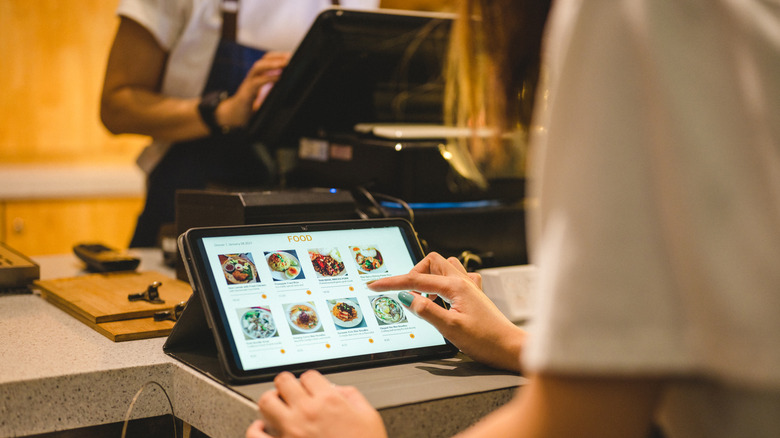
For many Americans, grabbing a bite is no longer affordable. In addition to pricey base food costs, growing frustration regarding tipping in restaurants and hidden costs drive disillusionment. Curiously, an inflated bill is even more likely to occur when using automatic dining kiosks and service tablets. Selecting your meal on a touchscreen is certainly convenient, but the digital experience predisposes us to extra spending for several reasons.
Foremost, there's the ease of ordering. Whether at a tableside tablet or a kiosk upon entry, a digital peruse makes it easier to throw on an item. Screens consistently advertise add-ons, tempt with promotions, and showcase mouth-watering pictures. Subsequently, an extra appetizer, drink, or dessert is only a click of a button away, without a moment to second-guess — and no worry that you're taking too long to decide as a queue grows behind you, as might happen at a manned till.
Oftentimes, customization is easier electronically — pricey modifications are simply plugged into the system. Some diners might feel less shame in requesting extra, while others will click quickly and won't hesitate, as they would when giving an order in person. As a result, digital interfaces strongly influence spending habits; restaurants report as much as 20% extra in sales. So next time you see a screen while dining, keep the financial spending tactics in mind.
Expect to see more dining kiosks and service tablets at casual concepts
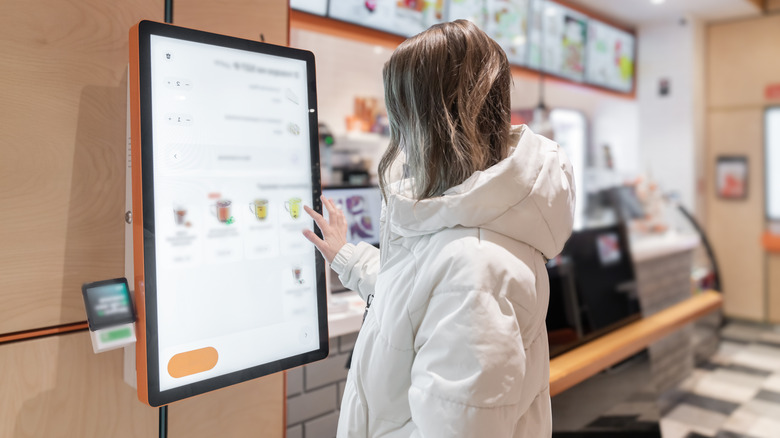
From a business perspective, installing digital ordering comes with a multitude of benefits. In addition to extra consumer spending, the technology reduces the need for staff, all while improving efficiency. Diners can order more swiftly at a kiosk, which can increase turnover and keep track of ticket order. Plus, there are logistical benefits, too; menu availability, outlet-specific dishes, and prices can be updated instantaneously with a digital system.
Naturally, self-service ordering denies the warm human element — tech interfaces likely won't appear in fine dining contexts, for example. Even in casual eateries, you won't get better restaurant service by exchanging pleasantries as you otherwise would, lending dining a more transactional tone. Yet at an already utilitarian fast food or fast casual eatery concept, such an order interface is well-aligned.
According to a 2025 Phygital Index Report released by Tillster, 61% of diners are open to self-service kiosks, up from a percentage of 36% in 2023. In combination with other digital systems like QR code ordering, AI-powered drive-thrus, and even occasional robot table-side delivery, it all adds up to a rapidly-altering dining landscape. Whether it's better or worse depends on the context, but it's clear that such systems influence our spending and eating habits.