

Scotch Is Traditionally Paired With This Non-Boozy Drink (Even In Scotland)
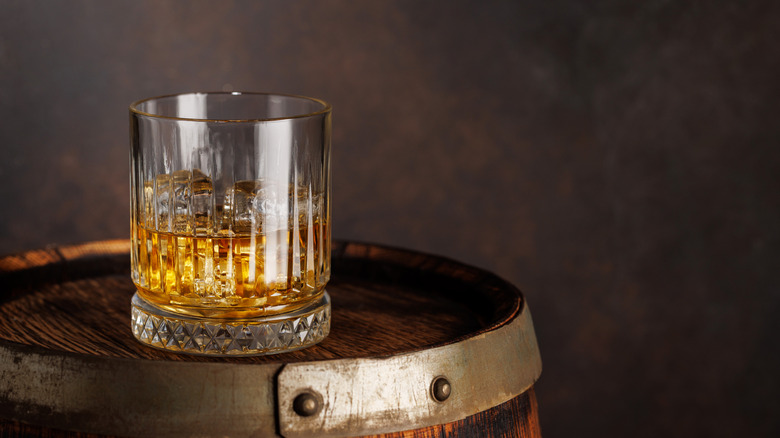
You can always find an unexpected upgrade to elevate your drinks. There's the mimosa, a delicious combo of Champagne and orange juice, and over in Spain, red wine is commonly paired with lemonade to create a refreshing summer aperitif. But perhaps a more unusual combination is found with Scotch. Translated from Gaelic as uisge beatha — literally meaning "water of life" — it's only fitting, then, that just a few drops of water can unlock the hidden depths of Scotch and allow its character to come alive.
While many folks enjoy whisky neat, it's not uncommon for a bit of water to be added. While this does dilute the drink, it doesn't water it down. Instead, it's used to uncover hidden aromas. Scotch is full of aromatic compounds that provide its character — think notes like smoky, vanilla, or woody. However, Scotch typically has a high alcohol by volume (ABV). In simple terms, this causes the flavor molecules to stay trapped within the bulk of the liquid, surrounded by ethanol.
This is where water can work its magic. Just a few small drops cause these aromatic compounds to rise. A 2017 study by Swedish scientists demonstrated this exact phenomenon by showcasing water's effects on guaiacol — the compound responsible for smoky flavors. In high-ABV Scotch, guaiacol is distributed throughout the liquid. But when water is added, it's been shown to drive the guaiacol to the surface, allowing the drinker to enjoy a more complex and elevated whisky. So, while you wouldn't add water to, say, wine or beer to elevate the taste, when paired with Scotch, it can reveal layers of flavor that might otherwise remain hidden.
How to ensure you get the best Scotch drinking experience

Scotch whisky is distinct from whiskey (notice the addition of the "e"). Scotch can only be made in Scotland, primarily using malted barley, and must be aged for a minimum of three years in oak casks, then bottled at a minimum of 40% ABV. Aside from its own production rules and processes, there are also unique ways Scotch is intended to be enjoyed.
The traditional drinking vessel for Scotch whisky was a quaich, and this dates all the way back to the 16thcentury. Featuring a small bowl with two handles, it reflects a long-standing spirit of hospitality and shared experience. Today, it's still used at important events, but is rarely seen in a casual capacity. In Scotland, most Scotch is now served in a simple tumbler. But at tastings, you'll most often find it served in a Glencairn glass — a tulip-shaped glass with a narrow body and rounded bottom. The wide bowl allows you to observe its natural color, while the tapering mouth concentrates the aromas of the whisky toward the nose.
While a few drops of water can do wonders for Scotch, purists generally advise against serving it on the rocks. The cold temperature of the ice has the opposite effect, locking aromas and creating excessive dilution that dulls the flavors of the whisky. Instead, Scotch is traditionally served at room temperature. You'll often find Scotch served as a "wee dram," which refers to a small measure of whisky. However, it should never be taken as a shot. The correct way to drink it is in small sips, allowing you to fully appreciate its complex flavors and aromas.