

This Chinese Restaurant Trick Makes Homemade Chicken And Broccoli Taste Like Takeout
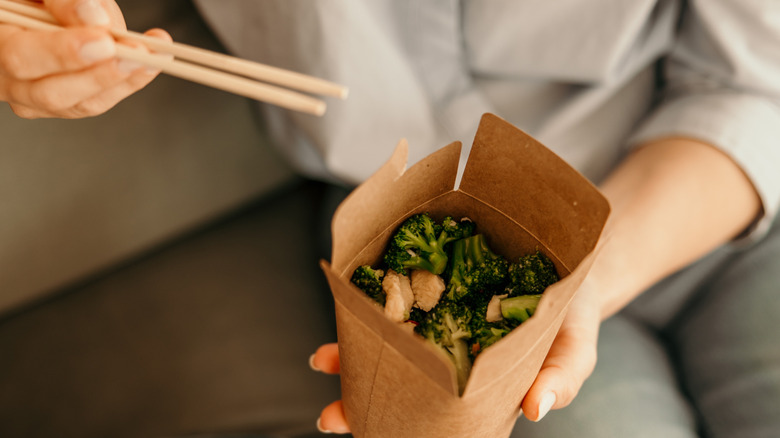
Although distinct from mainland China, Chinese American cuisine offers unique charms. Whether you're biting into General Tso's or Kung Pao Chicken, chow mein, or a serving of moo goo gai pan, the food exhibits a comforting balance of sweet, savory, and salty flavors, and is oftentimes covered in a glossy texture. Yet recreating such qualities at home — say with a serving of chicken and broccoli — can feel tough. What's the key to tapping into the takeout magic?
Essentially, the secret lies in corn starch marination, a sizzling hot wok, and finishing the dish with a rich slurry sauce. Whether you're making chicken or beef and broccoli, perfecting the texture is what'll recreate the takeout experience. The vegetable component is easy; simply rapidly blanch the broccoli in hot water to lightly soften. The poultry requires a touch more work, but isn't too labor-intensive, either. Most cooks briefly marinate the meat in a corn starch and salt-based marinade — a velveting technique common in Chinese cooking — then quickly sear the meat.
Later in the dish assembly, the corn starch slurry forms an equally essential cornerstone. Once broccoli and chicken are cooked, the dish's central savory sauce is thickened using corn starch. Akin to a simple gluten-free gravy, this rich mixture binds sauce, vegetable, and protein all together, thus forming chicken and broccoli's mouth-watering composition.
Fine-tune the flavors of chicken and broccoli to replicate Chinese takeout
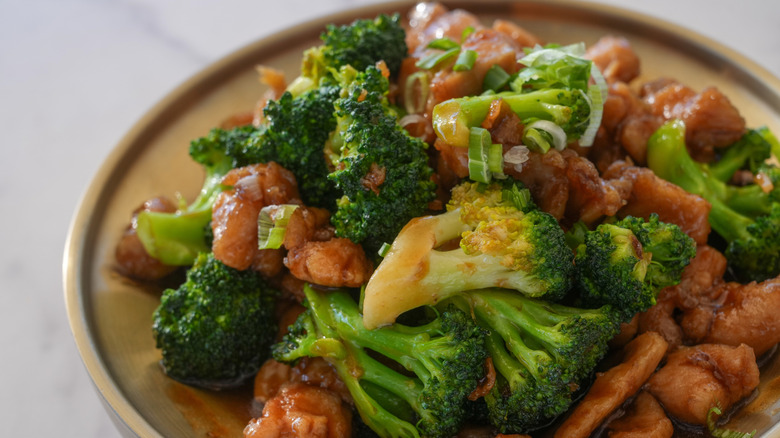
Whether baked into a rich and creamy casserole or whipped up into a chicken and broccoli linguine, this pairing of poultry and vegetable exists in many forms in American cuisine. To craft a rendition that tastes specifically of Chinese takeout, you'll need not only the right technique, but a pantry of Asian seasonings, too.
The chicken and broccoli flavors start during marination. In addition to the cornerstone corn starch, cooks often mix in Shaoxing wine, a Chinese staple with a complex salty-sweet flavor. The umami-packed sweetness of oyster sauce also frequently coats the bird, as do staples like soy sauce and rice wine vinegar. The sauces not only flavor the exterior of the chicken, but also further tenderize the meat, making their inclusion necessary.
Once the exhilarating wok-searing starts, aromatics like garlic, ginger, and scallions add a foundational flavor base. Then the dish's signature brown sauce involves an even broader array of components. Cooks typically employ chicken broth for a liquid base, mixed with the sauces from the marinade, all further flavored with sugar or honey, white pepper, and/or sesame oil. While no two recipes are alike, the aim remains consistent: tender chicken, lightly crisp broccoli, and the unctuous sauce tying the dish all together.