

The French Technique For Easy Braised Fish
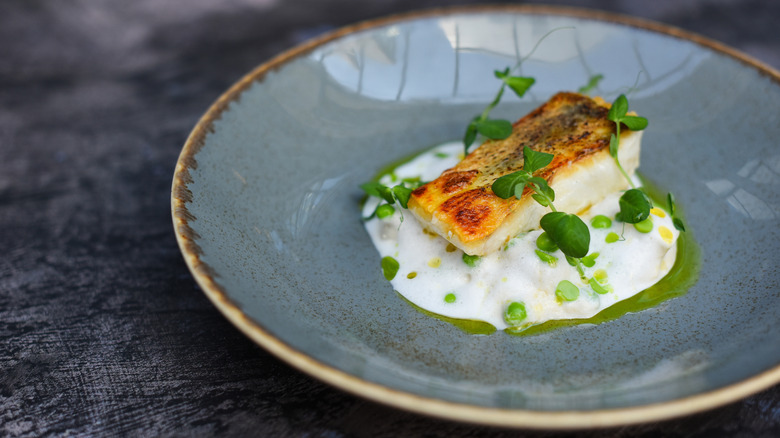
Cooking fish can be a bit intimidating since it has a very narrow window of being perfectly done without drying out. However, using the Bercy braising method widens that window considerably, providing moisture and flavor, while making prep even easier.
Braising is essentially a cross between roasting and simmering, providing a bit of caramelization while ensuring tenderness. Whether you're preparing a whole fish or just a single filet, the Bercy method tenderizes and moistens your filet, thoroughly seasons it, and yields a flavor-rich sauce, all while dirtying a single dish. Plus, it makes great use of the 10-minute rule for cooking fish, giving beginners exact timings and temperatures to work with for a perfect result.
Making the liquid for Bercy is quite simple, only requiring a basic fish stock from bones, heads, or skins that needs less than an hour of hands-off simmering. To bulk up the stock, you can add aromatics like parsley and shallots, and any white cooking or drinking wine you have lying around, then simmer on the stovetop over medium-high heat or pop it in the oven at 350 degrees Fahrenheit. Provided you baste the filet every so often, you'll have a perfect, easy-to-make seafood dish in around 12 minutes. But few French recipes are complete without butter, and adding a little knob at the end to bring all those flavors to life with a bit of dairy fat is an essential part of this technique.
Variations on Bercy-braised fish for different flavors
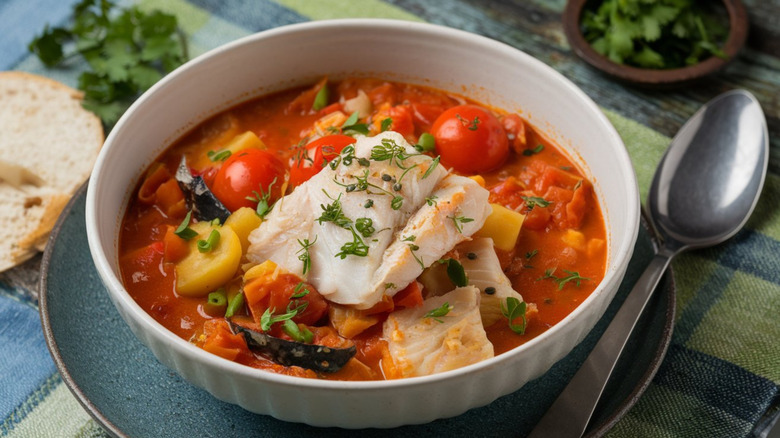
While not quite a French mother sauce, Bercy certainly has quite a few offspring. While you won't want to adjust the cooking times and temperatures too much, adding or tweaking ingredients can swiftly transform your dish into something completely new. If you're looking for something a bit more vegetable-forward, crécy and dugléré are two variations on Bercy that move the flavor profile towards something either rustic or bright. In addition to a finishing touch of butter, crécy also uses pureed carrots as a thickener, adding the smallest hint of sweetness that's perfect for especially lean fish. Dugléré, on the other hand, incorporates chopped tomatoes, making it bright, acidic, and a great addition for fattier fish like herring or mackerel. Plus, it adds a bit of texture to the dish overall, as the tomatoes shouldn't simmer long enough to fall apart and grow mushy.
For something heartier, it's hard to go wrong with bordelaise, which is the same as Bercy except it calls for red wine. It's a long-standing myth that you can't pair red wine with fish, and provided you pick a bottle that's low in tannins and a fish that's a touch on the oilier side, the two can make a remarkable pairing. You'll want to avoid additional acids, such as lemon, because they can be overwhelming when paired with the tanginess of a decent red.