

The Special Drawer You Can Almost Always Find In A Boomer's Kitchen
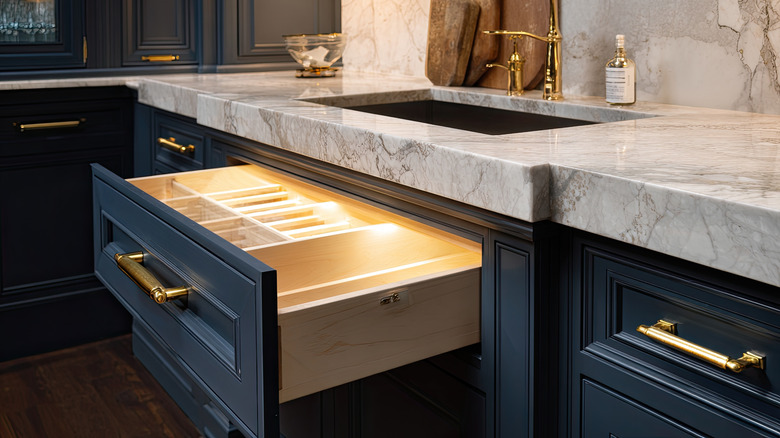
Sure, younger generations may not like this Boomer comfort food, but no one can deny their kitchen drawers hold many secrets; their insides often give away personality traits, distinguishing a neatnik from a more nonchalant person (and we're almost all guilty of shoving odds and ends in the next best kitchen drawer to clear a cluttered countertop fast). But it's not only the way content is arranged in a drawer that is telling, but also what's inside. In a Boomer household, you often find a kitchen drawer stuffed with small plastic pouches of sauces, as well as other items that come with takeout.
There is likely a psychological reason why Boomers hoard things. Their generation, born between 1946 and 1964, did not suffer economic hardships like their parents did, who lived through the depravations and shortages of the Great Depression and World War II. But despite the strong postwar economy, Boomers were raised by those with a spirit of frugality. Throwing away perfectly fine, originally packaged items that you might need in case of a shortage runs counter to that mindset. This is also why Boomers may have the confusing kitchen habit of underseasoning their food — they simply grew up with less and a make-do mindset.
That's why many Boomers dutifully collect ketchup, hot sauces, and other condiments from takeout meals, as well as small envelopes of salt, pepper, and coffee creamer from cafes and airplanes. Plastic utensils, paper napkins, and other items might also be part of the drawer inventory. Typically, the content of this ominous drawer never gets used and usually continues to pile up until someone — often the next generation who clears out a Boomer's home — throws it out.
How boomer shopping habits fill pantries, fridges, and basement shelves
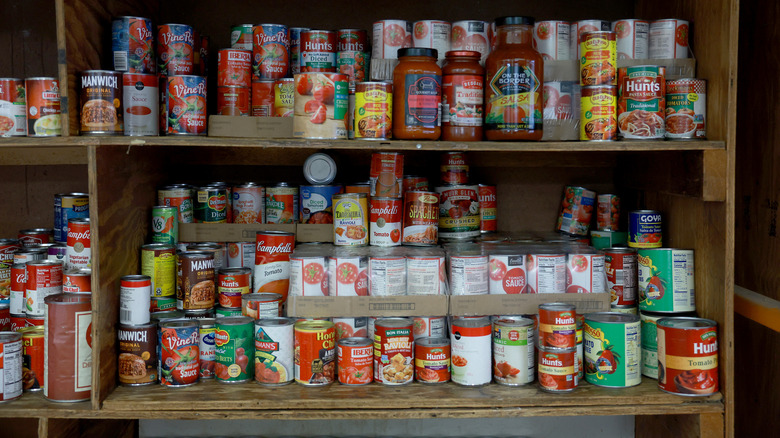
Accumulating takeout sauces in a kitchen drawer is not the only Boomer habit that leads to cluttering, a notorious characteristic of Boomer homes, much to the chagrin of their children — which isn't the only difference between Boomers and younger generations. Boomers also have some peculiar grocery shopping habits, both for food and non-food items. They like to stock up when they get a good deal on household items, and they buy things on sale or in family-size packages. It's important to note that Boomers don't just go for any cheap junk — they are loyal to name brands (despite them being up to 38% more expensive than private labels) because they look for quality.
Life was more stable, and housing and healthcare were more affordable for Boomers, so many of them were able to accumulate considerable wealth. In spite of that, Boomers have an acute sense of preparedness. The upbringing by parents marked by the war, as well as the financial crises in the 1970s and 1980s that Boomers experienced, contributed to that. They tend to buy more than they need because shelves that are filled to the brim give them peace of mind.
This habit served Boomers well when the pandemic hit in 2020. However, a 2026 survey by Motley Fool Money revealed that Boomers are wasting money by throwing out expired groceries or leftovers — the exact opposite of what Boomers aspire to.