

Why Americans Say Entree When They Mean Main Course
We may receive a commission on purchases made from links.
American English has its fair share of culinary misnomers. French fries were most likely not invented in France, German chocolate cake is not from Germany, head cheese isn't cheese, and sweetbreads aren't sweet (or bread). Every time you sit down at a restaurant and open the menu, you are likely to encounter another term that those outside the States see as inaccurate: entree.
Entree, in its original French meaning, designates the second course of a classic French menu, which consists of seven courses or more. It is served between the first course, the aperitif, and the third, typically fish — after the fish comes the fourth dish, the main, often a roast, called le plat principal in French. The entree itself is like an hors d'oeuvre, but a bit more substantial — think a slice of quiche, a bowl of soup, a hearty salad, or even pâté with rustic bread.
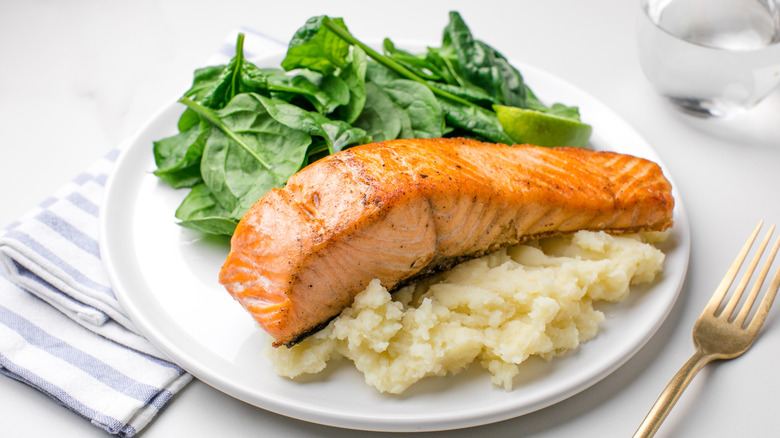
In the 20th century, eating habits evolved, and the standard menu became the trifecta of appetizer, entree, and dessert. In the United States, the original term entree for those additional courses remained, but it morphed into a main course. With World War I and the Great Depression, eating habits, even of those who could afford multi-course dinners at French restaurants, changed. Instead of fish, meat, or chicken dishes being served as a precursor to heavy meat dishes, they became centerpieces of a much shorter menu. The word entree stuck, albeit with a different meaning — unlike in other English-speaking countries, where it is used true to the original French meaning. The term entree for might not be a misnomer after all, but simply reflects how the way we eat has changed over time.
How French cuisine evolved in America
The word entree is not the only element of French cuisine that has undergone a significant development in America. The country got its first taste of French cuisine when Thomas Jefferson, during his tenure as ambassador to Paris from 1785 to 1789, had his enslaved cook James Hemings (who was half-brother to Jefferson's wife) train as a chef, who then brought crème brûlée, mac and cheese, and other French classics back stateside. The 1800s saw the opening of temples of fine French dining, from Delmonico in New York City to Antoine's in New Orleans.
The credit for introducing Americans to French cooking at home undoubtedly goes to Julia Child, whose cookbook, "Mastering the Art of French Cooking," was a bestseller. Her PBS show "The French Chef" on public television, which started airing in 1963 and ran for a decade, introduced French cooking to an even wider American audience.
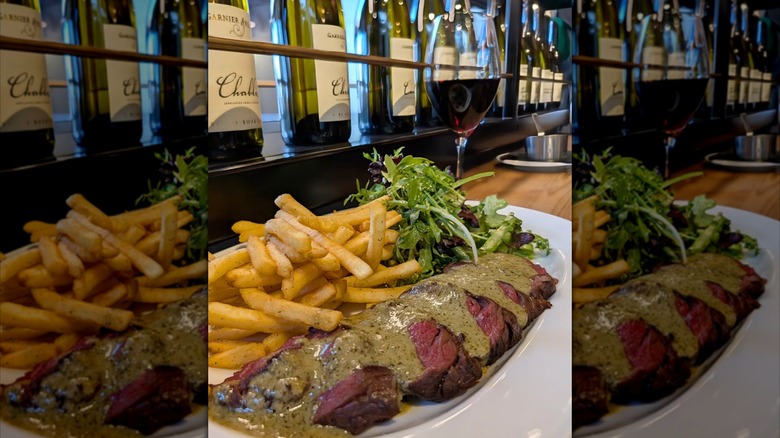
Today, French food remains valued as a beacon of haute cuisine, and new French restaurants keep appearing in places like New York City. The fare, though, is different from the time when an entree in a full French menu preceded a fish course and a roast. Today, French cuisine is bistro fare like steak frites or a simple niçoise salad recipe.