

This Costco Kirkland Cheese Makes Customers Forget This Pre-Shredded Rule
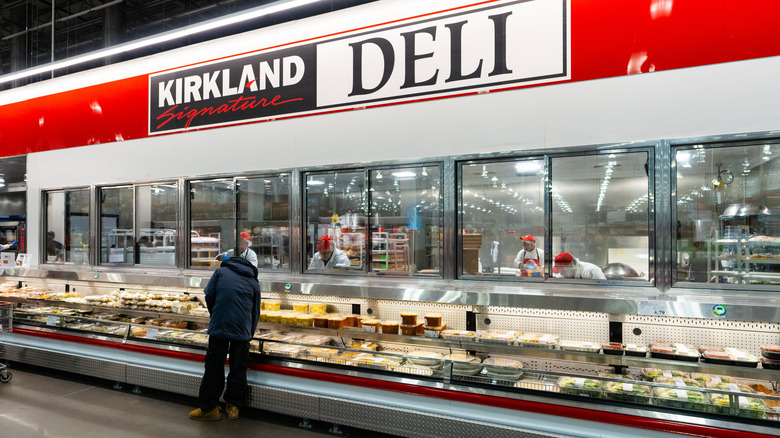
You likely grew up not thinking twice about getting a bag of shredded cheddar cheese for something like topping tacos or making eggs, or grabbing a container of grated Parmigiano from next to the jarred pasta sauces for your spaghetti. As you matured, you may have heard shredded cheese isn't the best, especially if you became more interested in cooking. There are good reasons for that, ranging from quality to cost, but Costco's shredded Kirkland Signature Parmigiano Reggiano is flipping the script on that advice, with customer reviews overwhelmingly praising it.
One reviewer wrote on the website, "This has been a go-to cheese for us for years because of the delicious flavor combo," while another also called it his favorite, describing it as "aged enough to be sharp, and nutty." Someone else raved, "Very good; the fine wine of [Parmigiano]!" A couple of people noted how good it is despite being shredded, writing about how fresh the cheese tastes, and it's obviously of top quality. Some people appreciated the convenience of a shredded cheese being delicious, so they didn't have to do the work themselves — but the cheese still seems like you grated it yourself.
The Kirkland Parmigiano is in a one-pound jar imported from Italy, where it gets aged for 24 months before being "freshly shredded," according to the label. It's made from part-skimmed cow's milk, cheese cultures, salt, and rennet only, with no fillers.
What the DOP symbol means and why people are warned off pre-shredded cheese
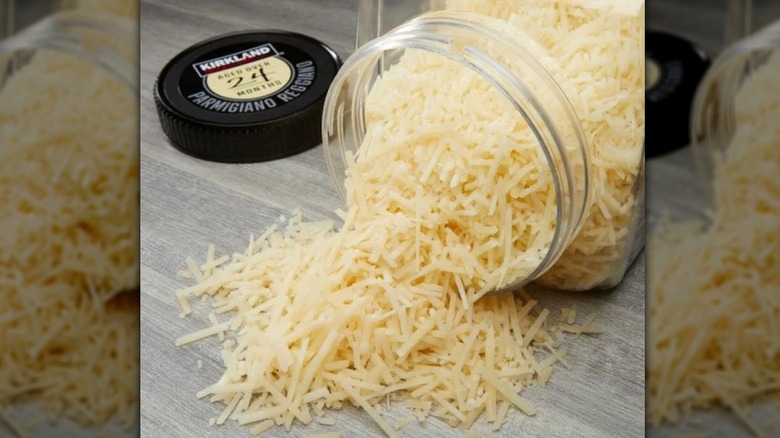
The Kirkland jar carries the DOP symbol, short for an Italian phrase that means "Denominazione d'Origine Protetta," which translates to "Protected Designation of Origin," confirming that it's a genuine product made in its traditional Italian region. The marking was created to oversee the quality of heritage products, so consumers know they're not buying an imitation, as well as to protect the industries and traditional practices behind them. That's why DOP Parmigiano Reggiano has to be made in one of five Italian regional provinces, including Parma, the place it was named after. It also explains why parmesan and Parmigiano Reggiano are not the same thing.
There are a number of reasons why people avoid cheese that's pre-shredded or grated. Because more surface area is exposed than on a brick or wheel of cheese, it can go bad faster. There's also the reality that any time you cut into something and have it fresh, it almost always tastes better than if it's been sitting around in the refrigerator. Another concern is that grated cheeses often have additives to keep them from clumping, like cellulose or potato starch. These can affect its taste and consistency, and also make it harder to melt. Finally, it can be more expensive (per ounce) because there is another step involved in producing it.
Costco also sells Parmigiano Reggiano in whole pieces, but it will cost you (even though it isn't the world's most expensive cheese). A 10-pound chunk is $210, and a full 80-pound wheel is $1,200. But if you can afford even a small chunk, save the rind, which is the key to creamy sauces.