

9 Of America's Oldest Grocery Store Chains Still In Business
Many stores have come and gone over the years, but some of the oldest grocery chains in the United States remain in business. As each stretches back into the past more than a century, with varying degrees of humble beginning, a common trait unites them: an entrepreneurial spirit after the American dream. Whether in the Northeast, the South, or sunny California, native-born and newly-arrived citizens alike have left their mark on the industry upon which everyone relies.
Included among the chains, each of which survived wars and the Great Depression, are tales of success for Danes, Irish, Mexicans, Russians and more. Familiar brands like Kroger, H-E-B, Wegmans, and Piggly Wiggly all began with one location — or something similar — before eventual expansion to dozens, hundreds, and even thousands of stores across the country. Some even revolutionized the industry, taking steps toward the now commonplace self-service supermarkets and their differences from modern grocery stores upon which Americans have come to rely.
1. Piggly Wiggly
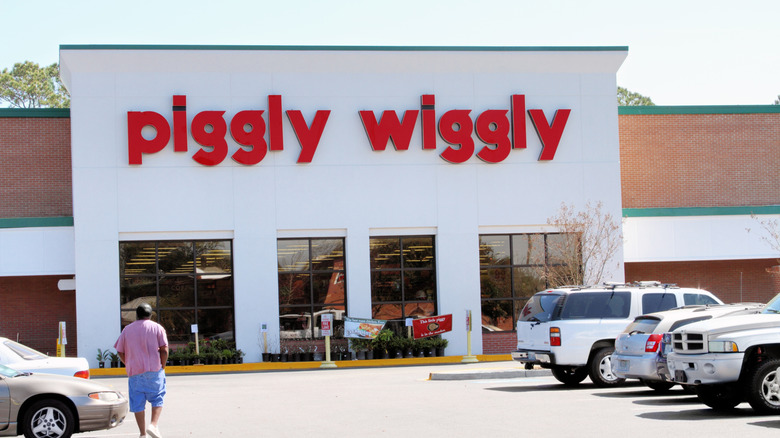
More than a century before online ordering and COVID-19 restrictions reintroduced the concept of personal shoppers across the country, full-service was the norm at the local market. That all changed thanks to Clarence Saunders. The birth of his Southern staple, Piggly Wiggly, introduced America to its first self-service grocery store in 1916. Reducing the number of clerks meant savings for the customers — who'd been eating the cost of payroll — and a boon for Saunders' own bank account as his business model became a success.
Through franchising, Saunders allowed others to open Piggly Wiggly locations while he collected a fee for the name use. As his fortune grew, the founder had pink marble hauled from Georgia to Memphis for the construction of his Pink Palace. He lost the mansion before its completion as he resigned from the company as a stock market cautionary tale six years ahead of the Great Depression crash. Now, the mansion is a museum that includes a replica of an early 20th century Piggly Wiggly to experience the chain's history.
Despite Saunders own rollercoaster of success that saw him peak and crash again with the stock market after launching Sole Owners Stores, Piggly Wiggly's footprint grew to encompass most of the south and beyond. As of 2026, over 500 stores operate in 17 states, per Piggly Wiggly, down from 18 after closing the only location in Muldrow, Oklahoma as one of a number of grocery chains that shut locations in 2025.
2. Wegmans
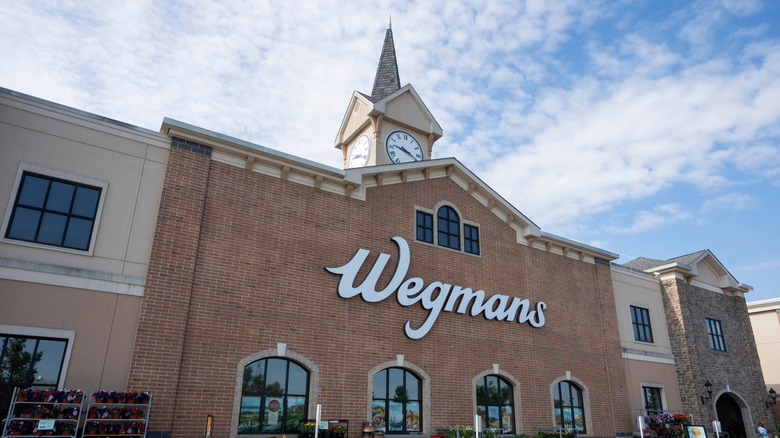
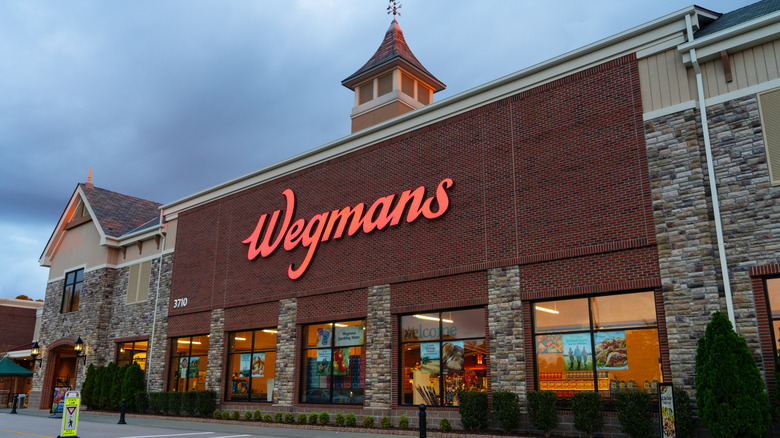
While considered one of the most expensive grocery chains in America, Wegmans has humble origins. Still family-owned over a century later, Wegmans, with locations in nine states and Washington, D.C. got its start as a produce pushcart operating in Rochester, New York in 1916. Despite the economic woes of the Great Depression, brothers John and Walter Wegman made a bold move to open a store in 1930 at a scale unheard of for the time: 20,000 square feet. This store operated under the old full-service model, as Wegmans didn't begin transitioning to self-service until 1949.
Wegmans stores can be found in Connecticut, Delaware, Maryland, Massachusetts, New Jersey, New York, North Carolina, Pennsylvania, Virginia, and the nation's capital after expansion beyond the Empire State started in the '90s. It took nearly three decades more before the business would reach the Big Apple, first with a Brooklyn location in 2019, and then Manhattan in 2024. As far as further expansion, Wegmans says of its plans there are areas of growth it is "not at liberty to disclose yet."
The legacy of family-owned business extends beyond the grocery stores to its suppliers. These days, Doug Mason and his children, Tori and Lewis, continue the tradition of providing produce to Wegmans — eight generations after their family farm was started in New York.
3. Safeway
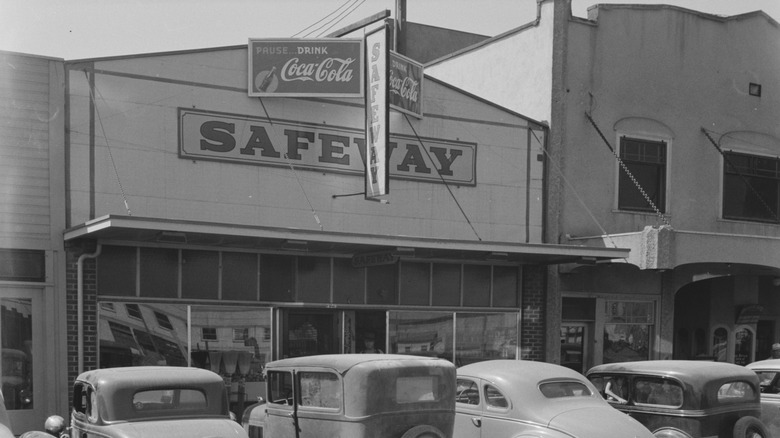
Long before a merger acquisition made Safeway a subsidiary of Albertsons Companies, a 1926 merger marked the beginning of Safeway, Inc. Prior to that, Marion Barton Skaggs made a deal with his father to purchase the first Skaggs store in 1915 at a cost of $1,088 — amounting to roughly $35,000 in 2026 when adjusted for inflation. Little more than a decade later, M.B. Skaggs' business that started in American Falls, Idaho had grown to operate 428 stores.
Teaming with Sam Seelig, who rebranded his eponymously named 322 locations to Safeway in 1925, the 750 locations of Safeway, Inc. quintupled to a peak of 3,527 grocery stores by 1931. At the time of their union, the business reportedly pulled in nearly $50 million in annual gross sales, a figure equivalent to more than $900 million after adjustment for inflation.
Safeway's reach has changed considerably as by 2026 it operates more than 900 stores — plus two Pak 'N Save locations — in 17 states as a subsidiary of Albertsons Companies. That change came about in 2015 nearly a year after a planned merger acquisition. The inclusion of Safeway's stores increased Albertsons own reach to 34 states courtesy of more than 2,230 stores, per PR Newswire.
4. Stop & Shop
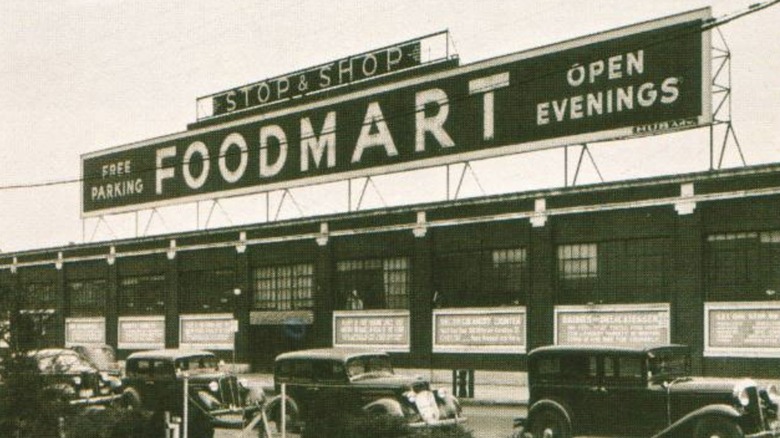
Before the 19th century came to a close, the parents of Julius Rabinovitz emigrated from Russia. Ultimately arriving in the Boston area, Rabinovitz would go on to open Stop & Shop's predecessor, the Economy Grocery Store, in 1914. The original Somerville, Massachusetts shop grew to dozens of locations before the founder's Harvard-educated nephew, Sidney, who would change his surname with others in the family took charge. Just like how the Rabinovitz family became the Rabb family, Economy Grocery Store became Stop & Shop in 1942, a year after the first location under that banner opened in Connecticut.
Little more than half a century later, Ahold acquired Stop & Shop in 1996, roughly two decades before the Dutch company itself would merge with Belgium's Delhaize. The resulting union created Ahold Delhaize which, in addition to Stop & Shop, lays claim to ownership of Food Lion, Giant Food, The GIANT Company, and Hannaford. Outside the United States, the business owns numerous other brands with a global reach in nine countries across Europe and in Indonesia. As of 2026, Stop & Shop operates over 360 stores in five states.
5. Vons
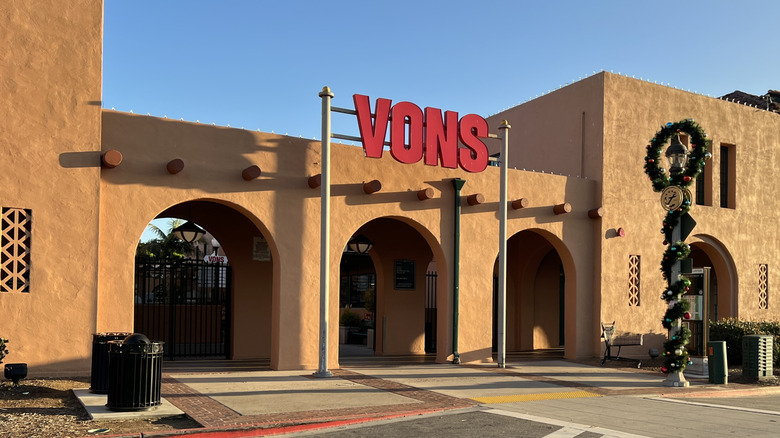
Roughly 80 years before it would become the first grocery chain in the United States to be head by a Mexican-American, Danish immigrant Charles Von der Ahe began the first run of Von's grocery stores in downtown Los Angeles, California. Originally known as Von's Groceteria, $1,200 was poured into opening the first location in a chain that would twice go on to be owned by Safeway. This first happened as a result of a 1929 sale to MacMarr of about 90 stores that were then bought by Safeway in 1931.
The second acquisition took place in the '90's, some 60 years after Von der Ahe's sons began Vons anew. It was at this second iteration of Vons that William Davila took a job sweeping floors and later as produce manager following a stint in the U.S. Air Force. The first generation American continued his ascent as a member of the grocery chain's advertising department before he became president of Vons in 1984. More than a decade later, Safeway offered Vons $1.6 billion in stock for a takeover that was approved.
As of 2026, Vons, now under parent company Albertsons, operates 186 locations primarily in California, with eight in Nevada. Once the top grocery store in Southern California, an increasing number of locations have been closed. One such shuttering is planned for May 2026 with the store in Escondido set to be rebranded as an Albertsons.
6. H-E-B
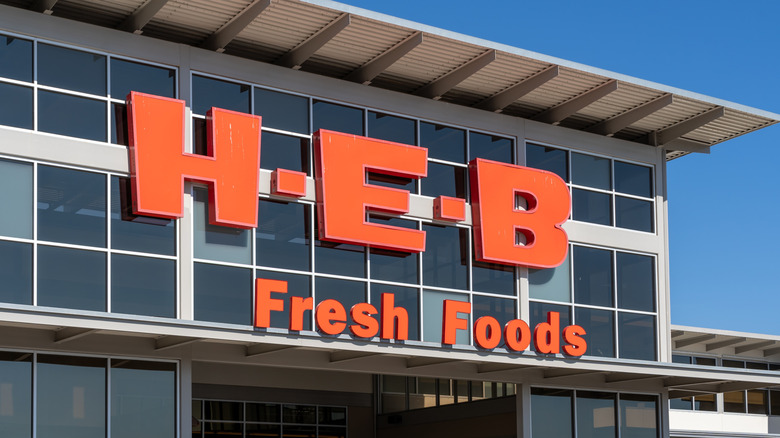
On any given list of Texas originals beloved across the Lone Star State you're bound to find Dr. Pepper, Shiner, Whataburger, and, of course, H-E-B. Known for customizing every single store to suit local communities as it expands, the supermarket chain operating on either side of the Rio Grande got its start by a mother with $60. In 1905, Florence Thomas Butt opened the first C.C. Butt Grocery Store in Kerrville, Texas with the 2026 equivalent of about $2,200 when adjusted for inflation.
Before a name change would come about following the chain's first location in the Alamo City, Howard E. Butt — from whence the initials H-E-B derive — took over the family business in the '20s. Efforts at expansion also included upgrades to the stores like air-conditioning and frozen food sections while WWII was underway. Some other major changes came about in 1976 when the founder's grandson took over and nixed the policy of stores being closed on Sunday while also opening up shelf space for the sale of beer and wine. With plans for more stores to be added to the chain, H-E-B boasts over 440 locations when accounting for those in both Texas and Mexico.
7. ACME Markets
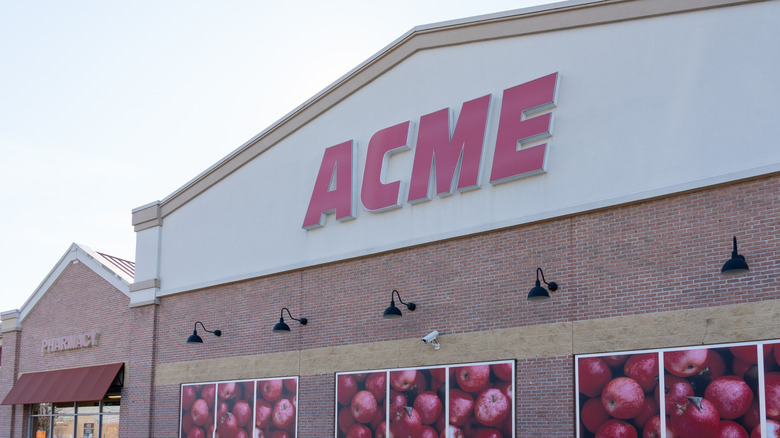
A century after the Bill of Rights was ratified, America's home for independence made space for the premier grocery store of enterprising friends Samuel Robinson and Robert Crawford. It was in South Philadelphia that the two Irishmen started a grocery store which, 26 years later, would merge with four other chains to form the American Stores Company — eventually known as ACME Markets. The new name brought with it growth from mere grocery stores to a full-service supermarket.
Like other chains in the industry, a bigger fish came around to gobble it up in 1999 when Albertsons acquired ACME. However, where once it operated 1,000 outlets, the brand had dwindled in size over the decades. By 2026, Acme laid claim to 157 locations across Connecticut, Delaware, Maryland, New Jersey, New York, and the original Pennsylvania. Some of its stores occupy the space where A&P, once a giant in the industry, had been, in part answering the question, "Are there any A&P grocery stores left?" Before its 2015 bankruptcy, the chain that once operated around 16,000 stores across the country itself had been one of the oldest chains in America, shuttering after 156 years of business.
8. Kroger
Accounting for all of its brands, The Kroger Company operates some 2,700 stores across 35 different states. But it all started with a single grocery store in Cincinnati, Ohio when Barney Kroger poured his life savings into the business in 1883. Adjusted for inflation, Kroger's $372 investment amounts to just shy of $12,000 in 2026. Effort led to innovation as the grocery store, in a first for the industry, added its own bakery. While other aspects of modern supermarkets followed in turn, some firsts included quality checks and electronic scanners.
Major moments in growth for Kroger include its 1983 merger with Dillon Companies Inc. at a time when the chain already had about 1,200 supermarkets across the country. That deal roped an additional 219 supermarkets and 350 convenience stores for Kroger, while an $8 billion acquisition in 1999 found the chain climb to 2,200 locations after picking up Fred Meyer Inc., then owners of Ralphs, Food 4 Less, and others, per the LA Times. Despite its size, there is still some consensus on the best day of the week to shop at Kroger. If Wednesday doesn't work for you, "Free Fridays" promoted throughout the year add an extra incentive to score a free item when offered.
9. Ralphs
Had a hunting trip ended under different circumstances, then George Albert Ralphs may never have set about opening a grocery store in 1873. As it happened, that fateful trip cost Ralphs his arm and his career as a master bricklayer, and set him on a path that would turn a single Ralph & Francis Grocers into scores of Ralphs locations across California over 150 years later. The original name may have been short-lived — Ralphs brother bought out partner S.A. Francis prompting the new brand, Ralphs Bros. Grocers — but the chain's policies that attracted customers carried on.
When Fred Meyer Inc. became interested in acquiring Ralphs in the '90s, the chain operated 264 supermarkets as well as dozens of other stores with brands like Food 4 Less, FoodsCo., and Falley's, notes Supermarket News. A year after Fred Meyer Inc. picked up Ralphs alongside Quality Food Centers, Kroger swept up the lot in its own $8 billion acquisition. As of 2026, a Ralphs sign is still found on 182 locations throughout over 100 cities in California.