

What Are Supper Clubs And Why Are They Common In The Midwest?
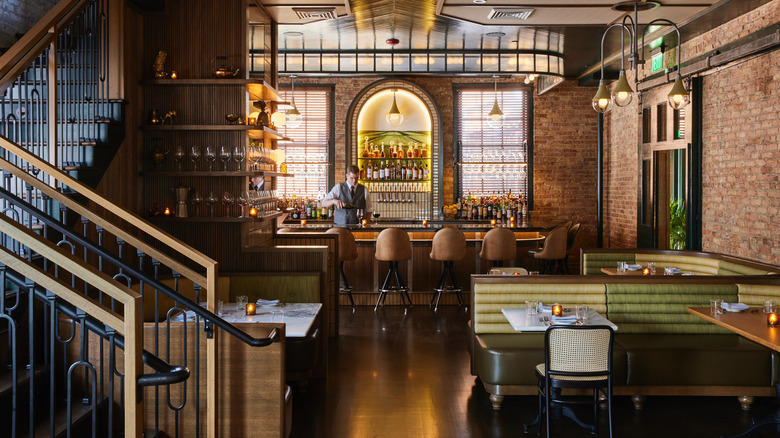
Most regions in the country have their own little culinary quirks; Coloradans likely ate green chili growing up, whereas New Englanders call a milkshake a "frappe" (their "milkshakes" don't have any ice cream in them). And if you hail from the great Midwest, you have likely visited a supper club. This grand old tradition has its roots in the post-Prohibition era, and it's relatively confined to just a few states: Iowa and Illinois, Michigan, Minnesota, Ohio, and especially Wisconsin. They are restaurants that are largely only open during dinner hours (hence their name), and their limited locations have to do with the unique culture of the Midwest.
When you think of the Midwest, what's the first word that comes to mind? Vast. Aside from the major cities that dot the region, like Chicago, Detroit, and Milwaukee, the region is defined by quiet stretches of small-town life where community is key. So people began to gather in local restaurants, where they could have a good meal and see their friends. Eventually, supper clubs entrenched themselves into the fabric of Midwest society.
Aside from their hours of operation, supper clubs distinguish themselves from regular restaurants in a few ways. First, the menus typically serve only traditional American cuisine. Second, there's no rush associated with dining in a supper club. Whereas some restaurants want you in and out, these special eateries encourage you to have a seat, socialize, and spend the evening lingering over a good meal, good beverages, and good company.
What you can expect to eat and drink at a supper club
There are a few unique dishes that are often associated with supper club fare. Most specialize in prime rib or steak, as well as seafood options — one of which may be a Friday fish fry — and many also offer chicken.
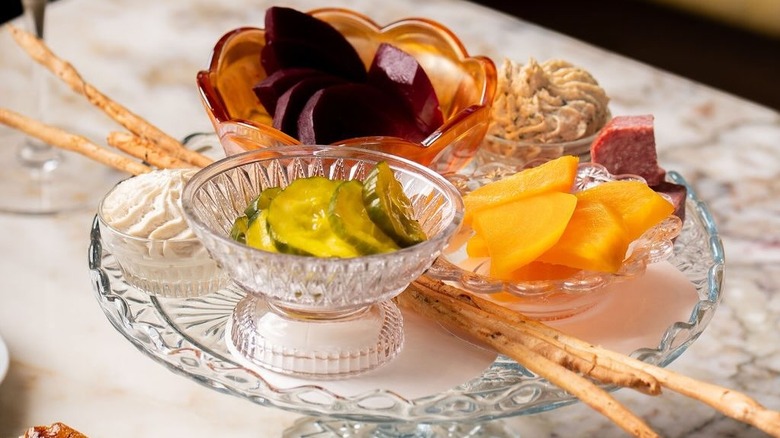
Another important element of supper club dining is the pre-dinner relish tray. No, it's not a plate full of relishes, but rather a regional platter featuring some sort of cold-pack cheese spread — port wine or cheddar are popular choices — as well as crackers for smearing it on. Then come the crunchy pickled vegetables, typically including olives and staples such as beets, sweet gherkins, and baby corn. Many supper clubs also feature a delightfully loaded salad bar, filled with greens, vegetables, a variety of house-made dressings, and homemade hot soups.
There is also the drinking component. Restaurants such as these also specialize in the now-retro sweet cocktails of the past, which you'll imbibe in three phases: before dinner, at the bar; during dinner, at your table; and after dinner, again at the bar, where you might combine your dessert with a spirit. This singular dedication to alcohol is something of a call-back to when supper clubs really took off in popularity, after the end of Prohibition.