

Not Everyone Loves The Smell Of Bacon. Here's What Science Says
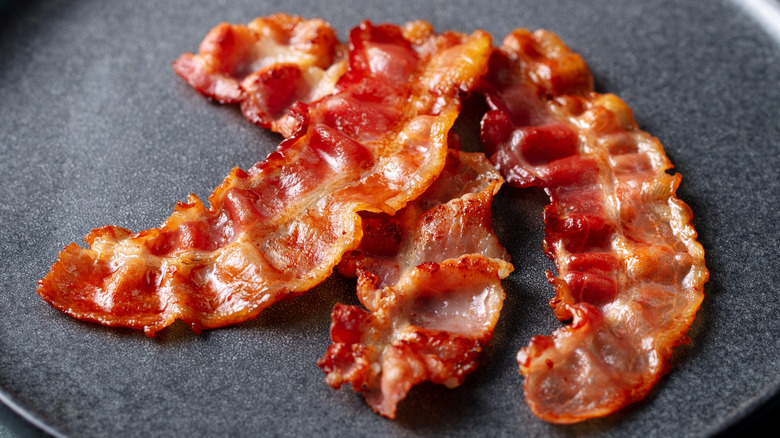
Humans have been biting into bacon for centuries, but for several years in the early 2010s, fandom for the food reached astronomic cultural heights. Beyond standard bacon cheddar burgers, you could find everything from bacon-flavored soda and mints to bacon-scented dental floss. To stand against the ever-widening stream of products and proclaim "I don't like how bacon smells" could still generate a side-eye in certain internet corners.
For starters, the taste of food is subjective; there's no reason to judge personal preference. To further add to the intrigue, such sensory claims are even backed by science. Bacon — as well as other pork products — comes with genetic deterrents, much like the famed cilantro aversion (a food even Ina Garten doesn't like).
As outlined in a 2012 study involving Duke University Medical Center, sensitivity to the smell of pork is often linked to the OR7D4 gene. A significant portion of the population carries a genetic variant that makes them extra sensitive to the hormone androstenone. Found in male mammals and concentrated in pork, the compound can trigger unsavory associations reminiscent of body odor for those with this genetic sensitivity. So, if the smell of even high-quality bacon turns your stomach, there may be deeply rooted genetics at play.
Unlocking the science behind bacon's aroma

Despite early 2010s internet trends, bacon isn't for everyone. Eating cured pork doesn't qualify for vegetarian, halal, or kosher dietary practices. Cured meats also contain nitrates and high levels of sodium, which some health organizations recommend limiting for heart and cardiovascular health. So what is it, then, that draws so many diners to bacon, especially in the smell department?
It turns out it's likely due to a complex, simultaneous transformation of compounds while cooking bacon. Just a slice contains more than 150 aromatic molecules, including hydrocarbons, aldehydes, and nitrogen-containing compounds, which can smell appealing to humans. Through the Maillard reaction — a transformation of bacon's amino acids and sugars under heat — these appetizing compounds are released into the air. For humans, this evolutionarily signals a mouthwatering bite, as cooked food is more nutritionally available. It just so happens that a pan of extra-crispy bacon sets off the Maillard reaction even faster, letting those aromas fly. For some, the unappetizing androstenone compounds still win out; yet for most, bacon's magic is easy to explain.