

The Pan Cleaning Technique For Easy Bacon Grease Removal
We may receive a commission on purchases made from links.
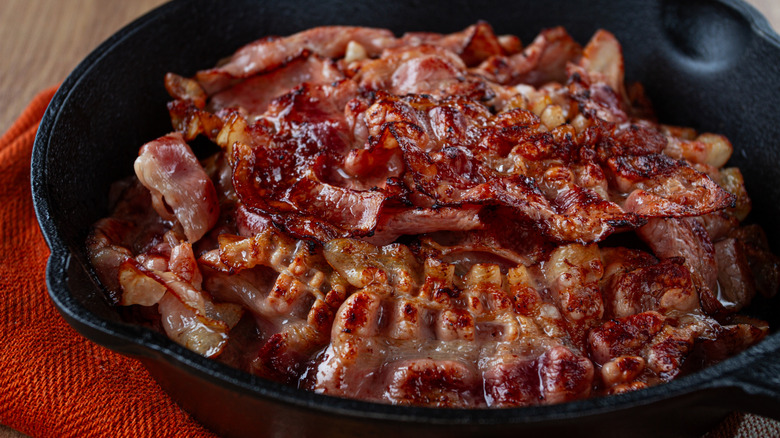
There are very few downsides to cooking bacon, but if we were forced to name one, it would have to be the cleanup. It's hardly the most mess-free thing you can make, and between the grease splattering across your backsplash and sticking to your pan, the aftermath can feel like more work than the cooking. Anyone who's had to suffer with a pan coated in hard bacon grease knows that soap and hot water simply won't cut it. Luckily, several tried-and-tested hacks will make cleaning much easier. Our favorite involves just two pantry staples: baking soda and lemon juice. Together, they can combat the most stubborn grease to make your pan or backsplash look as good as new.
The reason bacon grease, or any grease, is such a nightmare to clean is that when it cools, it hardens and sticks to the pan. On top of that, it's hydrophobic, meaning that instead of rinsing away under water, the grease will continue to cling to the surface of your pans. This is where baking soda and lemon juice come in handy. Baking soda is a mild alkali and naturally abrasive, helping it lift fat. When combined with acidic lemon juice (vinegar also works), it'll fizz, helping to further break down grime. To make things even better, the lemon juice will leave behind a fresh, citrus scent, leaving your pans looking and smelling great.
To clean your pan with baking soda and lemon juice, combine them together until they form a thick paste. Apply this to the stained areas and let it sit for a minimum of 20 minutes, then scrub under warm water using steel wool.
The dos and don'ts of removing bacon grease
To avoid dealing with bacon grease in the first place, the best thing to do is remove the grease before it has time to harden. One of the biggest cardinal kitchen sins is pouring grease down your kitchen sink. We've all learned the hard way that this is not the shortcut we expect, as the grease will harden and clog your pipes. It should always go in the trash, or better yet, let the grease cool slightly, strain it into a container, and store it in your fridge. This will make for the ultimate upgrade to your morning toast.
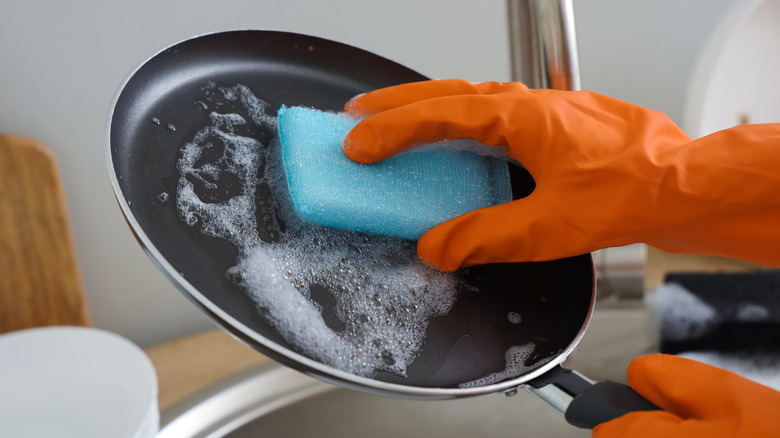
If the bacon is set and requires some elbow grease, the pan you used determines how you clean it. For starters, if you're using stainless steel, you should never use steel wool; this can leave behind tiny, permanent scratches. This is one of many mistakes for non-stick pans, too, as the harsh abrasives can remove the non-stick coating. In these cases, it's best to scrub off grease using less intense alternatives like nylon scourer pads or a microfiber cloth.
If you're working with a hardy cast-iron pan, some purists like to do things a little differently. The non-stick element of cast-iron comes from its seasoning. Traditionally, people avoided cleaning it with soap as it contained lye, which would break it down. Today, most soaps are compatible with cast-irons, but a commonly used alternative is scrubbing your warm pan with a coarse kosher salt; we recommend Diamond Crystal Kosher Salt, which will help lift greasy residue. Rinse off with hot water and rub it with a high-smoke-point oil to maintain the seasoning. Make sure to dry the pan immediately to prevent rusting.