

Caviar Vs Roe: What's The Actual Difference?
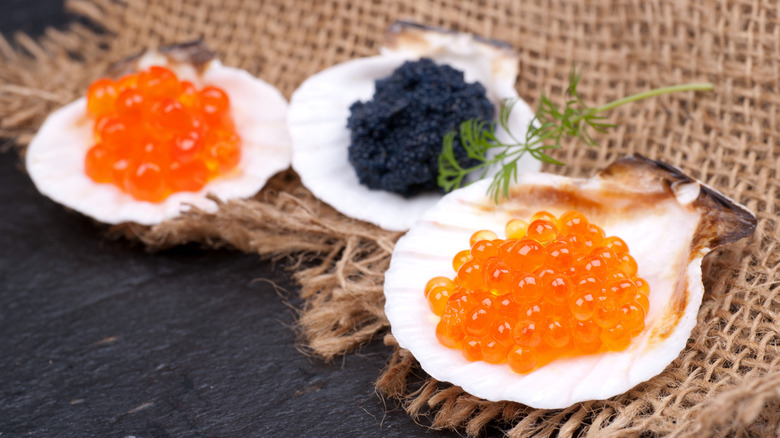
When discussing seafood, few ingredients are quite as nebulous, debated, and, most importantly, expensive as caviar. However, roe is fairly cheap by comparison, despite, at the end of the day, being the same "type" of food. While the two have many similarities, their taste, use, and history couldn't be more different.
Both caviar and roe are unfertilized eggs harvested from fish. While it's mostly a longstanding myth that caviar must come only from wild sturgeon, some organizations still stand by this historical precedent. Roe, on the other hand, is a much broader category that incorporates everything from the different types of fish eggs used in Japanese cuisine to grilled shad egg sacs, more popular in America. The real difference comes in preparation. Caviar is exclusively sold cured in salt whereas roe may come cured, smoked, or fresh.
While not all caviar has to be black, consumers historically prized the dark eggs of Caspian sea sturgeon above any other, a trend that still continues in the 21st century. Roe, however, comes in a rainbow of colors from black to bright orange, with each egg color, size, and texture being equally prized for their unique qualities.
Caviar serving methods, tools, and changes
Environmental considerations, from overfishing to manufacturing methods, have greatly changed the world of caviar. Much of it now comes from farm-raised sturgeons or fish born in hatcheries and later released into the wild. Many types of roe, on the other hand, are still almost exclusively from wild-caught fish.
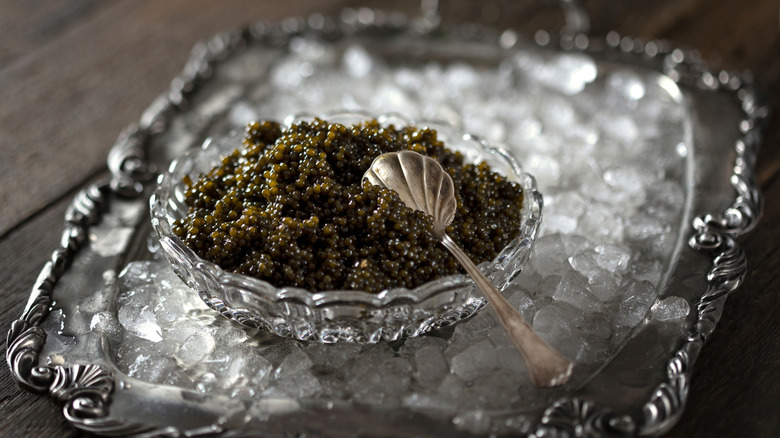
While caviar no longer has to be prohibitively expensive — largely thanks to how it is ubiquitous now, consumers of even moderately priced varieties often prefer to enjoy it to its full extent, eschewing heavy sauces or potent seasonings. Blinis are a popular, traditional accompaniment thanks to their pillowy texture and unassuming flavor profile. However, those who consume some of the highest-priced varieties that fetch thousands of dollars take things even further. Since oxidation can alter flavor and texture, some avoid using metal spoons, like silver or nickel, and instead opt for ones carved from pearl, bone, or horn.
Compared to roe, which you can find alongside just about anything from salads to crab, eating caviar was traditionally the fish egg equivalent of taking your whiskey neat. It allows you to experience every little pop of each egg, coat your tongue in the rich brine, and taste the eggs themselves far more fully. However, today, you'll find caviar ona whole host of foods — from chips to deviled eggs and fast food, a popular high-low food pairing.
Roe varieties and harvesting methods
Since roe is an umbrella term, its uses are as varied as the animals it comes from. In the 21st century, some varieties give even caviar a run for its money, both in price and popularity.
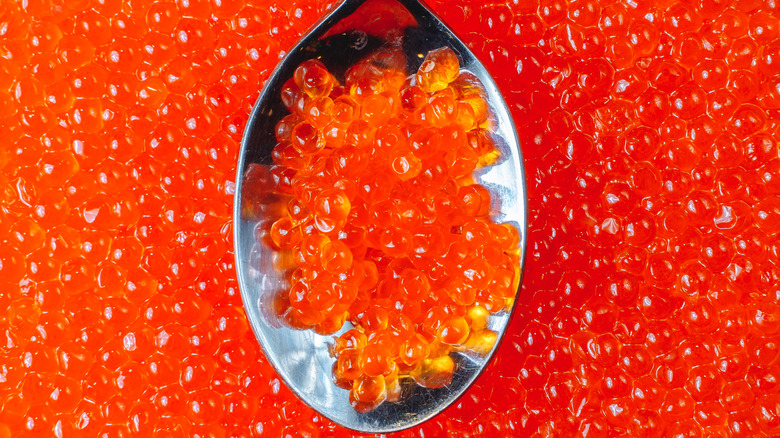
Tiny varieties, like tobiko from flying fish, are popular as colorful sushi toppers. While such small eggs may not have a ton of flavor, they're still packed with nutrients and impart a great texture. You'll most commonly find these varieties served raw and used as garnishes or to add a little more of a sensory experience. Larger eggs, like the prized red pearls from salmon, are great for many different recipes, including curing and consuming them like caviar. These are rich in both fat and flavor, and have some of the most savory tastes of any seafood you can find.
When it comes down to price, there are two main reasons roe is so much cheaper than caviar: availability of fish species and harvesting methods. While roe has historically been most popular in Asia, thanks to its seafood culture, its fish are found throughout the world, making the market highly flexible and adaptable. Plus, you can harvest many types of eggs without killing the fish, maintaining a stable population. While no-kill methods for sturgeon caviar are gaining popularity, most females are still killed to get their eggs, a process that can take between five and eight years.