

Signs You're At A Bad Pizzeria
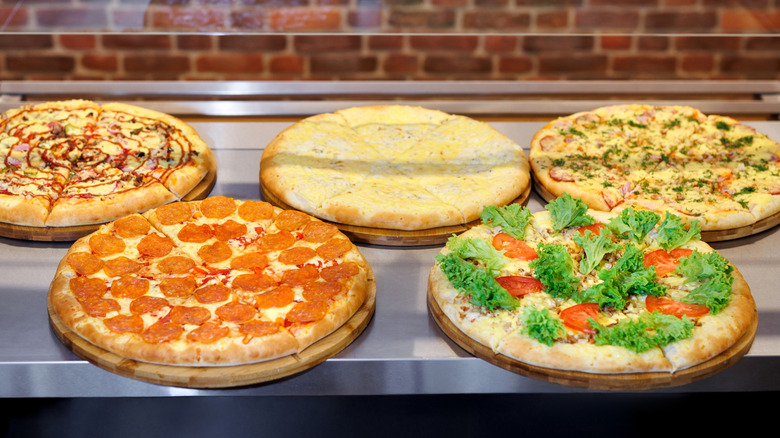
The widespread advent of pizza in the United States began after World War II, and the Italian-born dish's popularity hasn't waned since. Whatever type of pie you're hankering for — Chicago-style, Neapolitan, or that foldable New York City slice — there's almost always a pizzeria nearby to satisfy your cravings, no matter where you live. Not all of them are created equal, though, and Mike Bausch, founder of The Unsliced Restaurant System and owner of Andolini's Worldwide, shared some red flags to look for that indicate an establishment may not be the best place to take your business.
"The throughline across every great pizzeria, whether it is a $5 slice spot or a destination restaurant, is that somebody cares," Bausch explained. "They care about the food, they care about the experience, and most importantly, they care about you." A lack of consideration and inattention to quality are readily apparent if you know what to watch for — and when you see these warning signs, you should definitely say, "Next!" and go spend your dough elsewhere.
Excessive topping choices are usually a mask for a lack of focus
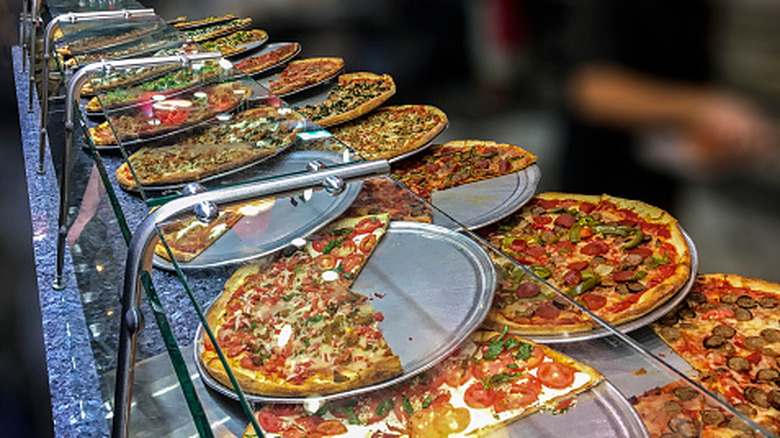
The biggest red flag that a pizza spot isn't up to scratch is "a menu loaded with toppings but zero attention to detail," Mike Bausch explained. "When I see a pizzeria advertising 50 toppings, I already know what I'm walking into. That operator is chasing the customer instead of chasing the craft."
A high-caliber pizza chef is "obsessed with doing one thing correctly," he said — and that one thing is crafting a great pie. A bloated menu often signals a restaurant and chef with scattered vision, a lack of confidence, and/or a lack of caring. The establishment with a veritable flood of topping options is focused on people-pleasing rather than technique and quality, which means a subpar slice will likely make its way to your table. A huge assortment of ingredients also increases the likelihood that low-caliber components will slip through, as quality control is more difficult with such an overwhelming number of elements to keep tabs on.
According to Bausch, every detail in a pizza shop is linked. If a shop is careless with its core concept, that negligence often bleeds into the dough, the sauce, and the overall experience. "Conversely, when you find a place with unbranded boxes, no marketing budget, no flashy signage, just a focused operator who clearly does not care about anything except the pizza itself, that is someone worth paying attention to."
Visible machinery signals a shop's respect for the dough
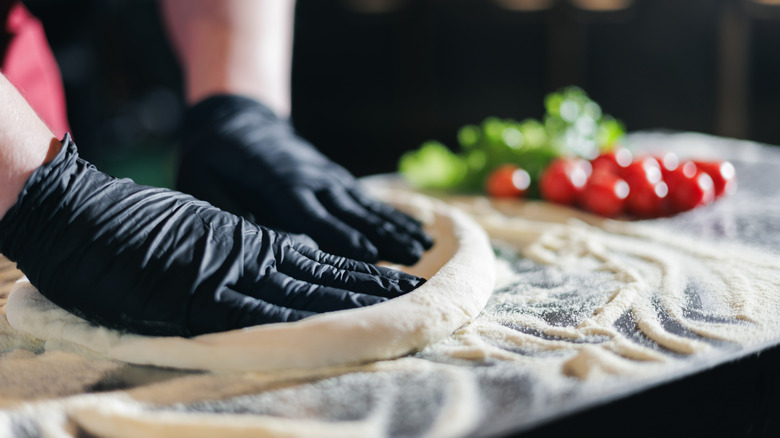
A good pizza shop has equipment that signals it's worth patronizing. The absence of these machines — and the presence of others — indicates that serving top-quality food isn't the priority. Rather, churning out pies in high volumes and at maximum speed is the order of the day.
"When I walk into a pizzeria, the first things I look for are a mixer and dough boxes on site," Mike Bausch shared. "That tells me someone understands that dough is alive and that time and temperature are ingredients[,] too. If I see a sheeter and commercial freezers front and center, I already know the dough is being forced rather than developed."
Sheeters are used for high-volume production — the antithesis of careful quality — automating the rolling process to standardize size and shape. This signifies a restaurant is not handcrafting its dough. Hand-stretching and tossing are crucial for moisture retention and developing the airiness, texture, and balance of crispness and tenderness that are the hallmarks of a true pizza artisan.
Similarly, a commercial freezer indicates a parlor is using frozen dough. The gold standard is dough made fresh daily on site, as properly crafted dough requires time to rise and ferment. Freezing circumvents that process and disrupts gluten development. Even superior ingredients — from San Marzano tomatoes to pizzeria-grade 00 flour — mean "nothing in the hands of someone who does not understand how to build a pizza from the ground up with actual technique," Bausch said.
A chef's pride is the ultimate indicator of quality
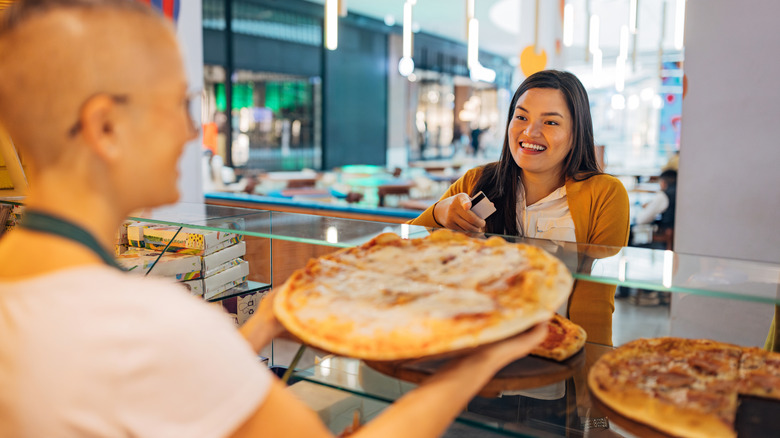
In a truly great restaurant, the chefs are hyper-focused on quality; if something leaves their kitchen that is less than high caliber, they are mortified. Emotional attachment to the greatness of the pie — or lack thereof — is another indication of whether you're in a good or bad pizzeria. "They feel genuine embarrassment when something goes out that is less than spectacular," Mike Bausch explained. "That standard, that internal accountability, is what separates the operators who are truly great from everyone else who just happens to sell pizza."
If you alert a restaurant staff member to deficiencies in your pizza, you'll know pretty quickly how much the chef does or doesn't care by the reaction you receive and any amends that are made. A good pizzamaker is not satisfied with anything less than exceptional food. "That embarrassment, that pride, that standard, that is the green flag," Bausch affirmed.
You don't have to wait to actually be served a bad pie, though, to find out the sentiment of the folks running the kitchen. "Ask if the dough is made in house and watch how they answer," Bausch advised, "because the right operator lights up when you ask that question."
Sometimes a great experience can outshine a mid-tier pizza
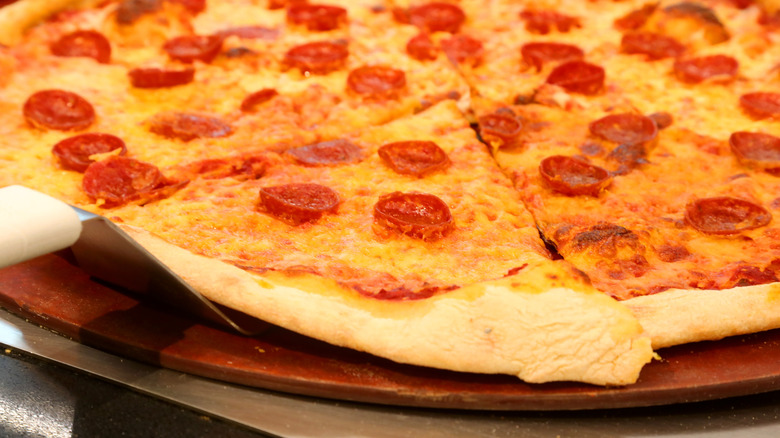
Sometimes, you walk into a pizza establishment knowing full well the pie you're going to get won't be great — and that's OK. "The dive pizzeria gets a pass," Mike Bausch declared, "and I say that with full awareness of what I'm admitting. You know the place. Beat-up counter, slice in the window, someone behind the register who has clearly been worn down by life and does not particularly want to talk to you."
The truth is, some eateries have appeal for reasons outside the cuisine — maybe they have history, nostalgia, or ambiance on their side. Bausch told Food Republic that while the food at these legendary spots is often just "mid," the experience of eating in a place that has stood the test of time can create a sense of nostalgia. That "warm and fuzzy feeling," he suggests, can be more memorable than the pizza itself.
That isn't to say, though, that quality doesn't matter at all. Even a restaurant that is well established for what it is, with lowered public expectation regarding its cuisine, still needs to meet certain standards. "A fantastic slice sitting in a window for six hours from someone who stopped paying attention will always disappoint you," Bausch clarified.