

Skip This Old-School Cast-Iron Seasoning Method Unless You Want To Waste Your Time
We may receive a commission on purchases made from links.
Owning a cast-iron pan feels more personal than other appliances. Carefully maintain and clean the pan, and it'll retain its function as an heirloom, the cooking surface only enhancing with time. However, just like how cast iron pans can linger into the future, they've also circulated since the 18th century — which means some old-school seasoning methods haven't aged so well.
To help explain the downfall of one such outdated technique, Food Republic spoke to Jordan Burdey. The co-founder of Cookware Care – which makes useful products like Cast Iron Seasoning Oil Wipes – he's quick to point out saturated fats as an inefficient seasoning vessel. Whether the fat is applied for an initial use or as a light coating post-cleaning, cooks will often reach for lubricants "like lard or bacon fat, ghee, butter," noted Burdey. He theorized that people use these types of fat without thinking it through, sticking to established practices out of habit.
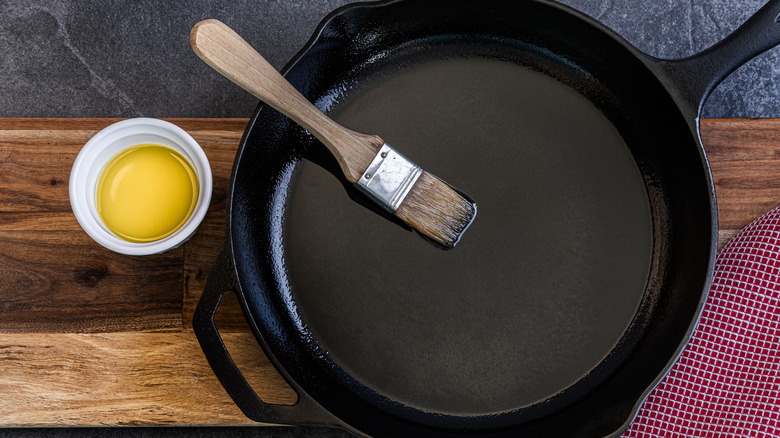
However, the composition of such saturated oils isn't optimal for seasoning. Instead, Burdey suggested people use "an oil that is very high in unsaturated fats," as it'll break down better for seasoning. Not to mention, lighter fats are less cumbersome to handle because their consistency is easier to drizzle and pat. So take note that the best oil to season your cast iron is grapeseed rather than good ole' bacon fat.
Verse yourself in oil science for optimal cast iron seasoning
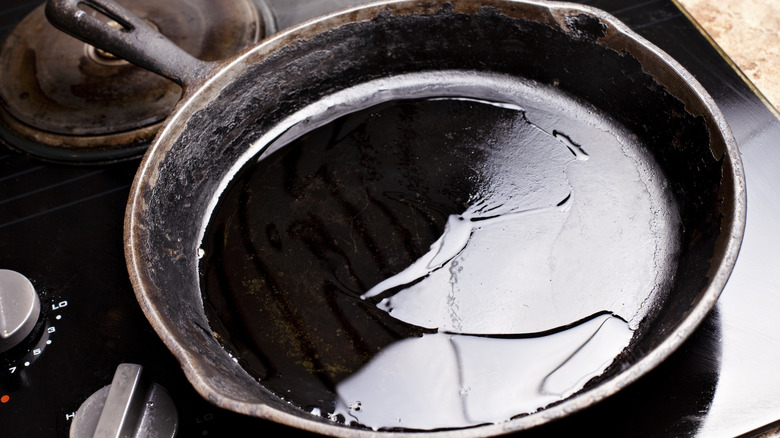
To keep seasoning your cast iron stress-free, it's helpful to dive into the intricacies of the process. For starters, don't undervalue the need for the step – an untreated cast iron pan is woefully adhesive and prone to rust. While most manufacturers do apply some seasoning when manufacturing, it's not enough to confidently sizzle through cast-iron recipes.
So instead, you'll need to do some seasoning yourself, which Jordan Burdey said is scientifically called "the process of polymerizing oil." Essentially, this entails warming oil to break "double bonds that exist in the fat molecule," thereby creating "a single chain of molecules," he explained. These single-bonded polymer layers stack up, serving as a nonstick base and protecting the pan from rust.
Burdey added a crucial detail: "Saturated fats do not have these double bonds while unsaturated fats do." He clarified that the ill-advised fat options will still work, as "most saturated fats do have SOME unsaturated fat in the fat content." Still, it makes sources such as animal fats, coconut oil, and palm oil inefficient. So keep such cast iron cookware hacks in mind, and your pan will indeed last for generations to come.