

Try This Genius Cardboard Trick For Weed Control And Richer Garden Soil
No matter the verdancy of your green thumb, the quality of soil dictates garden health. Ideally, the dirt in your background should have a complex composition and be full of nutrients, minerals, and other organic matter. Yet maintaining soil health — all while keeping leeching weeds at bay – can be difficult. So to offer an a genius easy cardboard trick, Food Republic is fortunate for guidance from Tammy Sons, the founder and CEO of TN Nursery.
Turns out, abundant leftover boxes offer quite a gardening advantage. "Cardboard suppresses weeds and slowly decomposes into the soil below," Sons noted. After all, the material is a paper product, composed of intricately processed wood fibers. So as long as you "only use brown cardboard with all paper labels and packing tape removed," said Sons, then boxes can actually enhance your garden's condition.
Firstly, the cardboard improves dirt health by "feeding soil microbes and loosening up hard soil," Sons explained. Additionally, this simple layer of thickened paper stifles weeds, depriving them of sun and oxygen. Easy to install, eco-friendly, and surprisingly effective, using cardboard lends lots of advantages for growing vegetables in your garden.
How to use cardboard in your garden
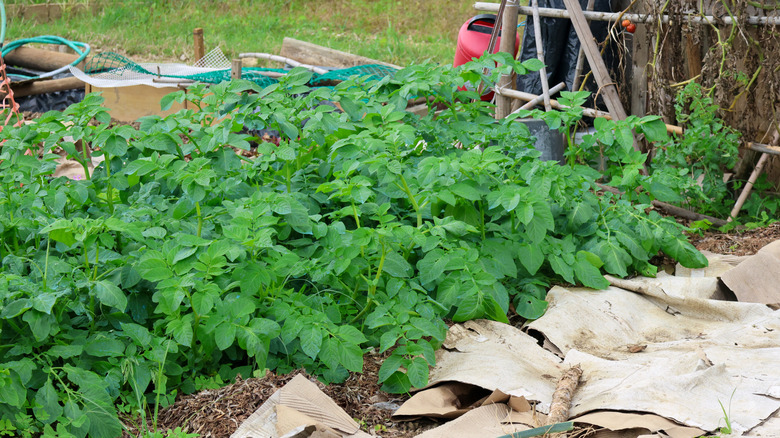
Cardboard box in hand, putting the material into action can feel tricky. Start by noting whether you can even use the material. "Shiny cardboard and cardboard with tape can contain chemicals," cautioned Tammy Sons, as do boxes covered in petroleum-based ink. Thankfully, widespread corrugated cardboard biodegrades, making most boxes fit for the task.
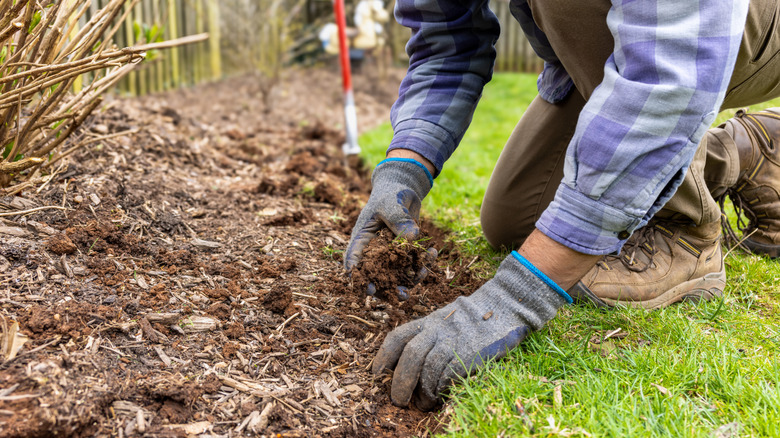
Next, you'll want to place the material down. "Cardboard should be overlapped and soaked with water to hold it in place," Sons explained. Understandably, wet cardboard doesn't offer maximum aesthetic appeal, especially as it disintegrates. So to remedy, Sons recommended adding a few inches of mulch, noting the gardening staple both disguises the cardboard and "adds another layer of weed-suppression."
You can incorporate fertilizer as well as reused coffee grounds to liven up your garden, or keep it to the mulch-cardboard combo. The paper-based product will take up to half a year to fully break down, but the hands-off technique will result in a higher-quality garden. Still have some cardboard leftover? Start storing potatoes in a cardboard box, thereby even further minimizing waste.