

Vending Machine Origins Go Back To Ancient Times
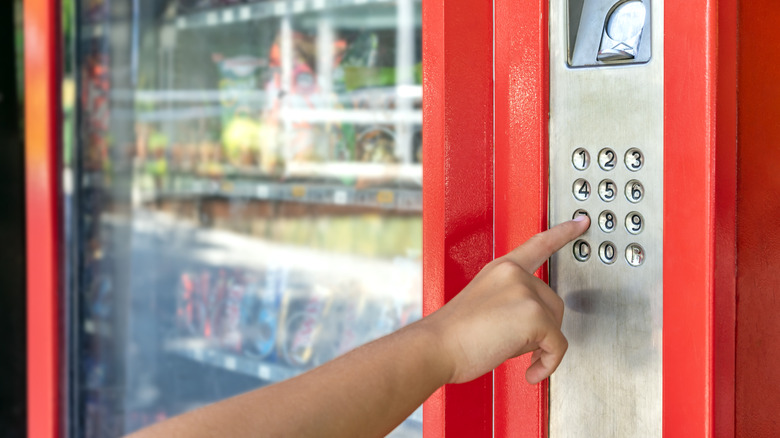
Most often, vending machines occupy a nondescript status, quietly humming away in diverse spaces like schools, factories, and malls. Yet the often overlooked device carries significant prominence, with millions of Americans using them each year to buy drinks and snacks. You may be surprised to learn that the history of the machine traces back centuries, to well before the advent of widespread electricity usage.
The concept of the vending machine dates back to the 1st century A.D. created by the influential Greek mathematician and engineer Hero of Alexandria (sometimes spelled Heron). In addition to pioneering machinery like the first steam turbine, Hero constructed a coin-operated device that allocated measured pours of holy water at temples in Egypt. The machine's mechanics function remarkably similarly to the first modern vending machines, just without any electricity involved.
When a coin was inserted, it landed on a delicately balanced lever, which triggered a spout. The holy hater then ran until the coin slipped off, shutting the valve. Created to enforce equal water distribution, it's very likely the device was employed at temples, but its duration of use is unknown. Yet, the mechanics of such a pioneering invention did become preserved in print, ready to inspire a new wave of inventors centuries down the line.
Vending machines became widespread in the 20th century
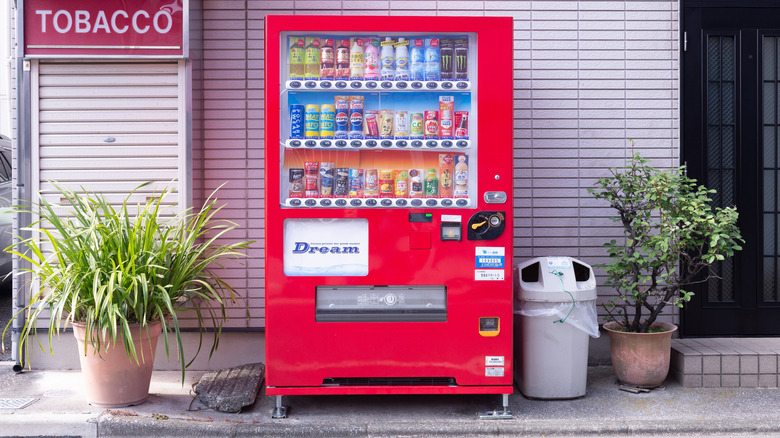
It wasn't until the late 19th century that vending machine momentum picked up once more, with early machines reinstating Hero's original blueprint. Gum was sold in the very first food vending machine in 1888, serving commuters on the New York City subway. Chocolates and candies joined the mix, and it didn't take long for soda to appear, too. The first Coca-Cola vending machine debuted in 1929.
Over the next few decades, innovators expanded the scope of the machine, securing payment, allowing for the use of cash (thus enabling change), as well as incorporating refrigeration. By the mid-20th century, the invention became widespread in the U.S., sustaining millions with drinks and snacks.
Millennia ahead of the curve, Hero's invention paved the way for a wondrous array of conveniences. Today, vending machines provide easy access to fresh eggs, dole out hot pizzas, and — as displayed by the Roboburger featured on Shark Tank – can even cook an entire burger to order. Global companies generate ever-increasing profits by way of the machine's ease of use, all thanks to a clever way of distributing holy water that's almost two thousand years old.