

What's The Best Time To Drink Coffee? Here's What Science Says
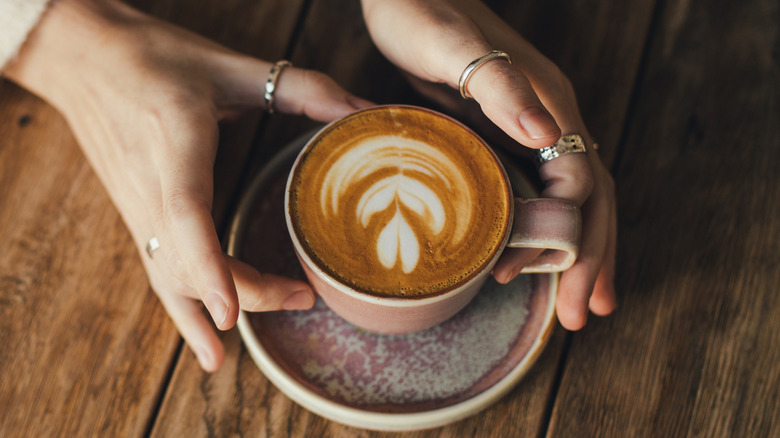
Some people go to bed thinking about the cup of hot, steaming coffee they will enjoy the next morning (it's us, we're some people). So it makes sense that more people imbibe this hot bean water than they do actual water every day, and that the average coffee drinker consumes as much as three cups in a 24-hour period (per the National Coffee Association). While many people drink the beverage because they simply like the taste, it also gives folks energy and perks them up. And according to Chelsie Rohrscheib, a neuroscientist, sleep expert, and the head of sleep research at Wesper, there are a few best times, which have been scientifically proven, to drink coffee and really feel its energizing effects: about an hour after waking up, and then between noon and 2 p.m.
"Caffeine in coffee blocks the activity of the sleep molecule adenosine, helping us feel more alert and energized," she explained to Food Republic. It also jolts your cortisol levels (cortisol helps with awareness), which gradually start to lower as you wake up. Rohrscheib also shared that our cortisol levels begin to dip again in the afternoon, which is why the noon-to-2 p.m. caffeine jolt can also do wonders for your attentiveness.
Know your caffeine limits to avoid the afternoon slump
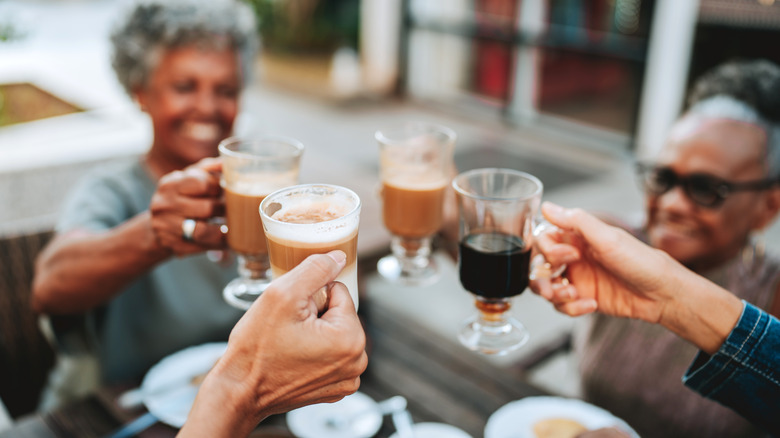
For many folks, coffee can be enjoyed until 2 p.m. without issue, but there are some people who are outliers. These people might have sleep issues and/or caffeine sensitivity, and while the morning cup is all right, the afternoon cup might leave them a shaking mess. "It's important to understand that caffeine has a long half-life, which means it can stay in our system for hours," Chelsie Rohrscheib told us. The average person can have their last cup six hours before bed, but for those affected by the stimulant, it should be more like eight hours.
Caffeine sensitivity, by the way, is characterized by anxiety, jitters, a rapid heart rate, and even vomiting in serious cases after consuming a caffeinated beverage like coffee. It can be caused by both your genetics, as well as the frequency and amounts at which you consume it. Rohrscheib suggested that if the above symptoms sound familiar, "it is generally best to limit caffeine intake and avoid it earlier in the afternoon." Or, if you can't live without that post-lunch cappuccino or latte, try swapping in decaf, which contains far less caffeine than regular and is actually more hydrating than you might think.