

The Common Fish That Belongs In Your Next Omelet
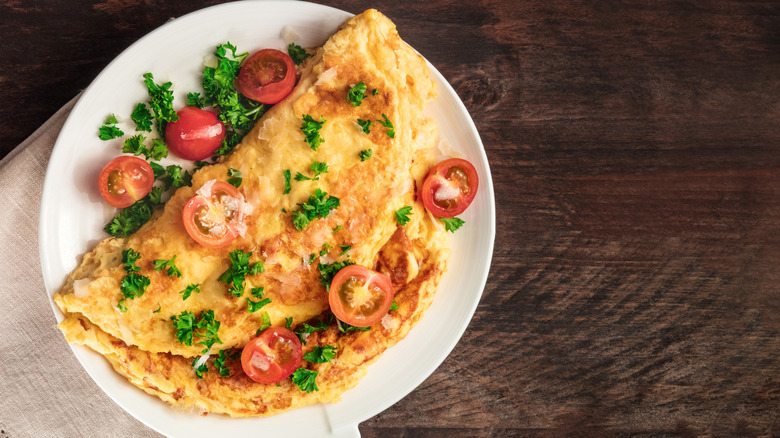
Few dishes are as customizable as the omelet. From regional differences like the creamy, unfilled French omelet to the heartier, folded, and loaded with fillings American-style omelet. On top of that, it's the perfect vessel use up your leftovers. There are many ways to upgrade your omelet, and one of the most underrated add-ins is salmon. To learn more about this elite combo, Food Republic spoke with David Davidov, recipe and culinary content developer, as well as founder of The Cooking Foodie.
According to Davidov, balance is the reason that salmon and eggs naturally work together. "Eggs are rich, soft, and neutral, while salmon brings saltiness, fat, and a slightly smoky or savory depth," he told us. Just think about tried-and-tested classics like smoked salmon and scrambled eggs on toast — a salmon omelet is just a tweaked preparation of this. Beyond taste, their respective textures are perfectly complementary: "Tender flakes of salmon folded into creamy eggs feel intentional and comforting, not heavy or greasy," Davidov noted. As if that wasn't convincing enough, salmon is a cut above your standard veggie or ham filling, making it an easy way to add a gourmet touch to an otherwise simple breakfast.
As for what salmon you should use, Davidov noted that both smoked salmon and gently cooked salmon work. For those in a pinch, canned salmon is also a convenient, cost-effective choice. Salmon is extremely tender and is particularly susceptible to drying, so it's always best added during the folding stage or even added on top after the omelet is finished. "I usually tear [smoked salmon] into small pieces," Davidov told us. "If I'm using fresh salmon, I cook it separately first, just until barely done, then flake it."
Mistakes to avoid when adding salmon to your omelet
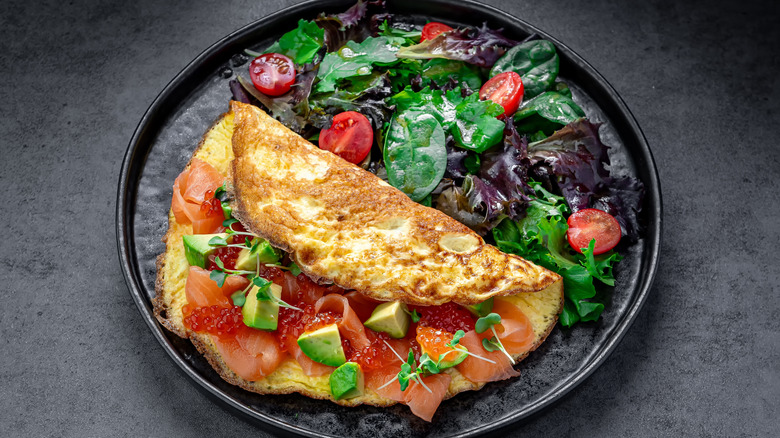
While anyone can master an omelet, a few easy mistakes can turn it from soft and creamy into something rubbery and chewy. According to David Davidov, the most common culprit of a ruined omelet is overcooking. To avoid this and to prevent your omelet from sticking to the pan, stick to a medium-low heat in a nonstick pan and keep the eggs moving at first. Add your fillings while the eggs are still moist, so they integrate smoothly and hold their structure. Otherwise, your omelet turns more into an egg taco — but hey, if that's your thing, go for it!
Another common mistake, Davidov noted, is over-seasoning. "Some fish need a lot of extra flavor to work with eggs, but salmon already has enough richness and natural savoriness," he explained. With its rich, buttery profile, all you really need is a light sprinkle of salt and pepper to enhance the dish. Going in too heavy with the seasonings can mask how well the eggs and salmon naturally pair together. That said, if you enjoy extra seasoning, fresh herbs like chives or dill complement both elements beautifully, while a squeeze of lemon adds a bright finishing touch that'll enhance the flavors of the salmon.
It's not exactly a mistake, per se, but stopping at just salmon would be a missed opportunity. Once you've nailed the base, adding complementary ingredients can take your salmon omelet from good to exceptional. A creamy element like créme fraîche pairs excellently, adding richness and a subtle tang while making the texture of the omelet even silkier. Other great additions include capers or sun-dried tomatoes, which echo the flavors of beloved salmon dishes alongside adding extra depth and textural contrast.