

What States Can You Get Cocktails To-Go?
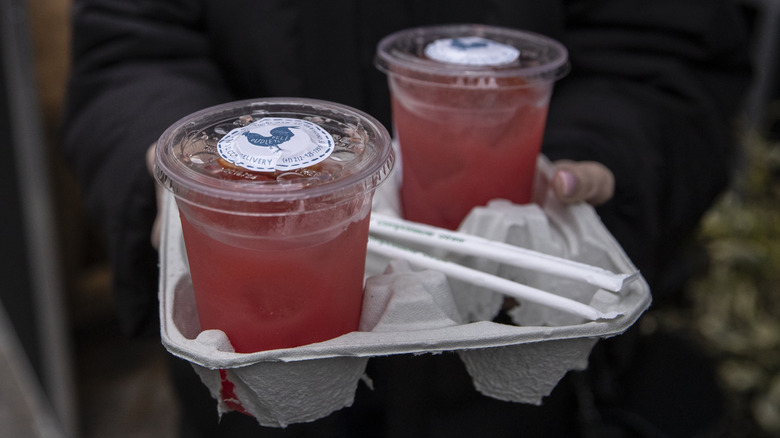
For many, the appeal of a cocktail is multisensory: the drink's glassware, the bar environment, and the bartender's explanation. Still, sometimes the party is simply better at home, so you may want to grab a tipple as takeout without learning how to make classic cocktails. In some U.S. states, that is in fact possible — an initiative that rapidly expanded during the COVID-19 pandemic.
As of January 2026, Arizona, Arkansas, Colorado, Connecticut, Delaware, Florida, Georgia, Hawaii, Illinois, Indiana, Iowa, Kansas, Kentucky, Louisiana, Maine, Massachusetts, Michigan, Missouri, Montana, Nebraska, Ohio, Oklahoma, Oregon, Rhode Island, Texas, Vermont, Virginia, Washington, West Virginia, Wisconsin, and the District of Columbia all permanently allow to-go cocktails. Meanwhile, California, New York, and New Jersey temporarily allow takeaway purchases, with those measures set to expire between late 2026 and 2030 (with New Jersey's specific expiration date currently tied to ongoing legislative review).
Due to the structure of the 21st Amendment, U.S. states rather than the federal government control alcohol distribution, as well as other intricacies of drinking. So do not be surprised when you cross a state line and even slight rules regarding to-go cocktails look completely different. Only some states allow to-go alcohol on delivery apps, and what constitutes an "open container" also deviates by area. In California — the U.S. state that drinks the most alcohol — order pickups are vigilantly verified and generally require the purchase of a meal, often with a two-drink cap per meal. While the majority of states participate, note that the precise details vary.
The specifics of to-go cocktails vary by state and bar
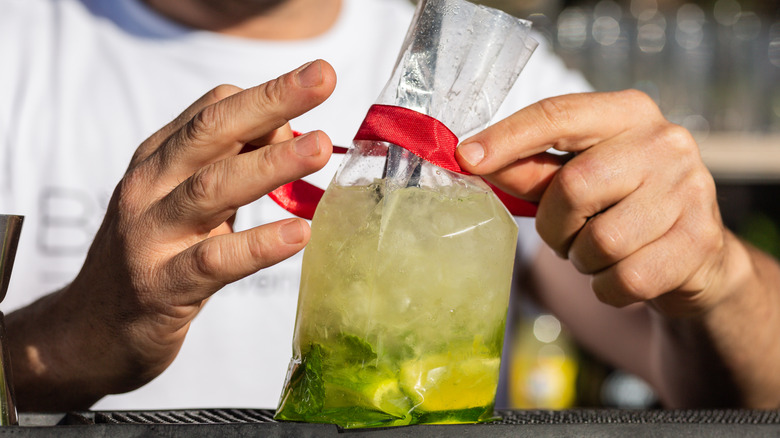
Despite widespread implementation years back, to-go cocktails remain a contentious topic. Most often, a takeaway drink comes with a food order or occasionally might follow a meal, perhaps meant for on-the-go sipping in a walkable "social district." Yet the practice's legality is always under discussion. Some officials cite that to-go cocktails enable underage drinking, while others worry over the proliferation of open containers in cars and public spaces. As a result, many to-go alcohol schemes come with stipulations, such as mandatory food orders, specific tamper-evident seals, or drink limits.
Furthermore, the businesses themselves also exercise discretion over how to-go tipples are carried out, with plenty of case-by-case variation. For instance, you can get alcohol to go at Olive Garden, but not always mixed cocktails. Meanwhile, some bars may not offer their drinks for offsite consumption due to a lack of proper containers or as part of a business strategy. Others might pre-bottle their drinks or even create specialized packaging for a specific offsite selection. Plus, while the practice of to-go cocktails picked up during the COVID-19 pandemic, there are also remnants of a long-established takeaway culture. Businesses like Louisiana's frozen daiquiri stands and Key West's streetside bars have been around for decades. Just remember that stances on drinking vary heavily across the U.S., but in the majority of states, you can request a cocktail to go.