

Did Chicago Thin-Crust Or Deep-Dish Pizza Come First?
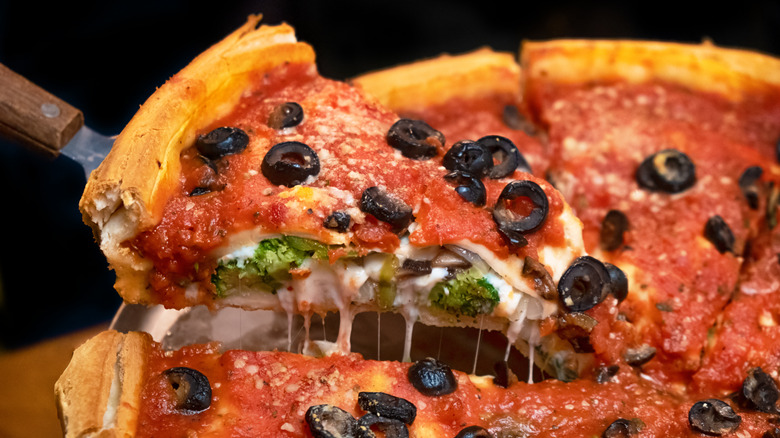
There are many types of pizza in the U.S., with Chicago's deep dish an especially noted style. Thick, doughy, and cheesy, the decadent pie often receives the spotlight of the city's food scene, especially for visitors. Yet Chicago-style pizza is more than just deep dish; its thin-crust rival — also called tavern-style pizza — is an equally popular offering. Both types come with loyal fans (as well as critics), upheld by decades of tradition. So naturally, pie fans may wonder: Which pizza type first emerged in the city's storied culinary scene?
Like elsewhere in America, Chicago's pizza culture started by way of Italian immigrants, who arrived in the Midwestern metropolis starting in the late 19th century. It took some decades for pie culture to firm up, with New York City's scene initially ahead of the Windy City's. A few small bakeries first sold the dish, followed by the opening of Chicago's first pizzeria in 1906, as well as the famed Pompei Restaurant in 1909. The city's first dedicated pizza institution, Granato's, only swung open its doors in 1924. What kind of pie did Pompei and Granato's sell? Thin crust.
Still, it took two more decades for Chicago's pizza culture to become truly widespread. Tavern style did not catch on until the 1940s, contemporaneously with the birth of deep dish. So although thin crust technically came first, the Windy City's two cherished pizza formats really emerged in parallel. Nevertheless, that still means whenever you order a thin crust pie, you're biting into Chicago's original pizza type.
Prohibition's end sparked the rise of Chicago's thin-crust pizza
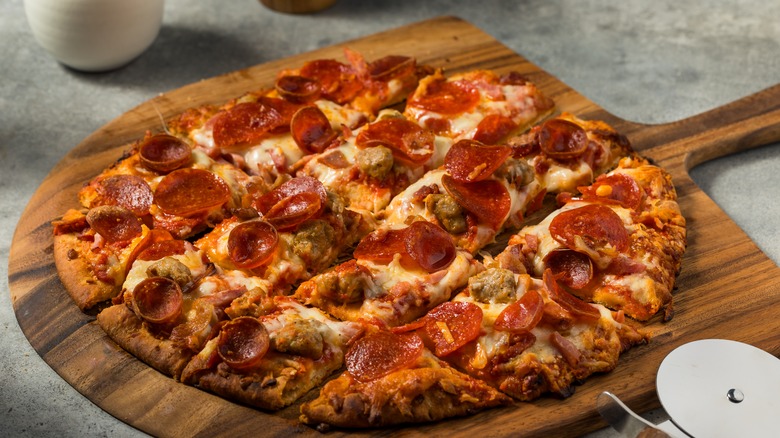
Unlike the meticulous preparation of Neapolitan pizza, Chicago's tavern style is especially easygoing. Influenced by old-world pizza-making, the first thin crust varieties served as casual nourishment in the city's numerous Italian enclaves. Not yet distinctly Chicagoan in composition, it took Prohibition's conclusion in 1933 to start shifting the city's pizza-making tradition.
Sometime in the early 1940s, taverns, like Home Run Inn, started offering free pizza at the bar to entice customers. To aid easy munching (and avoid the need for plates and dinnerware), the pies were conveniently sliced into squares, enabling consumption on a napkin. Bar owners then further streamlined the pizza creation process by employing industrial sheeters, yielding pie crusts without the need for labor-intensive dough-forming techniques. The mechanical process produced increasingly thin pizza, with techniques like initial par-baking or overnight chilling lending added crispiness.
To flesh out the cracker-like style, taverns also piled on generous helpings of cheese, optional cured meats (like housemade sausage blends), and the occasional vegetables, thereby satiating customers and prolonging the drinking experience. An increasing number of nightlife spots, like the still-beloved Vito and Nick's, joined the pizza party, creating unique takes on the style. Later, the thin and square-cut build took off in cities like Milwaukee and St. Louis, too. Easy to scale, inexpensive, yet delicious, tavern-style became one of America's iconic pizza styles.
Chicago's deep-dish style grew from experimental origins
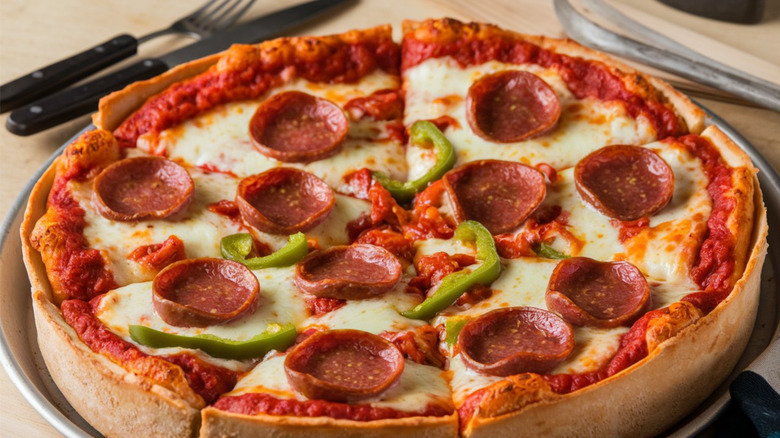
The origin of Chicago deep dish also dates back to the early 1940s, when a burgeoning American pizza culture took the Windy City by storm. In parallel with the complimentary thin crust pies doled out at the time, another tavern owner named Ric Riccardo started tinkering with a heavier style prepared in a cast iron pan. Riccardo not only added more height to his pizzas (the first rendition came about an inch thick) but also inverted the topping order, with cheese laid down on the bottom and sauce spooned on top.
He debuted the creation at his restaurant in 1943, then trained cooks at Pizzeria Uno, a still-operating business often misattributed as originating the food. Deep dish pizza caught on quickly, but it took decades to reach its modern form. The dough was reworked in the 1950s, with fat added to improve pliability. Furthermore, the pizza only achieved its final decadent height in the 1970s.
Today, many versions exist in Chicago, with numerous pizza makers showcasing unique doughs, toppings, and techniques. As with tavern style, deep dish culture comes bolstered by loyal fans, proud of a distinctly Chicagoan food. So whether you're making Chicago deep dish at home or eating out at a beloved institution, take note this food comes with a rich history, too.