

How Alton Brown Ensures Homemade Lobster Bisque Comes Out Just Right

Everyday soups like chicken noodle, vegetable, and tomato are among the easiest dishes to make without too much fuss. Fancier bisques, however, take more time. Several steps are involved in creating the richly flavorful soups with a velvety smooth texture. They are traditionally made with shellfish, and lobster is perhaps the most famous example. People tend to enjoy the luxuriously creamy dish at restaurants (though there's a red flag to be aware of before ordering it), but it can also be tackled at home. When Alton Brown makes his lobster bisque, he uses a few techniques to create the right taste and consistency.
The celebrity chef uses the crustacean's shells only, deliciously repurposing them when they would otherwise be thrown away. One of his key essentials is to "extract as much flavor from the shells as possible." He does this by first cooking the shells in butter and a mirepoix of carrots, celery, and onions until they begin to brown. Some of lobster's flavor compounds are fat-soluble, so this step infuses their essence into the butter. Browning the shells also brings the Maillard reaction into play, creating new tastes through heat-driven changes in proteins and sugars.
Sherry is then added, contributing its own flavor while deglazing the pan as its alcohol and acids dissolve the tasty bits on the bottom. The fortified wine's acidity also helps cut through the richness of the fat. Finally, after the shells simmer in seafood stock, Brown presses on them while straining the soup to extract all of their savory liquid before discarding them.
How Alton Brown thickens his lobster bisque
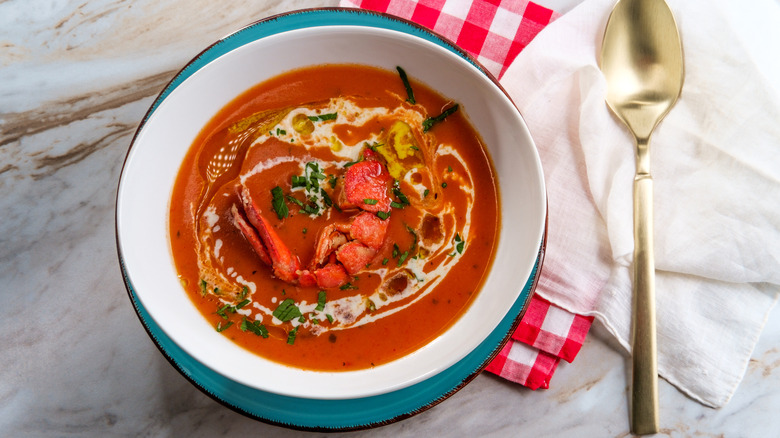
Alton Brown's other essential is thickening the bisque in two ways, starting with a beurre manié — a French term that means "kneaded butter," referring to the way equal amounts of softened butter and flour are mixed and kneaded together to form a paste. It has the same two ingredients as a roux, but beurre manié isn't cooked. The fat coats the flour, and as it melts after being mixed in a little at a time near the end of cooking, it helps spread the flour evenly, which then plumps up and thickens in the stock. Flour added alone would be lumpy, and the butter also helps make the bisque glossy.
Next, he whisks the soup in a blender with cooked white rice, which works because of its starch. In addition to Brown's direction to use a blender, the rice could also be whisked in the pot with an immersion blender, or, in some recipes, cooked directly in the stock. However it's done, the soup is then put through a strainer. The lobster shells are also sometimes ground up and incorporated for more flavor, but even after being strained, the bisque can be chalky.
There are variations you could try on Brown's recipe, such as deglazing the pan with brandy or cognac, adding spiciness with red pepper flakes or cayenne, or garnishing it with cooked lobster. You could also try French cuisine legend Julia Child's trick of lighting the pan on fire after pouring in the sherry, which she contended made the flavor even better. Enjoy your lobster bisque with crusty French bread and a crisp green salad.