

Why Delicious Homemade Pizza Takes Days To Make

While a frozen pizza may only take 20 minutes, homemade recipes aren't nearly so quick. Food Republic spoke with Frank Kabatas, owner and operator of East Village Pizza, to learn more about why the best pizza doughs can take up to three days to perfect.
"From the fermentation process to the cooking style and amount of time fermenting to oven temperature/type and equipment, pizza crust is influenced by a number of things," he said. One of the biggest mistakes everyone makes with homemade pizza is not letting the dough rest, resulting in a tough, dense bread. However, if you want great texture and flavor, restaurant-quality dough relies on a fermentation step known as cold fermentation. By letting your dough ferment at colder temperatures for longer, the yeast consumes sugar at a reduced rate, slowly releasing carbon dioxide and producing more complex tastes.
"Activating the dough's yeast during the fermentation process is a critical step for making a better, lighter pizza dough and crust," Kabatas explained. "For the best possible results, letting the dough ferment in a cold environment, like the refrigerator for one to three days is ideal." Temperature control is one of the biggest factors affecting a pizza's quality, creating both texture and flavor at every step of the process. Learning the exact degrees for each step is vital to getting the best product and even small differences can have a huge impact.
Best temperatures for different pizza stages
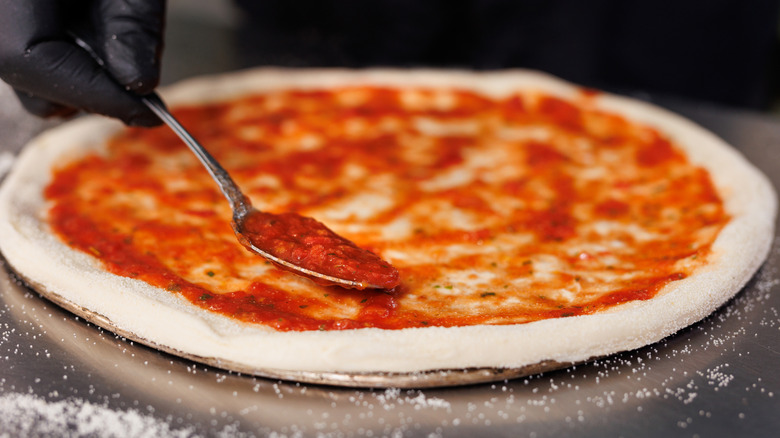
From multi-day cold fermentations between 39 and 41 degrees Fahrenheit to blistering hot ovens between 450 and 500 degrees Fahrenheit, the best homemade pizzas require some serious temperature ranges. However, you can't just shock your dough and equipment with sudden temperature changes unless you want a lackluster product.
If you skip cold fermentation and just let your dough ferment on the counter for two to five hours, it should already be at the perfect temperature range for shaping: between 65 and 75 degrees Fahrenheit. "Make sure to let the fermented dough rest and come to room temperature for at least one hour prior to baking," says Frank Kabatas. Not only is cold dough harder to work with, but, once you put it in the oven, it won't rise and crisp up properly. In a worst case scenario, you might end up with perfectly crisp toppings and melted cheese only to have a limp, doughy crust.
The best doughs need a little help getting the perfect texture, and that's where pizza stones come in. They're a cheap fix for uneven oven heat, but they also provide some extra heat directly to the bottom of the crust, crisping it up beautifully. However, like dough, you have to let them slowly come to temperature in the oven for an hour or two. "This step ensures the stone will evenly absorb the oven's heat and come to a consistent temperature, which will result in an evenly cooked pizza," Kabatas adds.