

The 4 Most Common Types Of Coffee Beans And How They Differ
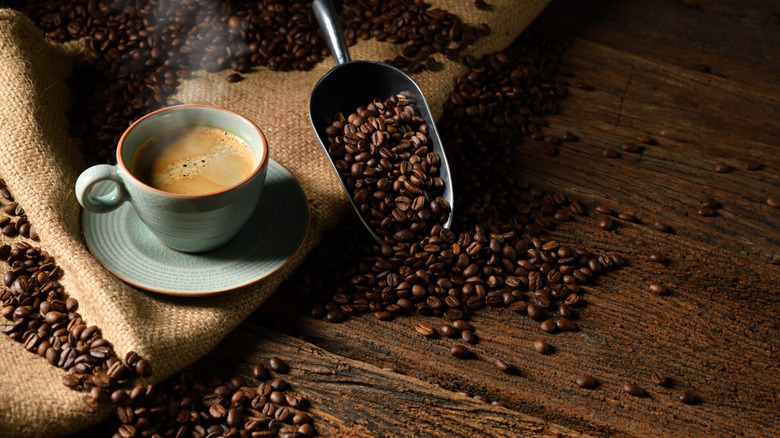
Coffee packs an astounding degree of diversity. The plant grows in over 70 countries, with thousands of varieties categorized into well over a hundred species — new types continue to be discovered to this day. Yet while information like the roast, origin, and flavor notes is what typically ends up on a coffee label, not much attention is drawn to the bean species (except, of course, for arabica beans).
Largely, this comes down to the limited range of commercially cultivated coffee types, with only four species comprising the bulk of global production. Among these — arabica, robusta, liberica, and excelsa — even fewer typically end up in a coffee cup. Today, arabica constitutes approximately 65% of global production, with robusta occupying the bulk of the remainder, and liberica and excelsa only tiny proportions. Such a skew towards a single species occurred by way of arabica's 20th century global dominance, fueled by marketing, taste preferences, and processing expertise.
Nevertheless, with intrigue in specialty coffee higher than ever, coffee producers, roasters, and consumers are all piqued in sampling a greater breadth of coffee types. Matched by new cultivation practices and accommodations for changing environmental conditions, expertise in coffee species is gaining a newfound gravity. All four produce flavorful cups, with distinct, intricate qualities worthy of appreciation.
Flavorful arabica coffee leads worldwide coffee production

Long the star of the coffee industry, arabica beans require demanding growing conditions, but produce flavorful cups with wide-ranging tasting notes. Originating in Ethiopia, varieties of arabica were the first cultivated and later transported coffee plants, forming a centuries-long growing tradition. Today, arabica production occurs worldwide — countries like Ethiopia, Colombia, and Honduras are all famed for this specific bean type.
Arabica delivers a smaller caffeine kick than robusta and other coffee species. Furthermore, the arabica tree has fussy growing conditions, requiring elevation over 2,000 feet, particular levels of rainfall, and nutritious soil – and it's all underlaid by predisposition to disease. Worryingly, modern climatic pressures only further diminish arabica's production, increasing its price and lowering availability.
Despite such hardships, arabica produces a wide-ranging, flavorful palate beloved by coffee enthusiasts, establishing the beans as the industry's go-to. Typically, such coffees come with complex fruit, chocolate, and earthy flavors, often punctuated by a pleasant tartness. Arabica's sugar and fat content improve drinkability, making it easier to produce a tasty cup as opposed to other species. Not to mention, the coffee translates its terroir into a wide array of flavor notes and shines under varying roast levels, further aligning it with coffee lovers. This translates to the generally higher intrigue of arabica over other species; varieties like geisha are among the world's most coveted coffees. Nevertheless, consumers are starting to shift away from arabica's perceived supremacy.
Robusta is a resilient and caffeinating coffee type
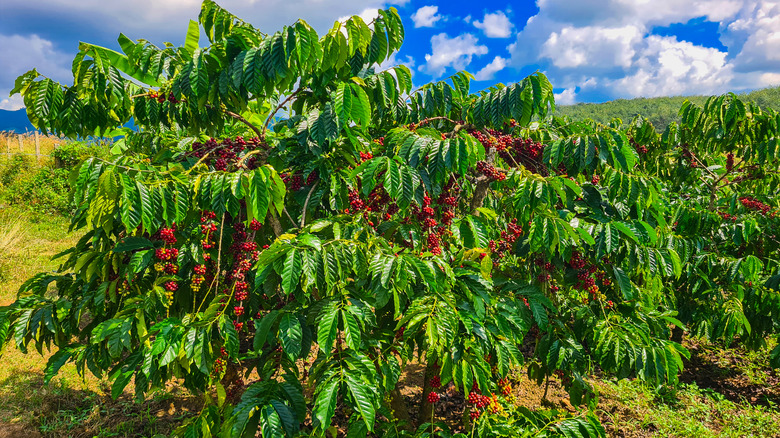
Robusta, the colloquial name for the coffea canephora plant, is the second most popular coffee species. Originating in sub-Saharan Africa, the bean type is valued for its hardiness. The plant is less restrictive with soil and elevation conditions and offers better resilience against disease and drought – major threats to coffee species. Such sturdy qualities come by way of robusta's increased caffeine content, which is significantly higher than other bean types.
Although its cultivation certainly comes with advantages, a major difference between canephora and arabica coffee species is the typical flavor profile. Especially when grown for quantity over quality, robusta translates to a coffee with bitter, rubbery, and woodsy flavors, often with less underlying acidity. The bean's bold palate and caffeinating nature have made it historically employed for espresso consumption, whether standalone or in a blend with arabica. Upheld by the coffee's lower price, robusta is also often grown for instant coffee.
Nevertheless, coffee professionals have recently spurred a newfound appreciation for the bean type. When properly roasted and aged, the coffee type can deliver complex sweetness and a pleasant, rich palate that melds well with other flavors. Robusta is widely utilized for brewing in Vietnam — the world's leading producer of the species – crafting richly flavored drinks with condensed milk. The coffee's also widely grown in Central Africa, Brazil, and Indonesia, cementing it as the globe's second most popular type. Complemented by the bean's resilience, robusta production is steadily increasing, catapulting the coffee type into the spotlight.
Infrequently cultivated liberica is gearing up for a resurgence

Liberica exists as one of the rarest types of coffee, occupying a tiny percentage of worldwide production. The bean type originated in Western Africa, but today is most often grown in Southeast Asia, with the greatest prevalence in the Philippines. The variety's known for its large resulting cherry, which translates to a prominent sweetness once brewed — some cite the bean tastes even fruitier than arabica. The flavor is often likened to jackfruit, with woody notes, accompanied by a full-bodied consistency that can taste syrupy or even boozy. Liberica's caffeine content is approximately halfway between robusta and arabica.
Liberica once comprised a prominent part of coffee cultivation for part of the 19th century, when coffee rust infection affected arabica plants. However, difficulty in quality control and an off-putting flavor led to a production decline, with cultivation now limited to a few countries. Furthermore, the plant's fruit produces a smaller yield of beans compared to other types.
Nevertheless, interest surrounding liberica has reignited in coffee circles, by way of the bean's useful environmental advantages. The Liberia plants are better predisposed to handling climatic troubles, difficult soil conditions, pests, and disease. The thicker skin of the large coffee cherries poses a harsher barrier to pests, and the plant can grow at lower altitudes. Matched with new roasting, processing, and brewing techniques, look out for more liberica coffee on packaging.
Rare excelsa coffee delivers unique flavors at a labor-intensive cost
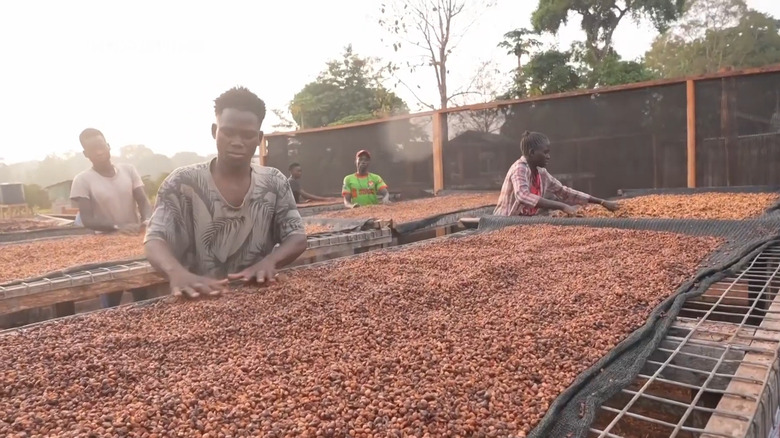
Another seldom-consumed coffee type, excelsa is often categorized as a subvariety of liberica, although new genetic research in a 2025 Nature Plants study suggests it's a standalone species. This coffee originated in Central Africa, before transplanting to South East Asia, where it's now predominantly grown in Vietnam and the Philippines.
Excelsa coffee produces complex fruitiness, underpinned by acidity and distinct woody notes. Common flavor notes involve comparison to plums, berries, and tropical fruit, accompanied by an intricate complexity reminiscent of tea or whiskey. The bean responds well to both medium and dark roasting techniques, and comes with moderate caffeine content similar to liberica's. Such unique qualities have led to increased interest in excelsa among niche coffee roasters,
Furthermore, excelsa comes with intriguing botanical qualities. Opposed to widely cultivated arabica and robusta — which sprout as shrubs — excelsa instead grows from a tree. The plant's pinned down by a fast-growing root system, which some coffee makers even graft onto other species. And although the plant looks visually similar to liberica, excelsa yields smaller-sized fruit.
Excelsa offers hardy qualities similar to robusta and liberica, with a propensity to grow at a lower elevation, at hotter temperatures, and with extra pest resistance. Nevertheless, the species poses tricky cultivation challenges. The tall trees necessitate recurring pruning, are harder to harvest, and result in a smaller yield. So, combined with a lack of awareness, excelsa remains a rare and expensive coffee type.