

The Retro Kitchen Appliance No One Has Used Since The 1950s

Ever wonder what people did just before refrigerators and freezers to keep food at a safe, cold temperature? While frozen foods actually date back thousands of years, for about 100 years before fridges became de rigueur in American households, a different sort of appliance sat in kitchens with the purpose of storing perishables: the ice box. You've probably heard of it, but do you know what it actually entailed?
Well, it looked rather like a large cupboard, with an exterior made of wood, but the insides were optimized for cool storage. Moving inward, the layer just inside the wood was made of metal, and the space between the two was stuffed with organic material like cork or straw for insulation. There were different compartments, including an area near the top where an ice block, used to cool the chamber, sat.
Ice boxes were the prominent method for cold storage from about the mid-19th century to the mid-20th century. But by the mid-1910s, with the advent of electricity in homes, inventors had come up with what we recognize as refrigerators. It took a few decades for them to catch on, but once Americans began to experience the reliability (and, it must be said, timeless appliance style) of refrigeration, it was all over for ice boxes by the 1940s and especially the 1950s.
How ice blocks reached homes' ice boxes
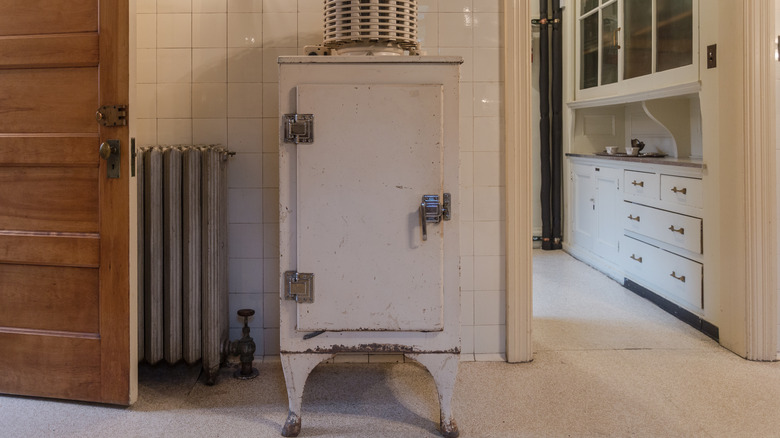
Part of the reason people were so eager to switch to electric refrigerators was because of how inefficient ice boxes could be. The ice blocks used to keep the interiors cool often melted quickly enough that they had to be replenished each day. It was up to someone in the household to remember to put the "ice needed" placard in the window, with the desired amount listed, so the ice man would know to stop (and woe to whoever forgot!).
Plus, the delivery was only a small part of the whole process. Ice was sourced from smaller bodies of water during the cold months, cut away by men wielding special tools of the trade, with the assistance of literal horse power. The fruits of the harvesters' labor were kept in ice houses, which did their jobs so well that they kept the blocks cold through even the hot summer months. When it came time for delivery, huge blocks were loaded up, then cut into smaller pieces according to each household's order. Times have certainly changed; today, we've moved beyond simple blocks of frozen pond water to a world of endless options, where home bartenders can easily craft everything from crystal-clear ice cubes to sophisticated smoked varieties for their favorite cocktails.