

Why This Pappy Van Winkle Year Isn't Worth The Sky-High Price Tag
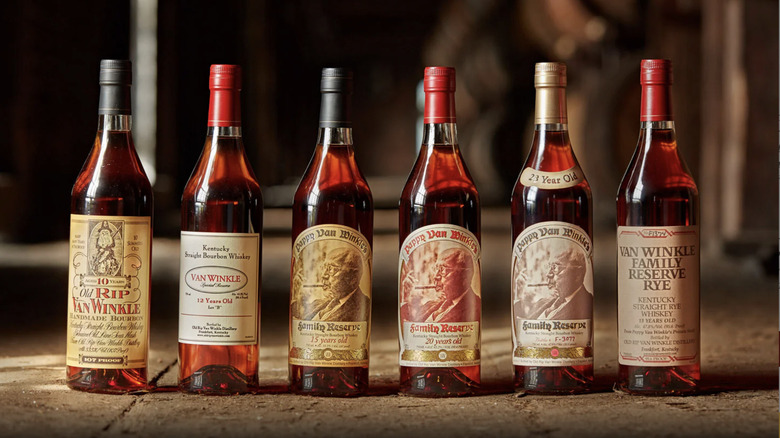
Pappy Van Winkle is among the most expensive bourbons in the world. It's a collector's favorite due to its rarity, exceptional quality, and limited annual release — factors that can fetch exuberant prices (one bottle sold at auction for $125,000!). However, not all bourbons are worth their high price tag, and the 23-year-aged Pappy 23 is widely considered to fit into that category. To unpack why, Food Republic spoke with Chris Blatner, executive bourbon steward and executive director at Bourbon Charity.
According to Blatner, the sky-high price of Pappy 23 isn't driven by exceptional taste alone. "Age, reputation, and scarcity all collide here," he explained. "Very few barrels survive 23 years without becoming too woody to bottle." Each barrel is handpicked, and this extensive aging process is far longer than most other bourbons. Moreover, the scarcity is also impacted by a significant portion of bourbon evaporating over the years, a phenomenon known as the angel's share.
As for what makes it so expensive, "Scarcity is doing most of the work," Blatner explained. "It's a well-crafted bourbon, but no bottle is worth the thousands it goes for on secondary markets." The cost of a bottle of Pappy 23 varies dramatically between its original retail price and the secondary market price. The original distillery price is around $300, whereas secondary market prices typically run around $6,000 for a single bottle. "What you're paying for is rarity and prestige, not a guaranteed life-changing flavor experience," Blatner added. So if you're just looking for a casual, good-quality bourbon, it's best to skip Pappy 23.
Is Pappy 23 ever worth buying?
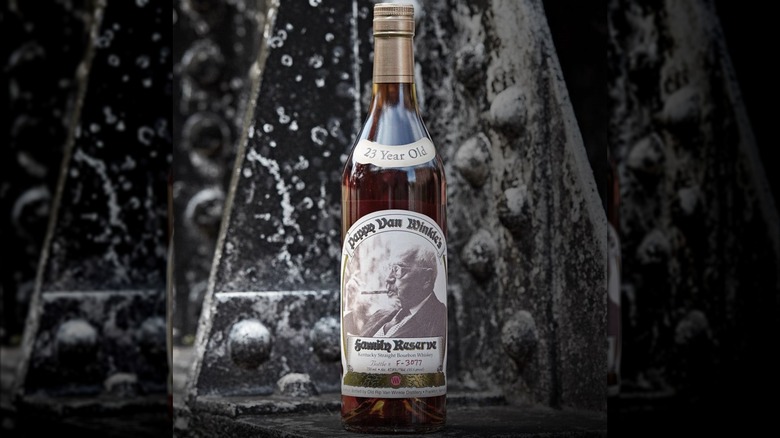
The flavor profile of any bourbon depends on its mash bill, the aging environment, and the time spent in the barrel. Just as fancy packaging doesn't guarantee a high-quality whiskey, long aging doesn't automatically mean a drink will suit your tastes. "Compared to other well-aged bourbons, the 23 stands out for its layered oak and soft wheat profile, but it's also one of the woodiest entries in the lineup," Chris Blatner told us. Whether you spend your money on Pappy 23 or a younger expression like the 10- or 15-year ultimately comes down to personal preference. "Pappy 23 leans heavily into oak, leather, and dark caramel, with a long, dry finish," Blatner explained. "The younger Pappy expressions show more balance, sweetness, and structure."
As for who Pappy 23 is best suited for, "It's mainly a collector's bottle," Blatner advised. "Enthusiasts might enjoy tasting it once for the education and experience, but casual drinkers won't get the value from it." For seasoned aficionados, tasting Pappy 23 can certainly feel like checking off a bucket-list item. But for the average drinker, the nuances that justify high-end bourbons are often subtle — and certainly not distinct enough to defend a four-figure asking price. "If you're buying it to actually drink, the younger Pappy expressions are generally more enjoyable and slightly more reasonably priced," Blatner recommended.
For more affordable bourbons that offer a comparable flavor experience, Blatner recommends Old Fitzgerald Bottled-in-Bond and the Weller lineup, "which is exactly the same mash bill as Pappy and made at the same distillery." He also points to other cost-friendly wheated bourbons, including Wilderness Trail, Maker's Mark, Holladay, and Bardstown Bourbon.