

The Type Of Shelves That Give Your Kitchen More Storage Space
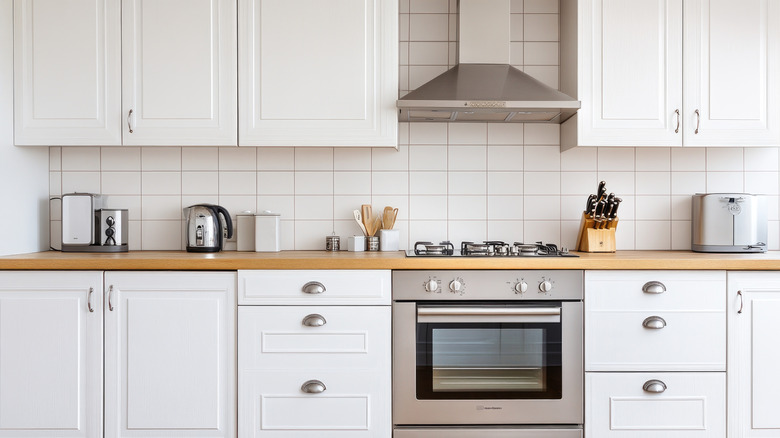
While there are plenty of genius storage ideas to maximize your space, sometimes you need a bit more of an overhaul. We spoke with Olivia Parks, owner and lead organizer of Nola Organizers, to get her take on the best type of shelving to maximize your storage space.
"In my opinion, pull-out shelving and adjustable shelving tend to offer the biggest boost in kitchen storage space compared to traditional shelves," Parks says. While you can store more with the help of deep shelves, rifling through the front rows to get to what you need in the back is a pain. Even if you keep your cabinets organized like Ina Garten with labels and large items in the back, it doesn't help to see your ingredients if you can't reach them. With pullout shelves, you're essentially able to bring those hard-to-reach items to you, which is especially useful for corner and lower cabinets which may be more difficult to rummage through.
While you may get the most use out of pullout shelves in large or awkwardly positioned cabinets, Parker is quick to point out that they're still useful for small cabinets. "Shelves that can be adjusted or pulled forward make the space feel bigger, enabling you to maximize it and use it more efficiently," she says. Finding, installing, and maintaining your new upgrade is also quite easy, provided you avoid abusing your hardware and pick the right one for the job.
How to avoid common pull-out shelving mistakes
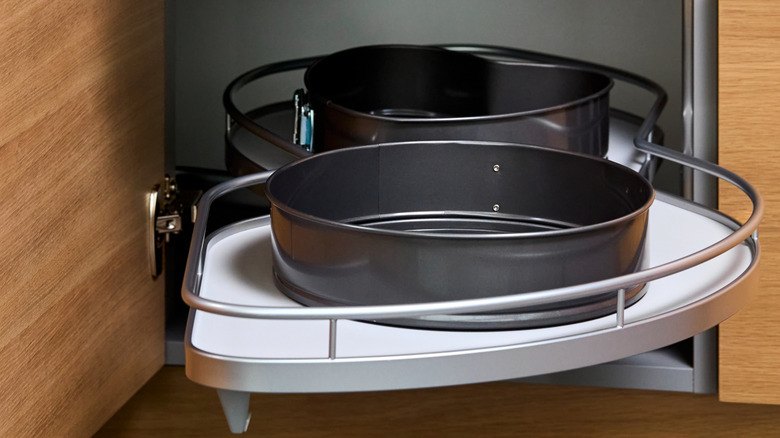
Whether you're painting the walls or installing a new counter, upgrading your kitchen is all about planning and preparation. Precisely measuring your cabinets, cleaning them, and evenly distributing the weight of your ingredients are all vital to keeping your pull-outs in working order.
Olivia Parker says that two of the most common mistakes people make is installing shelves too high or low, and too shallowly. "If shelves aren't installed at the right height for the items you own, you end up with a lot of empty, unused space above or below your things," she says. You'll need more room when storing bottles of oil than spices, for example, so you'll need to do some preemptive organizing before you pick up a drill. Similarly, if your shelves are too shallow and don't sit flush against the back, then you're wasting valuable space, needlessly trading storage for convenience.
While it may be tempting to opt for cheaper shelves, Parker says that another common mistake is using ones made out of flimsy material. They tend to bend and droop over time, compromising the security of your ingredients. If you're on a tight budget, reserve the flimsier shelves for lighter dry goods and spices, but always use sturdier brands for heavier items like oils, sauces, and vinegars. While they may rest securely in the cabinet, ingredients put more and more pressure on the joints when you pull the shelves out, something that leads to increased wear and tear until they finally collapse.