

Why These 2 Foods Are So Common On New Year's Day

We may receive a commission on purchases made from links.
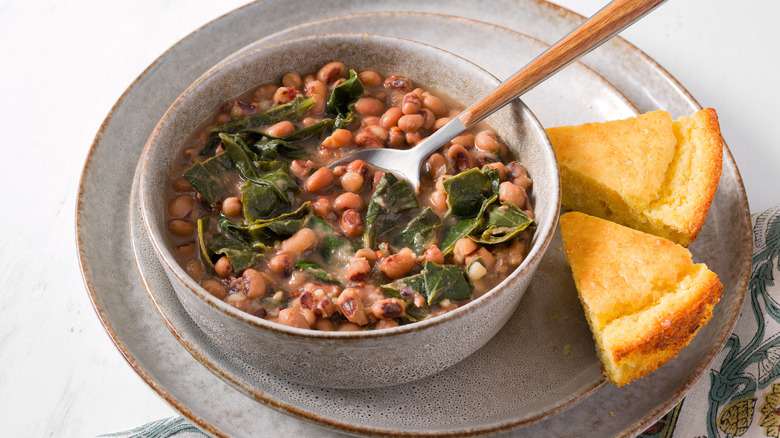
After ringing in the New Year at midnight with cheers, celebration, and popping corks of bubbly, many revelers sit down the next day to a festive dinner with family and friends. Just as it's common to have the same meal each year on Thanksgiving and Christmas, some people look forward to familiar dishes for their New Year's Day spread too. For many Americans, that means seeing black-eyed peas and collard greens on the holiday table.
It's traditional for many in the South to eat the two foods on the first of January for luck and financial success in the year ahead, particularly in the African-American community. The peas stand for coins and the collards for paper money, and they're often served with cornbread, representing gold. Cooking them with tomatoes is said to bring both money and health, and you supposedly should eat at least 365 peas to benefit on each day of the coming year. Sometimes a penny or a dime is put in the dishes, which gives the most good fortune to the person who finds it — though this might also be a choking hazard, so give people a warning that it's there if you do it.
Both black-eyed peas and their frequent collard greens companion are flavorfully cooked Southern-style with pork such as ham hocks or slab bacon, along with other seasoning ingredients like onions, garlic, celery, and spices. It can also be a great way to use a leftover ham bone or smoked turkey. Cornbread (without sugar for a true Southerner) is commonly dunked in the tasty "potlikker" liquid produced from cooking down the greens. The legumes are also sometimes combined with rice, a dish whimsically called hoppin' John.
What's the origin of this food tradition?
This New Year's Day food tradition has its roots in the African-American experience in the South. Black-eyed peas (actually a bean) are a common native crop in West Africa, where they're often part of celebrations and are viewed as a good luck talisman, Adrian Miller, author of "Soul Food: The Surprising Story of an American Cuisine, One Plate at a Time," wrote in Garden & Gun. He explained that enslaved Africans in the U.S. continued to grow and cook with the beans, which were often part of the food stores on the ships that brought them across the Atlantic in captivity.
Initially, they were the only people in the South who ate the beans, which were also fed to livestock. However, eventually their popularity spread, as others who'd previously looked down on the food began eating it as well. One potential origin story for how the legume became associated with luck by Southern enslavers harkens back to the Civil War. Supposedly, Union soldiers only left black-eyed peas when they raided the Confederates' provisions, as they viewed them as animal feed. The Confederate soldiers were able to survive on the beans, which came to symbolize good fortune and abundance.
Another leading possible origin story ties eating black-eyed peas directly to New Year's Day. In this version, enslaved people ate them on January 1, 1863, as they celebrated President Abraham Lincoln issuing the Emancipation Proclamation. Black-eyed peas had always been a celebratory food for West Africans, so eating the beans in jubilation makes a whole lot of sense.