

Swap Pricey Filet Mignon For A Cheaper Cut That's Tender & Juicy

A filet mignon dinner rarely disappoints, offering a thick yet tender steak texture without big, beefy flavors. Such a gourmand experience does come at a price, though — it's common for the cut to approach $40 per pound at the grocery store, a cost that can be hard to justify. Thankfully, it's possible to find affordable alternatives that offer a similar experience. Take the shoulder tender, for example.
This underrated cut offers a meat structure not too different from the tenderloin, which is where filet mignon is sourced. Also a long and lean muscle, the shoulder tender — also called a petite tender or bistro filet — is butchered from the shoulder, rather than the backbone area where filet mignon originates. The muscle typically runs smaller, weighing under a pound, making it a more manageable size to work with.
Many classic cooking methods work with the steak; you can grill, roast, or pan-fry the cut. Much like filet mignon, the beef is best enjoyed medium rare, as the lean cut dries out with prolonged cooking. And when finished over high heat, the steak develops a mouthwatering crust. Sliced into attractive medallions, shoulder tender recreates a filet mignon-like experience at a much more accessible price point.
High heat and resting make shoulder tender shine
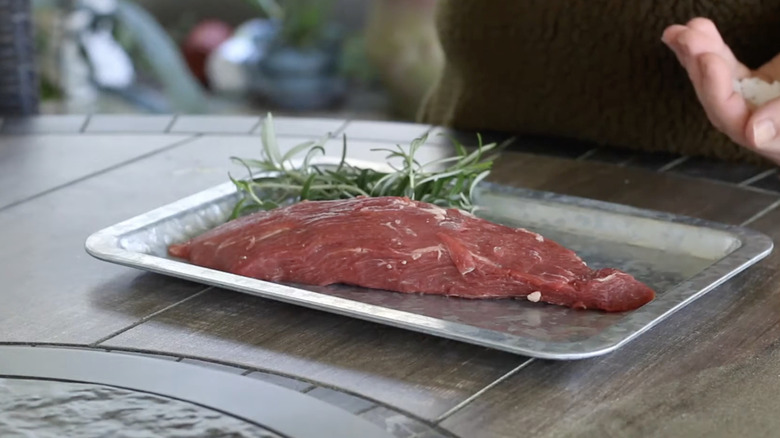
Ready to give shoulder tender the steak spotlight? Select the optimal cooking technique for the job. Various heat sources work with the cut, but it's essential to maintain meticulous temperature control. You want the meat to retain a juicy interior, boasting a pink color and plenty of moisture. As the cut is lean, this isn't beef designated for slow cooking; there's not enough fat and collagen to break down during the process.
Instead, throw the shoulder tender on a high-heat grill. At a scorching 500 to 700 degrees Fahrenheit, the cut may need only about three minutes per side, depending on its thickness. You'll get attractive grill marks on the exterior, while the meaty core remains juicy. Indoors, you can achieve similar results using a high-heat broiler, which will also lend the beef a delectable crust. Once done, just make sure to give the shoulder tender adequate time to rest, a crucial step for perfect steak. The cut can disappointedly lose moisture when sliced too early.
Alternatively, if you're finishing the steak in a pan, consider using a reverse sear. Ideally, track the beef's internal temperature with a probe thermometer, then sear it in a hot pan to yield a delectable crust. Accompanied by a flavorful steak seasoning, shoulder tender produces a memorable beef experience comparable to the most coveted cuts.