

The Type Of Beer People Drank In Old West Saloons
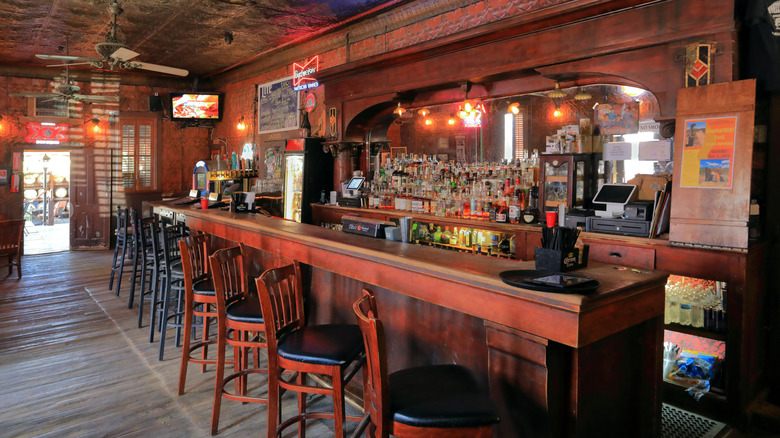
Stories of the Old West continue to captivate with tales of cowboys, cattle, and wide expanses. Central to the lore is the saloon, often portrayed as a ramshackle bar with swinging wooden gates, full of tough characters and rough drinks to match. Not all Old West drinking holes fit such a cinematic archetype — many operated as large tents or cantinas. Yet come the 1820s, saloons indeed proliferated in the Old West, catering to nightlife on the frontier.
Bar menus typically included straight spirits like whiskey and moonshine, simple cocktails, as well as beers. One can imagine sitting at such a dusty bar, sipping on a cold pilsner or lager, then chasing with a harsh liquor. However, beer drinking in the 19th-century American West looked a little different. For starters, the brews weren't often ice-cold, but rather a more tepid 60 degrees Fahrenheit. Both refrigerated beer and icemakers only emerged in the 1870s, taking years to arrive out West.
Instead, the served beer was essentially home-brewed. Crafted sans hops using a hodgepodge of grain bases and with uncontrolled fermentation, this beverage only loosely resembled today's brew. More likely than not, it did not taste good — especially since some bars reportedly even watered down the drink. Nevertheless, the enjoyment of beer was widespread, ingrained into the saloon experience.
How beer culture evolved in the Old West
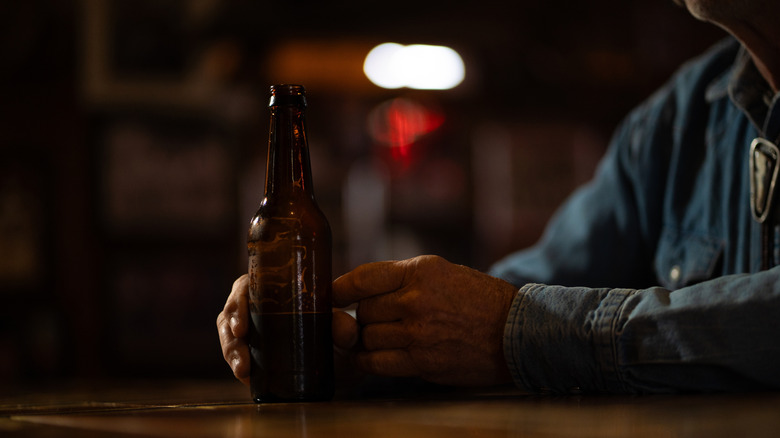
While saloons slung their house brews, larger scale beer culture emerged on the East Coast. Yuengling, the oldest brewery in the States, opened in 1829 with giants like Schaefer and Pabst arriving in the following decades. At first, these businesses did not have the resources to ship out West. Initially, kegs were transported via horse-drawn carriage. Bottled beer was not widespread until 1873, nor were brews initially pasteurized, increasing the risks of spoilage.
By the end of the 19th century, beer culture started to change. Still recognizable brands like Budweiser invested in temperature-controlled railcars and innovated pasteurization, enabling shipments further afield. Aided by a wave of European immigration, the average quality of ales and lagers improved. Some breweries even went on to purchase the watering holes, more strongly intertwining beer and bar culture together. By the early 20th century, lagers overtook ales in popularity, forming a new American beer scene. Brews in saloons started to resemble today's offerings, rather than the warm and off-flavored drinks of decades past.