

Why Fish And Chips Used To Be Wrapped In Newspaper
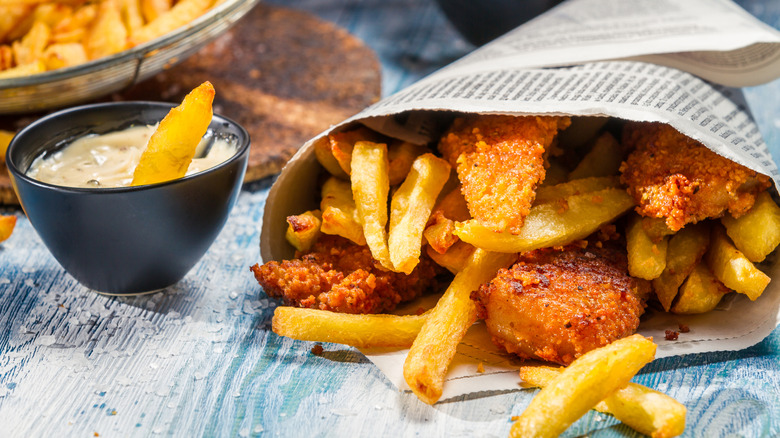
The crunchy delights of battered fish and chips come with a cherished old-timey aura. The combination debuted in 1860s London, and hasn't changed much since — save for the accompanying condiments and the presentation. Prior to the 1980s, you'd often find the fried foods wrapped in yesterday's newspaper, spotting grease (and possibly malt vinegar) onto old headlines. It's an iconic serving style continued today with faux prints, inciting the question — why did the practice start to begin with?
Turns out, the serving ritual predates the world wars, as newspaper provided a cheap, abundant, and insulating material for working-class meals. Yet as the dish was so cherished in the U.K., it never received rationed status during WWII, making the continued use of newspaper a savvy wartime adjustment amidst broader paper shortages. The practice perpetuated for decades, although health concerns about lead and chemicals in the ink touching the food caused the slow elimination of the technique. By the latter part of the 20th century, due to stricter food safety regulations, newspaper-wrapped fish became infrequently spotted.
The rise and fall of the classic newspaper-wrapped meal
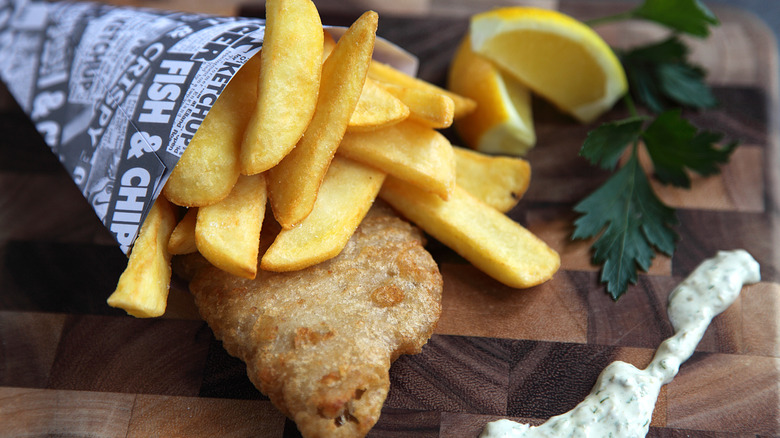
Oftentimes, the way a food is served is no less important than its ingredients; the paper vessel used for fish and chips is a prime example. A bundle of crunchy fried food in the daily unlocks powerful memories for many — the newspaper functions as a nostalgic cornerstone. "I very clearly remember me and my mates regularly buying [fish and chips] ... with pocket money and us all getting newsprint-stained fingers," noted one Redditor.
To add to the blurry memories, some shops employed a protective layer of blank parchment paper, thereby eliminating contact between newsprint and fish. Chippy fans report spotting the technique by the 1960s, with documentation of the practice lasting into the 21st century.
Most likely, the use of newspapers at restaurants was banned by the U.K.'s 1990 Food Safety Act. Afterwards, some vendors pivoted to food-safe paper, while others opted for different container types. Some vessels — like Styrofoam — can turn takeout fish and chips soggy, still giving paper a practical edge. So while the best shops no longer employ newspaper, the tie between morning literature and fish will continue for decades to come.