

10 Unexpected Ways To Use Everyday Kitchen Items
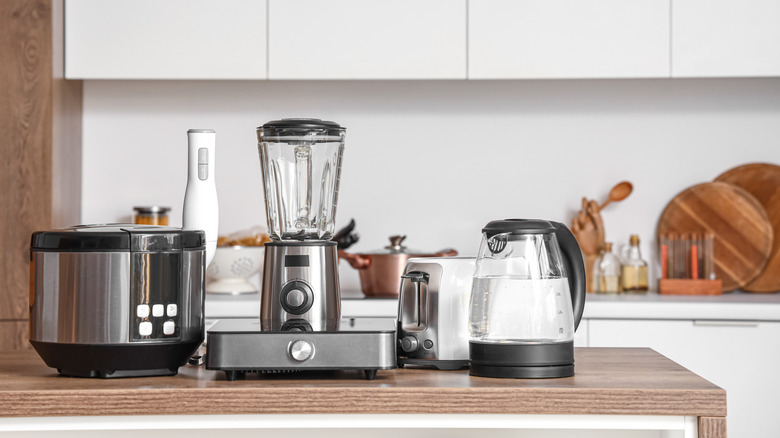
No matter how long someone's been cooking, odds are they're looking for new tips and tricks to make the experience easier or more enriching. Whether it's learning how to make frothy milk with a glass jar and a microwave, or how to use that same jar to turn a regular cake tin into a Bundt pan, there's always a new way to repurpose everyday kitchen items. And, really, who doesn't want to streamline their life while saving time, money, and frustration?
Whether you cook in a small galley kitchen or an elaborate open-plan space with a six-burner stove, having more gadgets than you need is annoying. The items clutter the countertops and fill drawers until, finally, they're stored in the back in favor of items you actually use. To stop the clutter and give you some new options for kitchen prep and cooking, these tips can show you unexpected ways to turn things you probably already have in your kitchen into powerhouses of efficiency.
1. Slotted spoons can fry delicate items
This one item is in nearly every kitchen drawer, thanks to its ability to strain liquid away from foods like pulled pork. But the spoons can do a lot more than that. The openings in the slotted spoon also make it quick and easy to separate yolks from egg whites. Poaching eggs and skimming cooled fat from soups and gravies are also popular uses for the utensils.
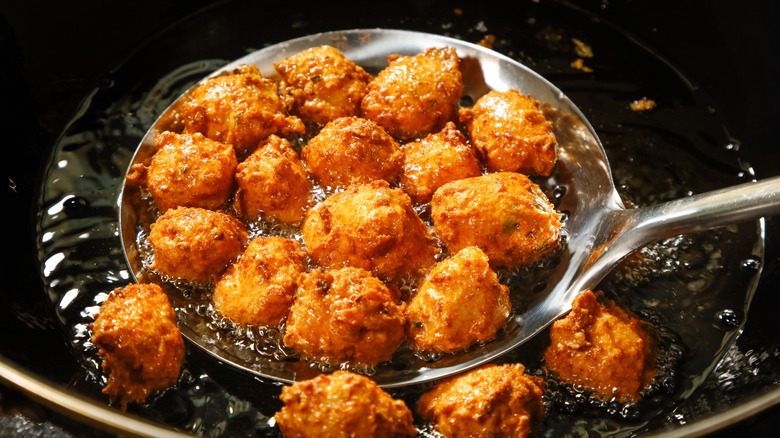
One thing people might overlook a slotted spoon for, however, is frying delicate items. That's understandable, because some of the spoons have openings that are too wide to hold small items. Others have slots that are too narrow to drain the oil properly from under larger items. That isn't the spoon's fault. Instead, it's the mismatch in what you're cooking, and the slot size needed to drain it without the item falling through.
To safely use a slotted spoon while frying, bring the spoon directly under the food item and lift it straight up from the hot oil. Allow the item to drain for a few seconds before transferring it to a wire rack or paper towels. Don't shake or tilt the spoon, as that can cause burns either from the item falling back into the oil, or the droplets flying off and hitting you.
2. Apple dividers cut potatoes into wedges
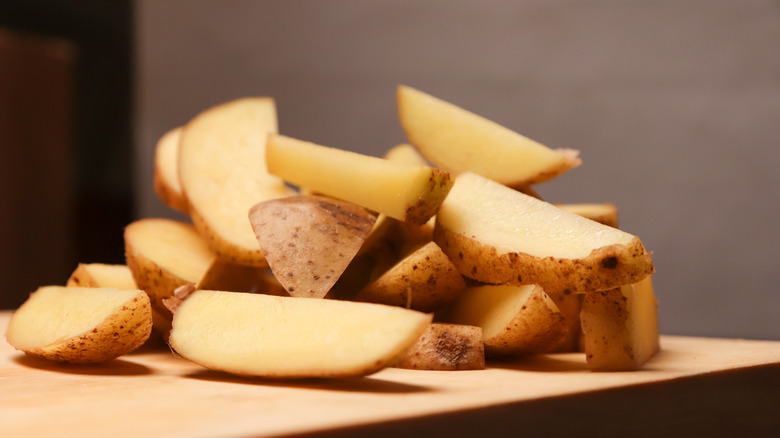
Using an apple divider to slice potatoes into wedges just makes sense. Instead of risking hurting yourself while cutting unstable pieces of potato with a knife, your apple corer can make short work of turning the tuber into pieces ready for the oven or stock pot. But you don't have to stop there. The apple divider can also cut onions easily, as well as other root vegetables. To take it even further, you can use the divider as a cookie cutter or impression maker, depending on how far you press it into the dough.
The apple divider will work with a raw potato, but you'll have to press hard if it's a russet or sweet potato. To make it simpler, microwave the potato for a minute or two; just enough to soften it slightly without turning it mushy. As a bonus, the divider cuts wedges with thick edges, helping to keep the ends from burning while cooking.
3. Bundt pans can roast a chicken
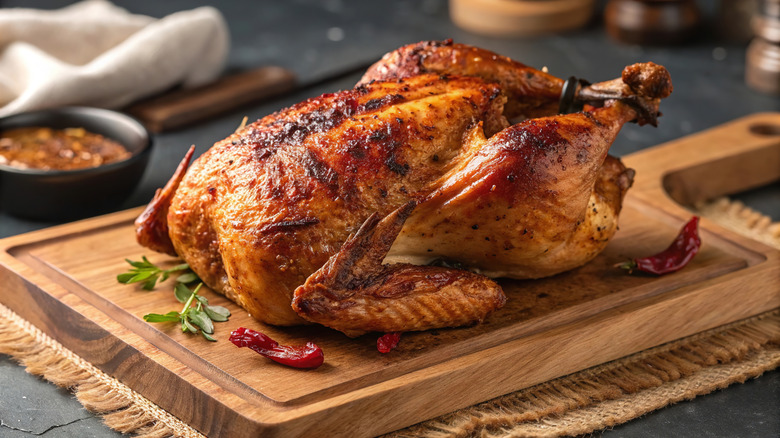
You might've heard of the hack to remove corn kernels from the cob using a Bundt pan. If you haven't tried it, it works, but that's far from the only clever way to repurpose the cake cookware. Instead, Bundt pans are one of the most efficient ways to roast a chicken.
The pans have a hollow space in the center, making them perfect to hold the chicken up by the cavity. This allows the bird to cook evenly, inside and out, while promoting crispy skin. Another plus is the way the chicken's juices gather in the bottom of the pan. Just throw some veggies and aromatics into the Bundt under the bird, and let gravity do the delicious job of basting them. Feel free to use white wine, beer, or cider to marinate the chicken before cooking to impart even more flavor into the meal.
4. Waffle irons double as sandwich presses
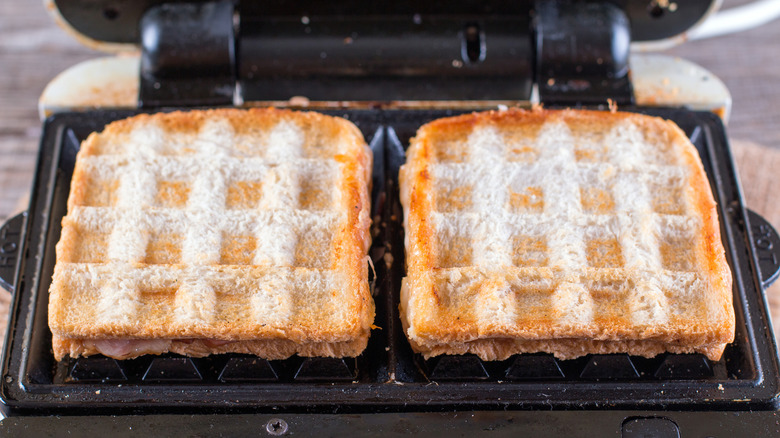
One of the best things about a waffle iron is its ability to make almost anything crispy. The appliances can actually be used to create an entire breakfast, with cheesy hash browns, waffled biscuits, and flattened omelets. Your waffle iron can also make desserts like brownie waffles or cinnamon rolls. But lunch just might be where the waffle iron really shines as a substitute for a panini press. Not only does the iron crisp up the edges of the bread, but it also creates pockets where things like tomato soup can sink in.
In fact, grilled cheeses are one of the simplest sandwiches to make in a waffle iron. That's because they're simple and thin. If you want to make a thicker sandwich in the iron, you absolutely can. It's just going to take a little longer, and you'll likely be supplying the pressure on the meal as the lid might not close completely. If that's a problem, just waffle the bread first. You can then assemble the sandwich and eat it as is or return it to the iron for a final press.
5. Egg slicers can cut soft cheeses
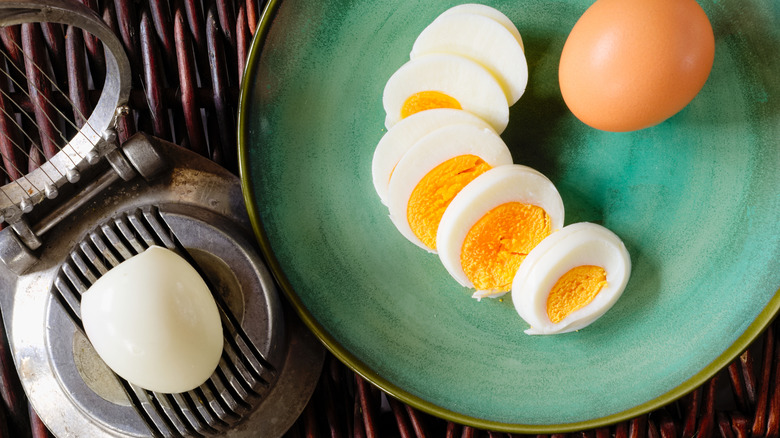
Egg slicers aren't just for fishing out a few times a year when you want to make a fancy salad. The small gadgets are perfect for slicing everything from strawberries, bananas, avocado pieces, and mushrooms to portioning butter beautifully. It can also make cutting soft cheeses, such as mozzarella or feta, incredibly simple.
Egg slicers aren't very large, so you might need to portion logs of cheese to make it easier to fit on the device. Either way, the thin wires on the slicer are the ideal strength and size to cut through many cheeses cleanly. Goat cheese, for instance, is infamously crumbly. Slicing it neatly can be difficult because of this. To make it easier, try chilling or lightly freezing (around 10 minutes) a log of goat cheese before using the slicer (and you can chill the slicer, too) to make neat disks. The same can be done with a variety of spreadable cheeses to help make preparing for your next party that much smoother.
6. Rolling pins crack hard shells
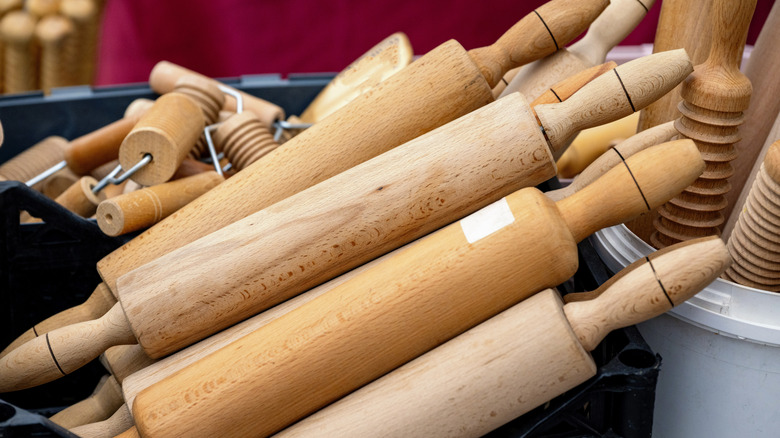
Rolling pins are an absolute powerhouse in the kitchen. You can use one to crush ice, flatten meat, and, of course, roll out dough. The cylinders can even muddle cocktails. One of the most overlooked ways to use a pin, though, is to crack hard shells. That can be for a handful of nuts or for a batch of gumbo crabs. Chefs like Carla Hall have been using their rolling pins to flatten proteins for years, but grabbing one to crack crab legs with doesn't seem as well-known.
To use a rolling pin to remove meat from lobster and crab claws and legs, take a rolling pin and gently but firmly press down on the end of the leg. Roll the pin forward and watch the meat pop out in a single piece, ready to be chopped or eaten as is. If you'd like to forgo a nutcracker when shelling walnuts, put them in a clean dish towel before swinging the pin into them a few times. It's best to avoid putting the nuts into a resealable bag for this. The sharp edges from the broken shells will pierce the bag, making it harder to separate the nuts from the plastic.
7. Molcajetes create pesto
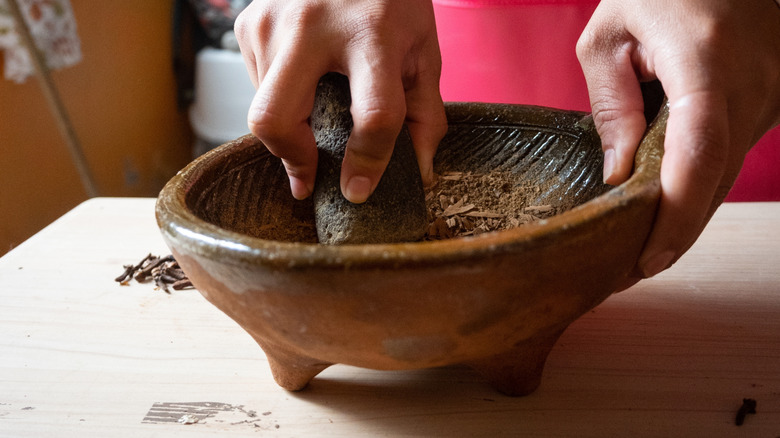
Traditionally used to make guacamole or grind spices, molcajetes and their European counterparts, the mortar and pestle, can handle more kitchen tasks than just that. The dishes can be used as serving vessels and to char garnishes for cocktails. And if you want to make a variety of sauces, like pesto and chimichurri, then a molcajete or mortar and pestle is just what you're looking for.
The pestle is the long stone or marble cylinder that crushes the ingredients, while the mortar or molcajete is the rounded bowl that holds them. Pounding garlic in the mortar creates a quick paste and lets you avoid having the smell on your fingers all afternoon. Making marinades and sauces in the dishes lets you control the texture of the final product in a way that food processors and blenders can't. Another plus is being able to serve the sauce directly from the molcajete, making it even more convenient.
8. Muffin tins make portioning meals a breeze
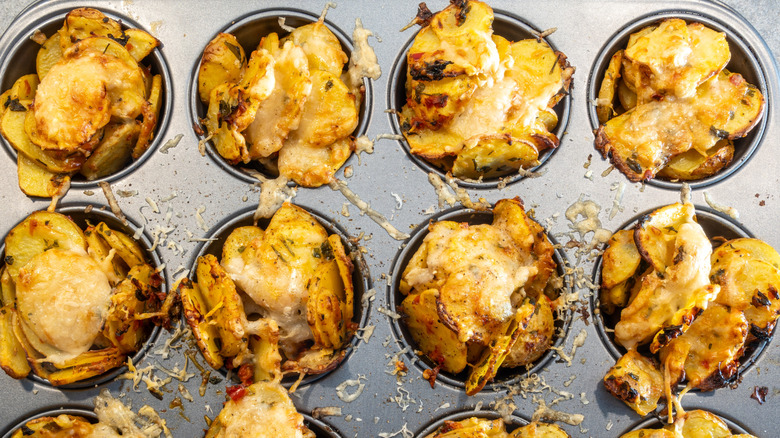
Muffin tins are made for individual-sized portions of cake or quick breads. But why stop there? The versatile pieces of cookware can bake appetizer portions of scalloped potatoes or meatloaf before it serves as a mold for chocolate cups or taco shells. You can even use a second muffin tin to hold your ingredients as you make the meal.
If you have leftover soup or stew, you can use a muffin tin to freeze the meal into easy-to-thaw portions. It saves you money and from having to eat the same thing three days in a row. It's also wonderful to be able to pull a muffin-sized meatloaf and mashed potatoes or a cup of soup directly from the freezer after a long day. Muffin tins are particularly helpful for meal prepping because of this. You can easily mix and match different dishes to customize your dinner by making a batch of food in the tins and storing them in resealable freezer containers. All you have to do is reach in, take out as many as you'd like, and throw them in the oven.
9. Graters can de-stem herbs
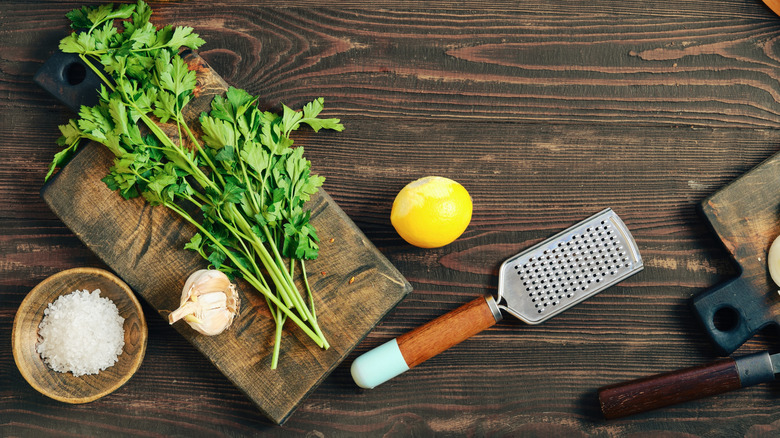
It doesn't matter whether you have a microplane or a regular box grater; both are invaluable tools in the kitchen. They can also get rid of charred areas on cookies or bread and serve as a potato ricer in a pinch. It just so happens, the holes on the microplane or the small side of the box grater are also the perfect size to strip herbs from the stems. If you have a box grater with large holes, you can even remove the ribs from greens like kale or spinach.
To de-stem herbs with a grater, simply put the leafless end of the stem into the grater hole that matches its size best. Then, firmly pull the herbs through, leaving the leaves separated from the stripped stem. If the herbs are tearing instead of pulling off, the grater hole size is too small. Try the next one up, and it should solve the problem.
10. Ice cream scoops stuff peppers with no mess
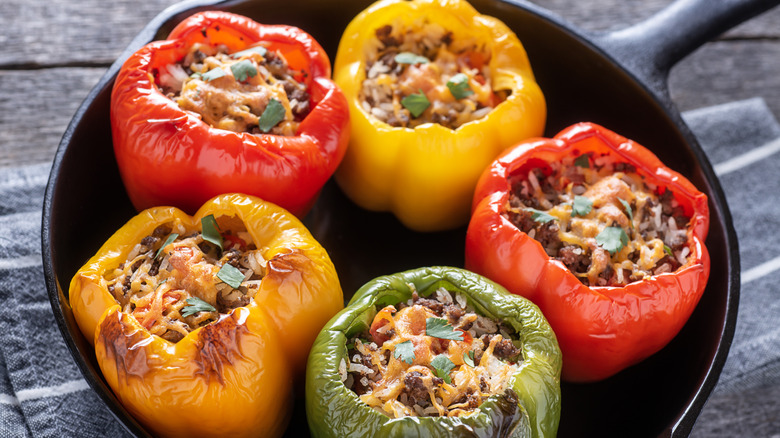
Much like muffin tins, ice cream scoops can dole out individual portions in a flash. The scoops can de-seed melons and squash, make large melon balls, and portion perfectly-sized cookies. But if you've never used an ice cream scoop to stuff bread bowls, melons, or peppers, you're missing out on one of the best kitchen hacks out there.
The scoops automatically let you portion out the meat, cheese, and/or veggie mixtures so that each pepper cooks evenly. The release button on ice cream scoops also helps push thick mixtures out without sticking, helping keep things clean. The scoops can fill almost any dish, if you have the right size. A standard scoop will fill peppers, apples, pita pockets, and bread bowls without issue. A large scoop can make filling pumpkins or watermelons faster. And small scoops can make stuffing deviled eggs or mushroom caps one of the easiest things you'll do all day.
Static Media owns and operates Tasting Table and Food Republic.