

America's Oldest Tea Garden Is Located In This California City
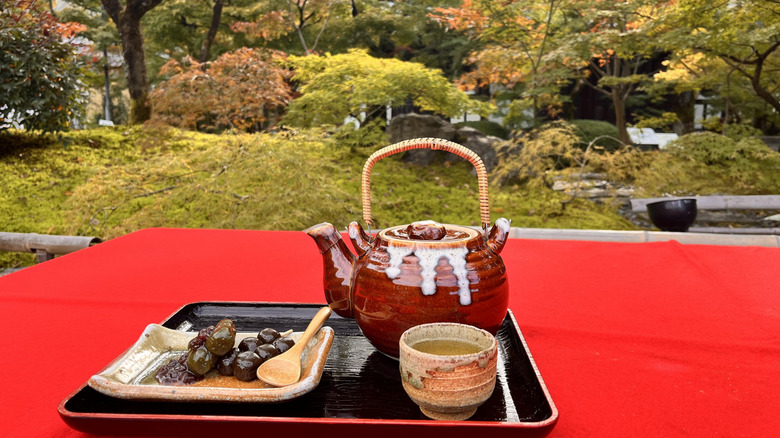
In Japanese culture, a tea garden is created to be a peaceful and reflective place, traditionally a preparatory natural area to pass through on the way to a tea ceremony at its tea house. The oldest still-existing one in the U.S. was founded in the late 1800s — around the same time as immigrants from Japan began arriving on the West Coast. However, its origin was actually as a Japanese Village and Tea Garden exhibit for 1894's California Midwinter International Exposition in San Francisco's Golden Gate Park. The California city made the popular exhibit permanent after the exposition, expanding its size to about five acres, and calling it the Japanese Tea Garden when it reopened in 1895.
Among the traditional elements present are stepping stone paths, stone lanterns, and native plants and trees, including Japanese maples and cherry trees. There are also koi ponds, a zen garden, the half-moon-shaped Drum Bridge, and a Buddha statue that had been made in 1790. A five-story pagoda created for the 1915 Panama-Pacific International Expo in the city was also moved to the grounds.
There were originally two tea houses in the exhibit and garden, but one was removed several decades later. The remaining one was rebuilt and refurbished a number of times, most recently in 2023, but remains at the same location. It has a Japanese design, featuring traditional foods and drinks, and a second-floor gift shop. The Garden has ticketed admission, but is free for San Francisco residents.
Japanese refreshments are available at the tea house
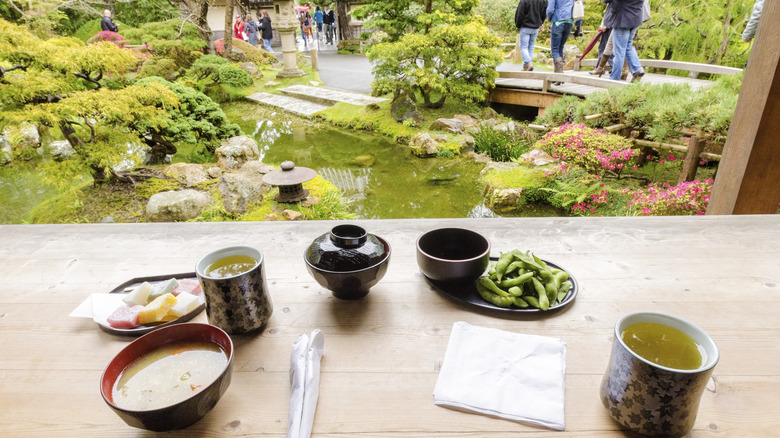
Visitors can stop for snacks and drinks at the tea house. Different kinds of green tea are on the menu: sencha, made from steamed leaves; genmaicha, a mix of leaves and toasted brown rice; a roasted type called hojicha; and jasmine. Matcha is, of course, also available, the popularly-embraced, deeply flavorful variety that now shows up in many other ways too, like lattes, cakes, cookies, ice cream, and smoothies. However, the powdered green tea was originally used in tea ceremonies, and the matcha available here is exclusively part of a set-course, reminiscent of Japanese ritual.
Guests can choose from a range of Japanese foods, including savory udon and miso soup, edamame, and Japan's version of fried chicken, double-fried karaage chicken. Among the sweets are dorayaki, pancakes filled with red bean paste; mochi ice cream (which has an unexpected U.S. origin); green tea cheesecake that's made with matcha; sweet rice cakes called warabimochi; and a cookie assortment that includes almond, sesame, and fortune cookies, and pocky sticks.
The Japanese Tea Garden actually has a claim to the invention of fortune cookies, even though they're associated with Chinese food. Although there are competing stories, a popular one is that they were first served in the U.S. at this tea house around the turn of the century. In Japan, fortune cookies were savory, but a bakery named Benkyodo that reportedly provided them to the Garden is said to have created them with the sweet vanilla flavor we know today.