

The Burrito Mistake Even Good Cooks Make All The Time
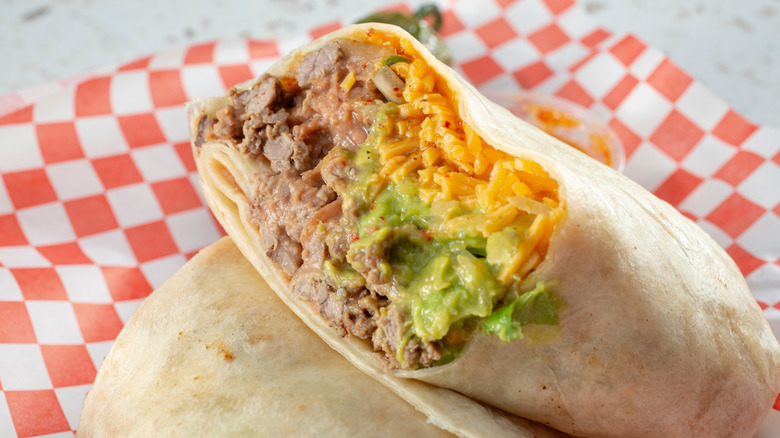
Whether you're making a two-ingredient Northern Mexican bean and cheese burrito or leaning into a hearty California-style, there's an art to assembling the dish. From carefully selecting and cooking the filling to doling out ingredients and then wrapping up the creation, nuance appears every step of the way. Thankfully, Food Republic spoke to Yvette Marquez-Sharpnack — a Mexican food blogger, cookbook author, and founder of Muy Bueno – to curtail common burrito pitfalls.
According to her, "The biggest mistake is overfilling and [overloading] burritos with too many fillers." In order to flesh out the dish in both volume and satiation, it's tempting to rely on bulk, often starchy ingredients; think rice or potatoes. Yet add too much, and such components ruin the burrito build. "Rice and other fillers absorb steam and moisture from hot fillings, which makes the burrito heavy and mushy fast," explained Marquez-Sharpnack.
Amongst common fillers, she especially objects to the addition of rice: "Personally, I don't think it belongs in burritos at all," Marquez-Sharpnack said. Indeed, many find the grain's inclusion divisive, with San Francisco's Mission-style burritos and some Texan renditions the most common styles featuring the ingredient. So with this starchy ingredient or others, it's necessary to keep a light hand, or else, "You don't taste the meat, the beans, or the seasoning," warned Marquez-Sharpnack.
Consider the tortilla when making burritos
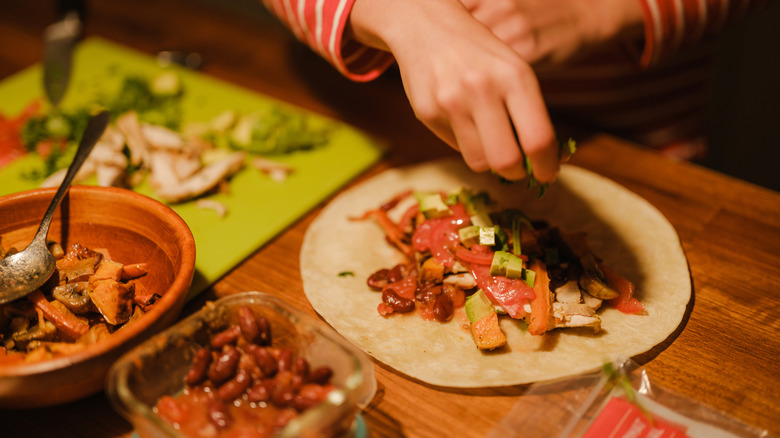
In addition to excess filler, Yvette Marquez-Sharpnack outlined faults with the tortilla as another widespread burrito issue. As the cornerstone of Mexican cuisine and the central vessel of a burrito, the tortilla's quality is not to be overlooked. "A burrito is only as good as the tortilla holding it together," Marquez-Sharpnack noted.
Usually, burritos employ flour over corn tortillas, which need ample heating. Using "undercooked or barely warmed tortillas" leads to a host of burrito issues, she explained. Mistakenly underheat the wrapper, and the burrito won't hold its shape or taste as good, and it will come with a generally unappealing sensation. Such issues only compound with too much filling; an overstuffed burrito using an unheated tortilla "tears, gets gummy, and loses its structure," cautioned Marquez-Sharpnack.
A burrito that won't hold is an easy way to tell a bad restaurant, and you want to avoid such a fault in the domestic realm, too. Subsequently, take the time to heat tortillas until "they're warm, pliable, and lightly toasted," roll up the burrito, then "lightly toast and crisp the outside," suggested Marquez-Sharpnack. It's a step that adds prep time, but alongside thoughtfully prepared, not-so-starchy fillings, you'll get a flavor-packed burrito that hits the spot.